



News:
Brokerage
Posted: April 14, 2015
Village of Ossining seeks developer for historic building at 200 Main Street
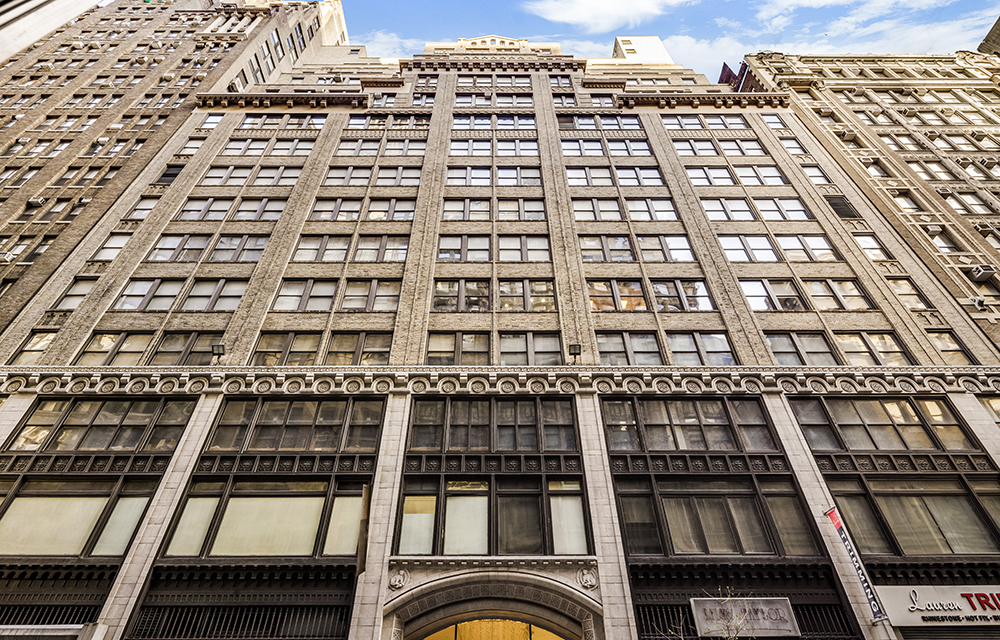
The Village of Ossining is seeking a qualified developer to collaborate with the village in the renovation and re-use of a National Register-listed historic building located at the intersection of Main St. and Rte. 9. A request for proposals has been issued for the village-owned property at 200 Main St., architecturally significant as one of the best-preserved examples of Beaux Arts architecture in Westchester County.
Located in Ossining's Downtown Historic District, 200 Main Street sits on a parcel totaling approximately 6,100 square feet is listed on the National Register of Historic Places. The building, which has two stories and a basement, was constructed in 1908 in the Beaux-Arts style to serve as the headquarters of the Ossining Bank for Savings. It functioned in that capacity until the bank's closure in 1983. In 2003, 200 Main Street was donated to the Village of Ossining. The structure is currently vacant and is approximately 5,200 square feet, excluding the basement.
"200 Main Street is the gateway to our downtown. The business or organization that breathes life into the historic Ossining Bank for Savings will be a powerful force in the revitalization of our Main Street," said Village of Ossining Mayor Victoria Gearity. "We on the Village Board are very excited about the potential for redeveloping this property. It is a key element in our vision for growing our vibrant local economy."
The Village seeks to partner with a developer that has a good track record, sound financial backing, and commitment to implementing creative, quality development in a timely manner. The Village is willing to consider a private venture or a public/private partnership to provide a dynamic use for residents and visitors alike. The complete RFP for the property is available online at www.villageofossining.org/economicdevelopment. Responses are due by 4:30pm on Friday, May 15, 2015.
Nestled along the Hudson River, Ossining is a culturally diverse and affordable place to live, rich in both history and natural beauty. Approximately 25,600 people reside in the three and one half square miles of this historic Village, with an additional 15,000 in the immediate suburbs. Ossining boasts extensive shopping, dining, recreational programs, educational enrichment opportunities, and excellent municipal services.
In 2012, the Village of Ossining set forth economic development strategic objectives that laid a strong foundation for economic development growth in the Village. The strategic objectives include increasing the buying power in and around our downtown area through approval of new market rate residential units, improved and enhanced pedestrian and traffic circulation, and finally increased beautification efforts of our downtown area to promote the Village of Ossining as welcoming community.
"The Village has invested time and capital in the redevelopment of Downtown Ossining," said Ingrid Richards, manager of downtown and economic development. "Over the past few years there has been what some would call an economic boom in the Village of Ossining. This boom will no doubt lead to a successful venture at the 200 Main Building."
The Village of Ossining is particularly attractive for young professionals and empty nesters looking for a combination of affordable living, waterfront views, and convenience with easy access to mass transit and New York City a mere 45 minutes away. Families can establish roots with an award-winning school system, close proximity to a variety of employment opportunities, and reasonable property taxes.
"Ossining is arguably the highest return on investment in Westchester for business owners and residents alike," said Richards. "We are focused on equitable community development and strive to create a sustainable foundation for retail business and a local marketplace."
Tags:
Brokerage
MORE FROM Brokerage
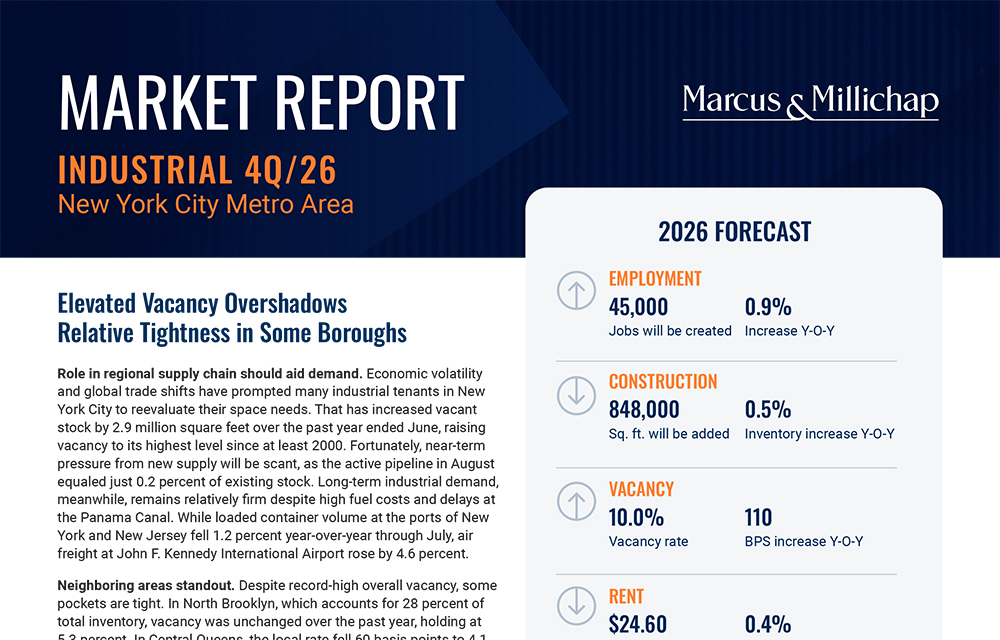
Marcus & Millichap releases fourth-quarter 2026 NYC industrial market report
Manhattan, NY Marcus & Millichap has published its fourth-quarter 2026 New York City Industrial Market Report. “New York City’s industrial market is showing a clear




Quick Hits

Columns and Thought Leadership

New York’s streets are full again, and the retail numbers prove it - by Noam Aziz
Walk down any New York block this year and you can feel it. The sidewalks are crowded, the storefronts are lit, and the energy that defines this city is back at full volume.

The art of investing in real estate - by Thomas Donovan
Real estate investing is as much an art as it is a skill. No one can time the market, or the factors that drive it, perfectly. Location, zoning, size, transportation, and neighborhood density give you a baseline for

Hunt CRE question and answer: Choosing a real estate agent - by David Hunt
First, we will only work with one agent exclusively. The primary reason is that we want that agent to legally represent our client’s interests. In New York State, a real estate agent has a fiduciary

Hunt commercial real estate question and answer: Fortune 500 wisdom - by David Hunt
Yes, there are lessons to be learned from the largest companies in America when comes to managing your real estate. But the decision to buy or lease real estate may not be one of
.gif)