



News:
Brokerage
Posted: August 24, 2015
Thru the Lens: Ariel Property Advisors' hosts The Borough Presidents Forum: An Inside Look At The Outer Boroughs
Over 250 property owners, managers and real estate professionals gathered at Club 101 on July 30 for Ariel Property Advisors' semi-annual Coffee & Cap Rates event. Entitled "The Borough Presidents Forum: An Inside Look At The Outer Boroughs," the event was headlined by a discussion led by Shimon Shkury, president of Ariel Property Advisors, with borough president Eric Adams of Brooklyn and borough president Ruben Diaz Jr. of the Bronx.
The program began with a presentation, given by Shkury, about trends and overall performance of the New York City investment sales market in the first half of 2015. After the overview by Shkury, eager audience members were afforded the opportunity to ask the borough presidents questions and exchange in an open dialogue about the current state and future of the Bronx and Brooklyn.
During the course of the 45 minute panel, the borough presidents inspired lively banter between themselves and with the audience. Borough president Diaz began by urging the audience to "think differently about the Bronx," and went on to say, "We are not the Bronx of the 70's, 80's or early 90's" and pointed out the borough has received 8 billion in private investments in the six year since Mr. Diaz became Borough President..
Borough President Adams was optimistic when speaking about the East New York rezoning and other opportunities in Brooklyn. Mr. Adams specifically mentioned Atlantic Avenue as a prime area to be rezoned, and stayed true to his coined catchphrase "build baby, build."
James O'Neal, executive director of the Legal Outreach, shared the goals and objectives of his nonprofit, which helps young people from underserved New York City communities gain admission to the country's most competitive colleges and universities. Four students involved with Legal Outreach also addressed the audience to discuss their experiences interning for Ariel Property Advisors as well as their plans for the future. All funds raised in conjunction with Ariel Property Advisors' Coffee & Cap Rates are matched by the company and donated to Legal Outreach.
More information about Coffee & Cap Rates can be found here: http://events.arielpa.com/?coffee-n-caps-jul2015
Tags:
Brokerage
MORE FROM Brokerage
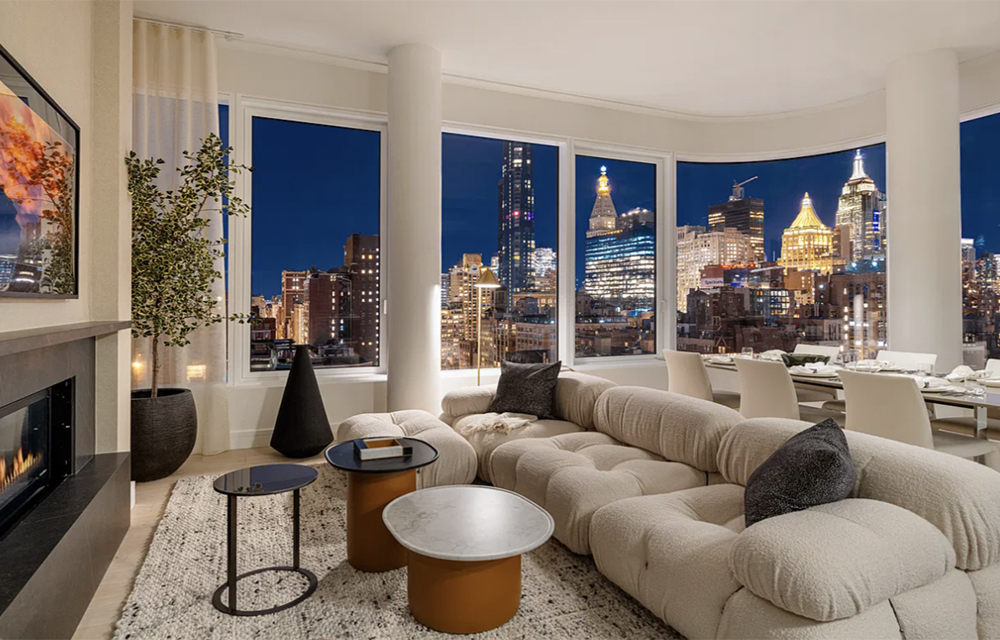
200E20TH sells out in Gramercy, penthouse A closes out sales at the CetraRuddy-designed condominium residences
Manhattan, NY 200E20TH, the CetraRuddy-designed architectural masterwork that brought a curved, contemporary sensibility to Gramercy’s Beaux-Arts streetscape, has



Quick Hits

Columns and Thought Leadership

Hunt commercial real estate question and answer: Fortune 500 wisdom - by David Hunt
Yes, there are lessons to be learned from the largest companies in America when comes to managing your real estate. But the decision to buy or lease real estate may not be one of

New York’s streets are full again, and the retail numbers prove it - by Noam Aziz
Walk down any New York block this year and you can feel it. The sidewalks are crowded, the storefronts are lit, and the energy that defines this city is back at full volume.

Hunt CRE question and answer: Choosing a real estate agent - by David Hunt
First, we will only work with one agent exclusively. The primary reason is that we want that agent to legally represent our client’s interests. In New York State, a real estate agent has a fiduciary

The art of investing in real estate - by Thomas Donovan
Real estate investing is as much an art as it is a skill. No one can time the market, or the factors that drive it, perfectly. Location, zoning, size, transportation, and neighborhood density give you a baseline for
.gif)