



News:
Brokerage
Posted: June 28, 2022
The Moinian Group completes 12,000 s/f build out at 572 11th Ave.
New York, NY The Moinian Group has completed a multi-million dollar, build-out for The Learning Experience, a national pre-school and early education center. The new TLE location, at The Oskar, the owner/developer’s luxury residential property with retail space at 572 11th Ave., includes 12,000 s/f of space.
With more than 300 locations nationally and 240 in development, TLE provides educational programs for children 6 months to five years old. TLE utilizes a proprietary curriculum which encourages children to learn by exploring and activity, with the goal of achieving success independently while developing intellectually, socially and cognitively through varied early educational materials, activities, and social interactions.
“The Learning Experience is a wonderful organization providing critical educational services to young children,” said Ted Koltis, executive vice president of Commercial Leasing for The Moinian Group. “We are gratified to welcome them into The Oskar and expanding the roster of world-class tenants throughout our portfolio.”
Designed by CetraRuddy, The Oskar is a pet-friendly, luxury rental property in Manhattan’s Hell’s Kitchen neighborhood. The lobby reflects more the sensibilities of an art gallery than a residential building, boasting an impressive collection of work by Phillip Michaels, and a sculpture garden and sky-lit reflective pond housing a glistening, mirror-polished sculpture by the renowned artist Arik Levy.
The building’s distinctiveness lies within its meticulous attention to detail and appreciation for fine materials such as top-quality leather, sueded stone, lustrous wood and antiqued bronze. Refined and attentive, the well-conceived array of amenities at Oskar includes a 24-hour concierge, a beautiful public ‘Living Room’, an elegant outdoor patio space, and state-of-the-art Lifetime Fitness center, where residents can enjoy a no-fee membership.
The Oskar also features a rooftop lounge with exquisitely breathtaking views of the city skyline and the Hudson River and a sculpted lawn designed by landscape architects from HMWhite.
The 164 studio, one- and two-bedroom residences aspire to an elevated sense of living, with modern, custom-colored pale taupe wood floors, distinctive shelving niches in the kitchen, and smart technology, including keyless smart locks and Nest thermostats.
Tags:
Brokerage
MORE FROM Brokerage
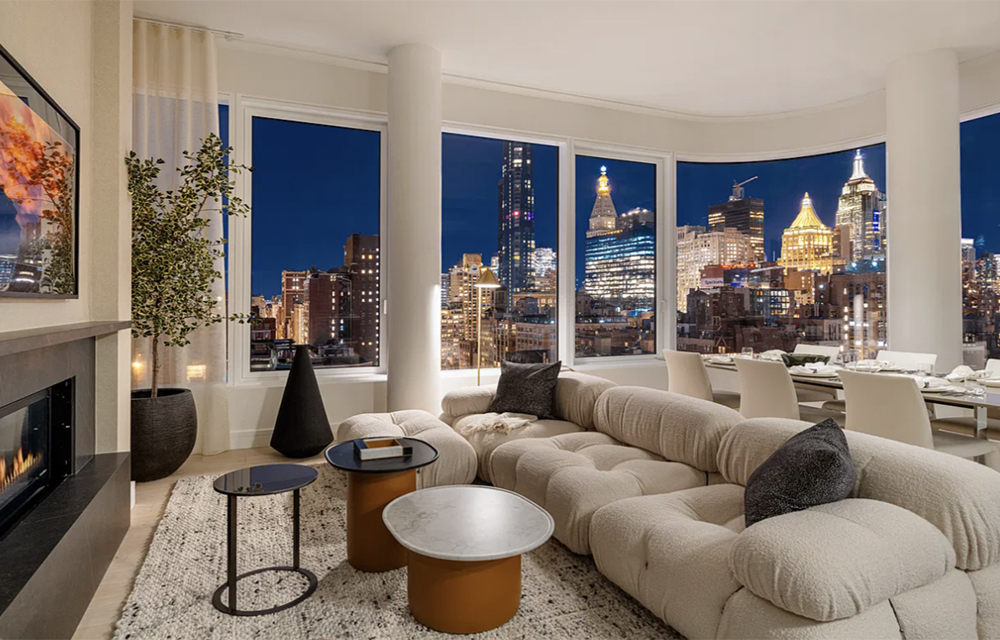
200E20TH sells out in Gramercy, penthouse A closes out sales at the CetraRuddy-designed condominium residences
Manhattan, NY 200E20TH, the CetraRuddy-designed architectural masterwork that brought a curved, contemporary sensibility to Gramercy’s Beaux-Arts streetscape, has





Quick Hits

Columns and Thought Leadership

New York’s streets are full again, and the retail numbers prove it - by Noam Aziz
Walk down any New York block this year and you can feel it. The sidewalks are crowded, the storefronts are lit, and the energy that defines this city is back at full volume.

Hunt CRE question and answer: Choosing a real estate agent - by David Hunt
First, we will only work with one agent exclusively. The primary reason is that we want that agent to legally represent our client’s interests. In New York State, a real estate agent has a fiduciary

Hunt commercial real estate question and answer: Fortune 500 wisdom - by David Hunt
Yes, there are lessons to be learned from the largest companies in America when comes to managing your real estate. But the decision to buy or lease real estate may not be one of

The art of investing in real estate - by Thomas Donovan
Real estate investing is as much an art as it is a skill. No one can time the market, or the factors that drive it, perfectly. Location, zoning, size, transportation, and neighborhood density give you a baseline for
.gif)