



News:
Brokerage
Posted: September 24, 2012
The Internal Revenue Service simplifies available relief for real estate professionals
For individuals with investments in real estate, qualification as a real estate professional can result in favorable tax consequences. While losses from real estate activities are passive per se, the losses of a real estate professional are considered ordinary losses available to offset other ordinary income.
In order to qualify as a real estate professional, a taxpayer must pass both tests of Internal Revenue Code Section 469(c)(7)(B). First, more than one half of the overall personal service hours performed by the taxpayer in the tax year must be performed in real estate trades or businesses in which the taxpayer materially participates. Second, the taxpayer must perform at least 750 hours in real estate trades or businesses in which that taxpayer materially participates. For purposes of the second test, the IRS looks at each real estate activity separately. A taxpayer would only qualify as a real estate professional for real estate activities in which they perform more than 750 hours during the tax year.
A solution for a taxpayer trying to qualify as a real estate professional lies in a special election available to taxpayers under Regulation Section 1.469-9(g). This regulation allows a taxpayer to aggregate all real estate activities into one activity. After aggregation, a taxpayer must perform 750 hours across the grouped activities. This election may be made in any year in which the taxpayer qualifies as a real estate professional and must be made on an originally filed tax return. If this election is not timely filed, a taxpayer must request a ruling for late relief under §301.9100-3 and pay a user fee.
Revenue Procedure 2011-34, issued in May 2011, simplifies the process of requesting late relief to file a §1.469-9(g) election and allows qualifying taxpayers to retroactively aggregate real estate activities. In order to qualify under Rev. Proc. 2011-34, a taxpayer must meet the following requirements:
* The taxpayer failed to make an election under §1.469-9(g) solely because the taxpayer failed to timely meet the requirements in §1.469-9(g);
* The taxpayer filed consistently with having made a timely election under §1.469-9(g) on any return that would have been affected if the taxpayer had timely made the election;
* The taxpayer has timely filed each return that would have been affected by a timely filed election; and
* The taxpayer has reasonable cause for its failure to timely meet the requirements of §1.469-9(g).
Taxpayers who meet these requirements may attach the statement required by §1.469-9(g) to an amended return for the most recent tax year. The statement must contain all of the information required under §1.469-9(g) and must explain the reason for the failure to file a timely election. Last, the statement should identify the taxable year for which it seeks to make the late election.
Since the election required by §1.469-9(g) is the difference for many taxpayers between qualifying and not qualifying as a real estate professional, the late election relief provided by Rev. Proc. 2011-34 is a welcome opportunity. Taxpayers requiring late relief for failure to timely file the §1.469-9(g) election should capitalize on the chance to make the election retroactively without the cost and burden of a ruling request.
Brian Lovett, CPA, JD, is a senior tax manager at WithumSmith + Brown, PC, New York, N.Y.
Tags:
Brokerage
MORE FROM Brokerage
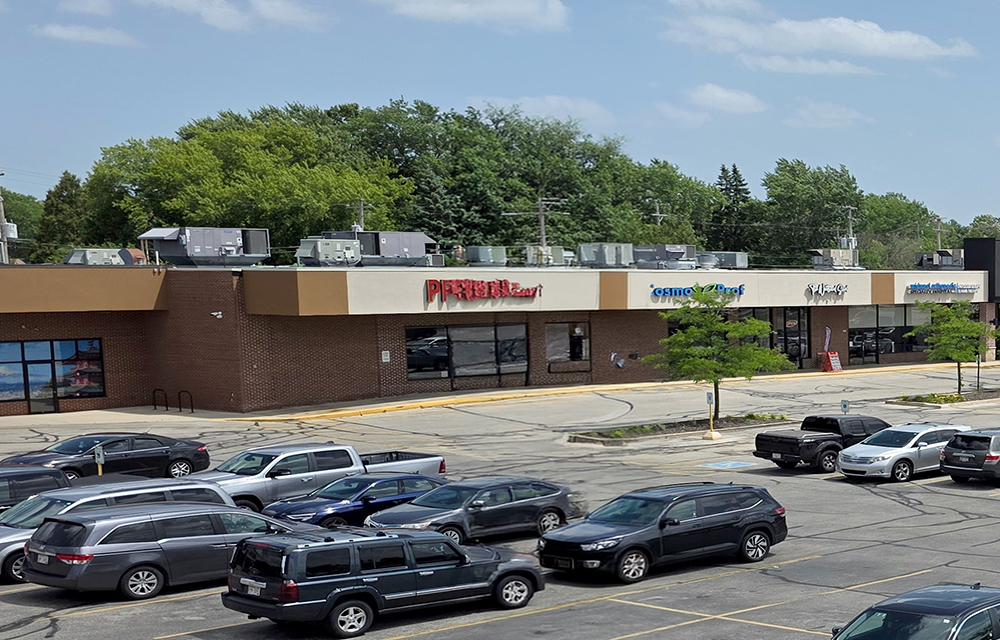
United Properties Corp. expands Wisconsin and Illinois retail presence adding 200,000 s/f
West Allis, WI United Properties Corp. completed two retail acquisitions totaling $27.4 million across Illinois and Wisconsin, adding 205,000 s/f of shopping center space to its portfolio






Columns and Thought Leadership

Positive forecast for New York’s pro-housing push? - by Philip Butler
New York’s housing crisis remains a hot button topic despite growing consensus that varied and affordable housing is desperately needed statewide. Governor Hochul has recently introduced several initiatives to overcome N.Y.’s anti-housing

A guide to finding the right NYC property management company - by Sanjay Gandhi
Being a small to midsize landlord in NYC is an increasingly demanding endeavor. From navigating complex regulations, increased compliance demands to dealing with tenant issues and remediating violations. It is wise to enlist the assistance of a partner, a professional

New York’s streets are full again, and the retail numbers prove it - by Noam Aziz
Walk down any New York block this year and you can feel it. The sidewalks are crowded, the storefronts are lit, and the energy that defines this city is back at full volume.

Hunt commercial real estate question and answer: Fortune 500 wisdom - by David Hunt
Yes, there are lessons to be learned from the largest companies in America when comes to managing your real estate. But the decision to buy or lease real estate may not be one of
.gif)