



News:
Brokerage
Posted: October 29, 2012
The fall push is on to achieve 2012 goals
It has been eight months since the MBA Commercial Real Estate Conference convened in Atlanta. With the fourth quarter rapidly approaching, many commercial real estate lending institutions are focused on goal achievement for the year. This may be difficult to achieve as several macro-economic and political uncertainties are at work.
We began 2012 with the ten year U.S. Treasury hovering around 2%. As forecasts for the year were being put together, optimism was abundant. Economists were eyeing a rebound in the economy, as jobs were being added, and the unemployment rate dropped from a 10% high in late 2009 to 8.3% in January 2012. With the reality of a 2% Ten Year U.S. Treasury, lending institutions were anxious to put money to work. Fannie Mae and Freddie Mac were looking to exceed the $44 billion they placed in 2011. Commercial Mortgage Backed Security (CMBS) lenders and life companies were also looking to pad their production from 2011 levels. As time played out, the recovery many had hoped for began to stall. The U.S. economy became affected by the Euro and Greek debt crises and this resulted in a lack of business confidence worldwide. Political uncertainties may have also played a role in the slow-down experienced by many lenders this summer. With the presidential elections coming up in November, financial institutions could be waiting for the results before putting more money out. The ten year U.S. Treasury dropped like a rock reaching a low of 1.4% back in July 2012. This 30% drop in the treasury caused many balance sheet lenders to bump their spreads higher, install rate floors, and tighten underwriting standards. The result was a reduction in the amount of placements and closings this summer.
Last week, one of our major national life insurance company correspondents reported that they closed $1.6 billion through May of 2012 and only closed $400 million through August 2012. Now as year-end approaches, this major life insurance company is becoming more aggressive and has loosened their underwriting standards. Today they are allowing for transactions with some lease roll-over risk and financing properties in secondary markets.
Whatever the reasons may have been for this summer's slow-down, many institutions are now putting on a "fall push" for closings. Several life insurance companies playing in the $5 million and over range are dropping their loan floors below 4% and are now specifically targeting the Fannie Mae and Freddie Mac agency markets for multi-family loans below 60-70% loan-to-value. Equity is very important to the life companies and you can expect they will hold firm on the 30% minimum equity requirement.
In addition, several CMBS lenders are pushing loan-to-values by adding their own balance sheet monies as mezzanine debt. This will help CMBS lenders to achieve 70% to 80% loan-to-values on many product types including hotels. The "A/B" loan structure is often times collateralized with an inter-creditor agreement. This allows the CMBS lenders to sell off the "A" piece in a securitization while holding on to "B" piece on their books. "A" piece amortizations will be in the 30-year range with "B" piece amortization coming in around 10 years.
On the multifamily side, loan to values are getting a boost from preferred equity sources. Several private preferred equity sources have approval to fund with both Freddie Mac and Fannie Mae's DUS loan programs. Preferred equity multifamily players will typically fund up to 90% of loan-to-value with yields in the 10-12% range. Often times, pay rates may be structured around 9% to insure sufficient cash flow coverage (typically around 1.10x).
Whatever the reason for this summer's slow down, it now appears many lenders are looking to make up for lost time with a fall push. Looser underwriting requirements, dropping of rate floors, structuring A/B loans as mezz debt and preferred equity are all in play to help lenders achieve their goals. This is good news for our developer and investor clients.
Sam Berns is the managing director at NorthMarq Capital's Upstate New York Regional Office, Rochester, N.Y.
Tags:
Brokerage
MORE FROM Brokerage
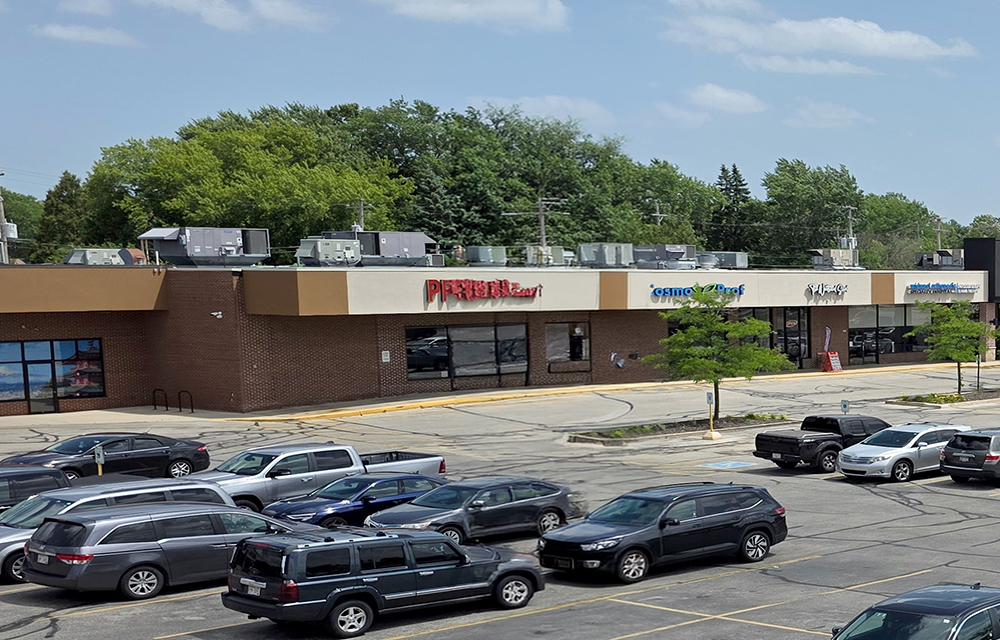
United Properties Corp. expands Wisconsin and Illinois retail presence adding 200,000 s/f
West Allis, WI United Properties Corp. completed two retail acquisitions totaling $27.4 million across Illinois and Wisconsin, adding 205,000 s/f of shopping center space to its portfolio






Quick Hits

Columns and Thought Leadership

Positive forecast for New York’s pro-housing push? - by Philip Butler
New York’s housing crisis remains a hot button topic despite growing consensus that varied and affordable housing is desperately needed statewide. Governor Hochul has recently introduced several initiatives to overcome N.Y.’s anti-housing

A guide to finding the right NYC property management company - by Sanjay Gandhi
Being a small to midsize landlord in NYC is an increasingly demanding endeavor. From navigating complex regulations, increased compliance demands to dealing with tenant issues and remediating violations. It is wise to enlist the assistance of a partner, a professional

New York’s streets are full again, and the retail numbers prove it - by Noam Aziz
Walk down any New York block this year and you can feel it. The sidewalks are crowded, the storefronts are lit, and the energy that defines this city is back at full volume.

Hunt commercial real estate question and answer: Fortune 500 wisdom - by David Hunt
Yes, there are lessons to be learned from the largest companies in America when comes to managing your real estate. But the decision to buy or lease real estate may not be one of
.gif)