



News:
Brokerage
Posted: January 31, 2023
Technology is the key driver of tenant experience - by Jeremy Bernard

When the office industry started to think about the occupier experience, it focused on occupied spaces. The layout became incredibly important, as did amenities. Investment was poured into ensuring that buildings had the best dining facilities, gyms, yoga, meditation studios, and ambient sound or living walls. While I’m not suggesting that having a great physical experience (both aesthetically and to aid productivity and collaboration) isn’t necessary, we’re now learning that the occupier experience must go much deeper.
At essensys, we recently conducted research, which showed that only one in five office workers indicated that amenities bring them back to the office: this pales in comparison to the pull of technology and flexibility. While amenities have a part to play when vast numbers of the workforce (86%) are frustrated with their current office experiences and vacancy rates are struggling, more notice should be paid to what occupiers want—great office experiences.
This doesn’t refer to surface-level experiences or physical experiences. They are after seamless engagement with their physical space, removed from frustrations. Technology is the key to delivering that, and occupiers know it – so much that workers are envious of the technologies available in other buildings.
The takeaway is clear, technology is the key driver of tenant experience. We see all too regularly the industry turning towards amenity-rich buildings as the solution to address vacancy issues. According to Cushman & Wakefield’s Q3 2022 U.S. Office Marketbeat report, there was negative 18.5 MSF of net absorption across the U.S., the ninth negative quarter out of the past 10, dating back to Q2 2020. However, this approach must change as landlords combat a recession, navigate changing working habits post-pandemic, and deal with more demanding and vocal occupiers. The industry has been operating under a somewhat false assumption that physical amenities alone will move the dial. However, technology undoubtedly contributes the most to the in-building experience.
Technology applied correctly, not tech for tech’s sake, should be invisible to the occupier. Connecting the physical to the digital should enhance the spaces they interact with. This supports the delivery of amenity space, can bring older buildings back to life, and remove everyday pain points such as seamless roaming, access to areas or services, or consistent and reliable Wi-Fi. These are things that we know occupiers are demanding to enhance their workplace experience.
As we see a flight to quality, why has more not been done to satisfy occupiers who clearly demand digitally enabled spaces that underpin flexible and agile work environments? Why, as an industry, does there seem to be less hesitance in investing billions of dollars into re-outfitting buildings with plush new interiors when the playing field can be leveled by utilizing in-building technology at a fraction of the cost?
To curate a meaningful occupier experience and to entice people back to the office, all elements, such as security, amenities, and sustainability, should be addressed. They all undeniably impact the future of the office and how people work. However, it is the technology that underpins enabling the delivery of all these elements.
I firmly believe that overlooking investment into technology in favor of expensive physical amenities will be detrimental not only to the long-term future of the office but also to the short-term ability of commercial real estate to remain competitive.
Jeremy Bernard is the North America CEO of essensys, Manhattan, N.Y.
Tags:
Brokerage
MORE FROM Brokerage
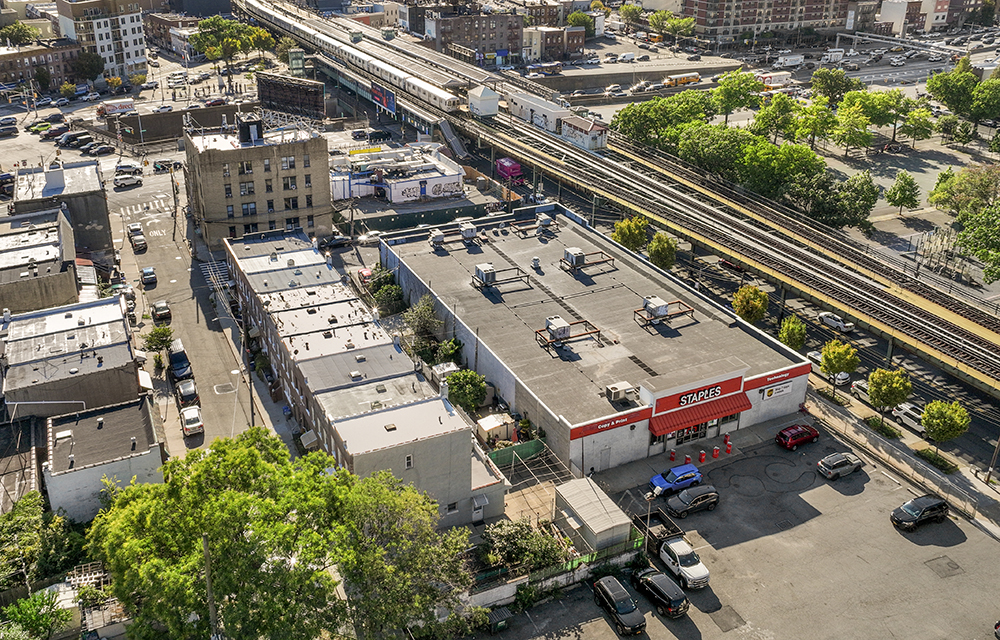
Investment Property Realty Group represents The Vaja Group in $26.4 million acquisition of fully entitled Astoria development site
Queens, NY Investment Property Realty Group (IPRG) arranged The Vaja Group’s $26.39 million acquisition of 24-41 31st St., a fully entitled development site in Astoria. The 29,638 s/f site traded for $176 per buildable s/f.




 (2).gif)

Columns and Thought Leadership

Positive forecast for New York’s pro-housing push? - by Philip Butler
New York’s housing crisis remains a hot button topic despite growing consensus that varied and affordable housing is desperately needed statewide. Governor Hochul has recently introduced several initiatives to overcome N.Y.’s anti-housing

New York’s streets are full again, and the retail numbers prove it - by Noam Aziz
Walk down any New York block this year and you can feel it. The sidewalks are crowded, the storefronts are lit, and the energy that defines this city is back at full volume.

Hunt commercial real estate question and answer: Fortune 500 wisdom - by David Hunt
Yes, there are lessons to be learned from the largest companies in America when comes to managing your real estate. But the decision to buy or lease real estate may not be one of

A guide to finding the right NYC property management company - by Sanjay Gandhi
Being a small to midsize landlord in NYC is an increasingly demanding endeavor. From navigating complex regulations, increased compliance demands to dealing with tenant issues and remediating violations. It is wise to enlist the assistance of a partner, a professional
.gif)
September Promotion
