



News:
Brokerage
Posted: November 24, 2014
Singer of Singer & Bassuk arranges $50 million refinancing for the William Kaufman Organization
William Kaufman Org. has closed on a $50 million permanent first mortgage loan for its landmarked Meatpacking District office building at 320 West 13th St., which was recently renamed 2 Gansevoort St.
The loan, which was provided by M&T Bank, will fund tenant and ongoing capital improvements at this historic property, which is enjoying a remarkable renaissance fueled by the changing character and growing popularity of the Meatpacking District as well as its location just two blocks east of the High Line.
Built in 1912 as a warehouse and trade school, the building, situated at the intersection of West 13th, Horatio and Gansevoort St. in the Greenwich Village Historic District, was acquired by the William Kaufman Org. in 1948 as a notable addition to its Manhattan portfolio of class A office buildings, which include 777 Third Ave., 767 Third Ave., 437 Madison Ave., 747 Third Ave. and 77 Water St. In recent years, asking rents at the property have escalated from the mid-$30s to over $110 a s/f.
"We are transforming and repositioning this property, not only in name but through significant capital improvements, so that it can take its rightful place as one of the signature buildings in this resurgent neighborhood," said Jonathan Kaufman Iger, vice president of Sage Realty Corp., the leasing and management division of the William Kaufman Org.
Andrew Singer, chairman of The Singer & Bassuk Org. LLC arranged the refinancing on behalf of the William Kaufman Org.
The ongoing transformation of 2 Gansevoort includes renovations and upgrades to the building's lobby and main entrance, a complete window replacement, elevators, and access management system.
The William Kaufman Org., a multigenerational real estate company founded by its namesake in 1924 and now led by Robert Kaufman and Jonathan Kaufman Iger, has developed and repositioned 6 million s/f of real estate in the city. The current portfolio consists of six class A commercial office buildings, totaling over 3 million rentable s/f, along with additional real estate assets.
Tags:
Brokerage
MORE FROM Brokerage
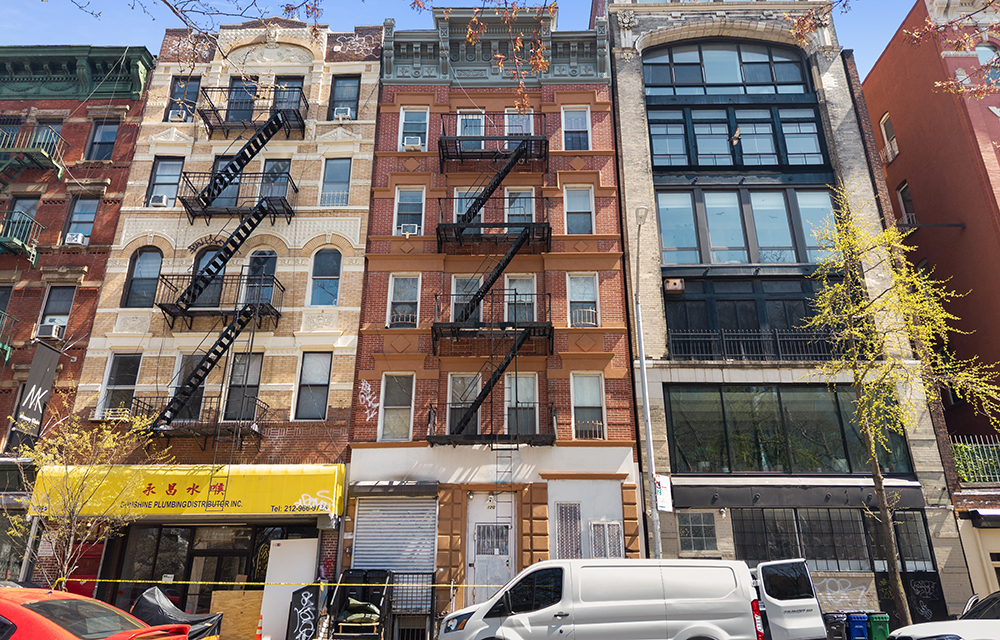
Investment Property Realty Group sells 120 Forsyth St. for $1.35 million
Manhattan, NY Investment Property Realty Group (IPRG) closed the sale of 120 Forsyth St., a mixed-use building located in the Lower East Side section of the city, for $1.35 million.




Quick Hits
 (2).gif)

Columns and Thought Leadership

New York’s streets are full again, and the retail numbers prove it - by Noam Aziz
Walk down any New York block this year and you can feel it. The sidewalks are crowded, the storefronts are lit, and the energy that defines this city is back at full volume.

Hunt commercial real estate question and answer: Fortune 500 wisdom - by David Hunt
Yes, there are lessons to be learned from the largest companies in America when comes to managing your real estate. But the decision to buy or lease real estate may not be one of

Positive forecast for New York’s pro-housing push? - by Philip Butler
New York’s housing crisis remains a hot button topic despite growing consensus that varied and affordable housing is desperately needed statewide. Governor Hochul has recently introduced several initiatives to overcome N.Y.’s anti-housing

A guide to finding the right NYC property management company - by Sanjay Gandhi
Being a small to midsize landlord in NYC is an increasingly demanding endeavor. From navigating complex regulations, increased compliance demands to dealing with tenant issues and remediating violations. It is wise to enlist the assistance of a partner, a professional
.gif)