



News:
Brokerage
Posted: September 23, 2013
Sidel and Sheehan of EagleBridge Capital arrange $11.08 million financing
EagleBridge Capital has arranged construction/permanent mortgage financing in the amount of $11.08 million for 103 Woodland St. which is leased to St. Francis Hospital Medical Center. The mortgage financing was arranged by EagleBridge principals Ted Sidel and Brian Sheehan with a regional financial institution on behalf of its client, The Keystone Companies, Simsbury, Conn.
The five-story, 57,753 s/f building is located on a 3.91 acre site across Woodland St. from the main campus of St. Francis Hospital Medical Center. The building formerly housed VNA Healthcare. 103 Woodland St. is NNN leased to the hospital on a long term basis. It will house administrative, IT, and finance offices.
The building is undergoing significant modernization and rehab which will include buildout of new office space as well as upgrading of the roof, core, electrical system, and elevators.
Saint Francis Hospital Medical Center is a 617 bed major teaching hospital and one of the largest hospitals in the state. It is a regional referral center with major clinical concentrations in cardiology, oncology, orthopedics, women's services, and rehabilitation. In 2011, the hospital opened the ten-story, 318,000 s/f John T. O'Connell Tower featuring 135 private patient rooms,19 new operating rooms, a new emergency room with 70 treatment areas and 13 sheltered ambulance bays, and a rooftop heliport.
EagleBridge Capital is a Boston-based mortgage banking firm specializing in arranging debt and equity financing as well as joint ventures for mixed use properties, shopping centers, apartments, office, industrial, R & D, and medical buildings, hotels and condominiums as well as special purpose buildings.
Tags:
Brokerage
MORE FROM Brokerage
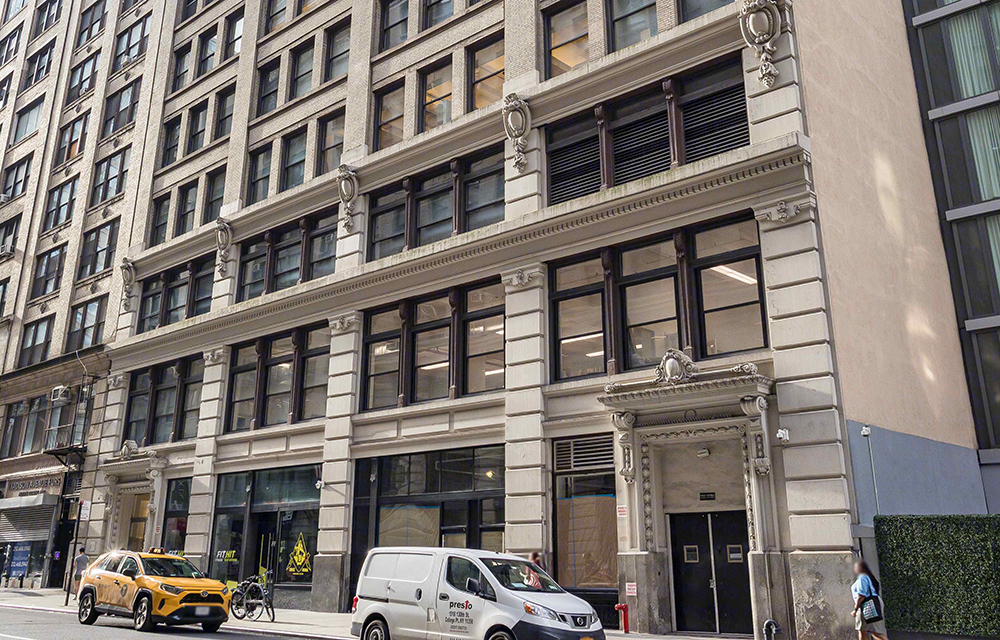
Koeppel Rosen inks 16-year 33,783 s/f lease for coworking firm Nomadworks at 122 West 27th St.
Manhattan, NY According to Koeppel Rosen LLC, leasing and management agent for the Rosen family portfolio, Nomadworks has signed a new 16-year, two-month lease totaling 33,783 s/f at 122 West




 (2).gif)

Columns and Thought Leadership

The art of investing in real estate - by Thomas Donovan
Real estate investing is as much an art as it is a skill. No one can time the market, or the factors that drive it, perfectly. Location, zoning, size, transportation, and neighborhood density give you a baseline for

New York’s streets are full again, and the retail numbers prove it - by Noam Aziz
Walk down any New York block this year and you can feel it. The sidewalks are crowded, the storefronts are lit, and the energy that defines this city is back at full volume.

Hunt CRE question and answer: Choosing a real estate agent - by David Hunt
First, we will only work with one agent exclusively. The primary reason is that we want that agent to legally represent our client’s interests. In New York State, a real estate agent has a fiduciary

Hunt commercial real estate question and answer: Fortune 500 wisdom - by David Hunt
Yes, there are lessons to be learned from the largest companies in America when comes to managing your real estate. But the decision to buy or lease real estate may not be one of
.gif)