



News:
Brokerage
Posted: May 23, 2011
Scott Benson - State of flex/industrial market in Westchester and Rockland Counties
Over these past few years, the lower Hudson Valley (Westchester, Rockland, and Putnam) "flex" and industrial markets have declined rapidly. This is partially due to the outsourcing or relocation by local firms to more competitive countries, states and counties. The average taxes for "flex" and industrial buildings in the lower Hudson Valley region are between 25% to 50% of the effectuated rental rates being achieved. It is not unusual in Rockland County to find a freestanding vacant former 20,000 to 60,000 s/f manufacturing/warehouse buildings charging $6.25 per s/f triple net, with taxes over $3 per s/f. One of the harder hit areas in the Rockland industrial and "flex" market is that of Orangeburg. Over 20 years ago, both manufacturing, distribution, and "flex" tenant's came by droves, attracted by initial "tax packages," and other incentives that provided for taxes to be phased in over a considerable period of time. That time has passed, electrical costs have also "sky rocketed," and there is building after building available for lease, sub-lease or sale.
A similar case can be found in Westchester County in Mt. Vernon and Yonkers. Once a vibrant hub for manufacturing, distribution, and "flex" tenants, now riddled with considerable inventory due to high taxes, and antiquated product. Presently the taxes on the low side average between $2 to $2.40 per s/f. Conversely, the neighboring counties of Orange, Bergen, N.J., and Fairfield, Conn. have made considerable strides in keeping their taxes on commercial and industrial properties below $1.75 per s/f, as well as offering various other incentives packages to promote new business's to come to their county.
One of the reasons why many of the Westchester and Rockland's flex and industrial tenancies have fallen prey to our neighboring counties is due to the financial incentive packages that these counties are offering. Presently, there are no initiatives in place to keep these companies from moving. If local owners were given the economic impetuous and incentive(s) to improve their properties to make them more competitive, as well as an immediate reduction in their taxes, so they can attract and secure new company's to backfill their vacate building(s), then the vacancy rate would drop significantly.
What these county government(s), and municipalities have not realized to date is that when they raise the taxes, and other costs of doing business for flex and industrial tenants, who employee higher paid skilled laborers, executives, middle managers, sales staff, and clerical personnel, and these companies are forced to move, the economic ripple effect is enormous. One of the tax initiatives that I have advocated to numerous politicians and municipalities over many years have been to develop a "tiered methodology" for assessing various types of commercial real estate. Essentially, this would establish a tax floor and ceiling for specific classifications of commercial real estate in a given municipality.
Scott Benson is the president of of Benson Commercial Realty, Inc., Tarrytown, N.Y.
Tags:
Brokerage
MORE FROM Brokerage
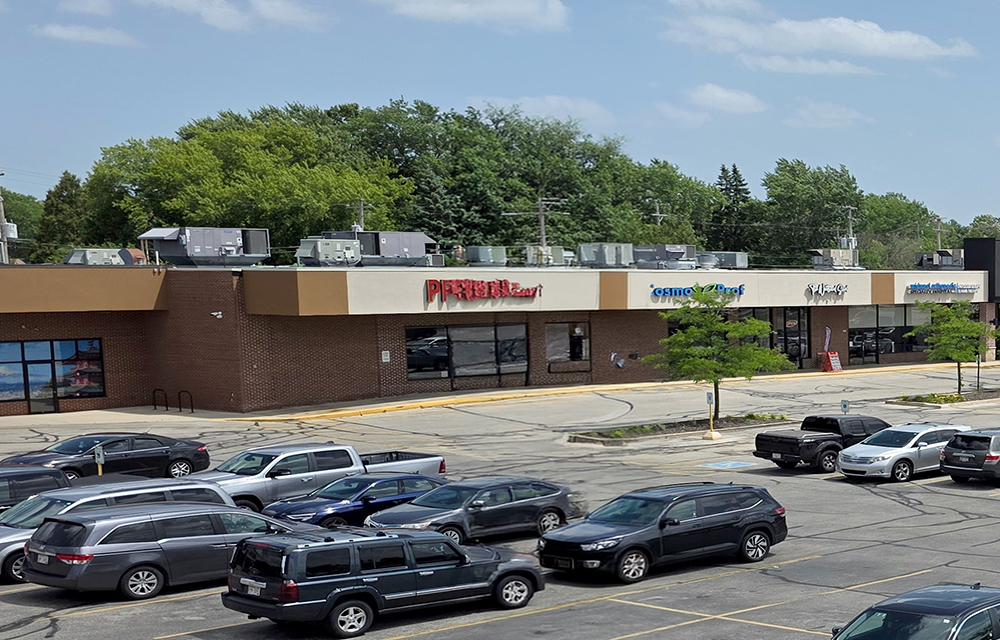
United Properties Corp. expands Wisconsin and Illinois retail presence adding 200,000 s/f
West Allis, WI United Properties Corp. completed two retail acquisitions totaling $27.4 million across Illinois and Wisconsin, adding 205,000 s/f of shopping center space to its portfolio






Columns and Thought Leadership

Hunt commercial real estate question and answer: Fortune 500 wisdom - by David Hunt
Yes, there are lessons to be learned from the largest companies in America when comes to managing your real estate. But the decision to buy or lease real estate may not be one of

A guide to finding the right NYC property management company - by Sanjay Gandhi
Being a small to midsize landlord in NYC is an increasingly demanding endeavor. From navigating complex regulations, increased compliance demands to dealing with tenant issues and remediating violations. It is wise to enlist the assistance of a partner, a professional

Positive forecast for New York’s pro-housing push? - by Philip Butler
New York’s housing crisis remains a hot button topic despite growing consensus that varied and affordable housing is desperately needed statewide. Governor Hochul has recently introduced several initiatives to overcome N.Y.’s anti-housing

New York’s streets are full again, and the retail numbers prove it - by Noam Aziz
Walk down any New York block this year and you can feel it. The sidewalks are crowded, the storefronts are lit, and the energy that defines this city is back at full volume.
.gif)