



News:
Brokerage
Posted: October 28, 2013
Schechtman, Zimmerman, and Nigido of Eastern Consolidated secure $16.4 million sale
As capital from Korea and China continues to flow into the safe havens of the city's commercial real estate market, a private Korean-American investor, through his exclusive representative in the United States, Tony Park of PD Properties, has found a true "gem" just a block away from the city's rapidly-evolving Diamond District.
4 East 46th Street is a 6-story, 16,000 s/f office/retail building with 30,000 s/f of unused air rights for $16.4 million, equating to more than $1,000 per s/f. The seller was DJM Post Production - a longtime owner who occupied the building for 47 years.
Eastern Consolidated executive managing director David Schechtman Esq. with associate director Steven Zimmerman and senior financial analyst Paul Nigido, exclusively represented the seller, DJM, and procured the buyer with assistance from Tony Park and Elad Dror of PD Properties.
According to Schechtman, the deal occurred in an "extremely quick timeframe" and represents a growing trend in Manhattan's investor market - the uptick in single-occupier purchasers. The buyer plans to utilize the property for personal use.
"With the European debt crisis still looming in the background, Manhattan remains to be a safe place to park capital, and because of that, we are seeing some very unique foreign buyers, especially money coming in from Korea," Schechtman said. "Buildings right off Fifth Avenue in Midtown don't come on the market often, and when they do, they sell quickly - and that's what we saw here. We worked with a very assertive buyer who saw the inherent redevelopment potential in this asset and wasted no time getting the deal done."
Located just 130 feet off Fifth Avenue on East 46th Street, the building lies within Midtown's Special District and could be impacted by the pending Midtown East rezoning in the future. The property's retail component on the ground, mezzanine and basement levels has been newly leased to Vitae Restaurant for 10 years, and it has rapidly become a popular Midtown business lunch hub as well as an after-work cocktail/dinner hot spot. The upper floors (2-6) will be delivered vacant, and the property can support up to 45,000 s/f of redevelopment.
Attorneys on the transaction William Weisner, Esq. of Tarter Krinsky for the seller, and Samuel Ahne Esq. of Ahne Law, P.C., for the buyer.
Tags:
Brokerage
MORE FROM Brokerage
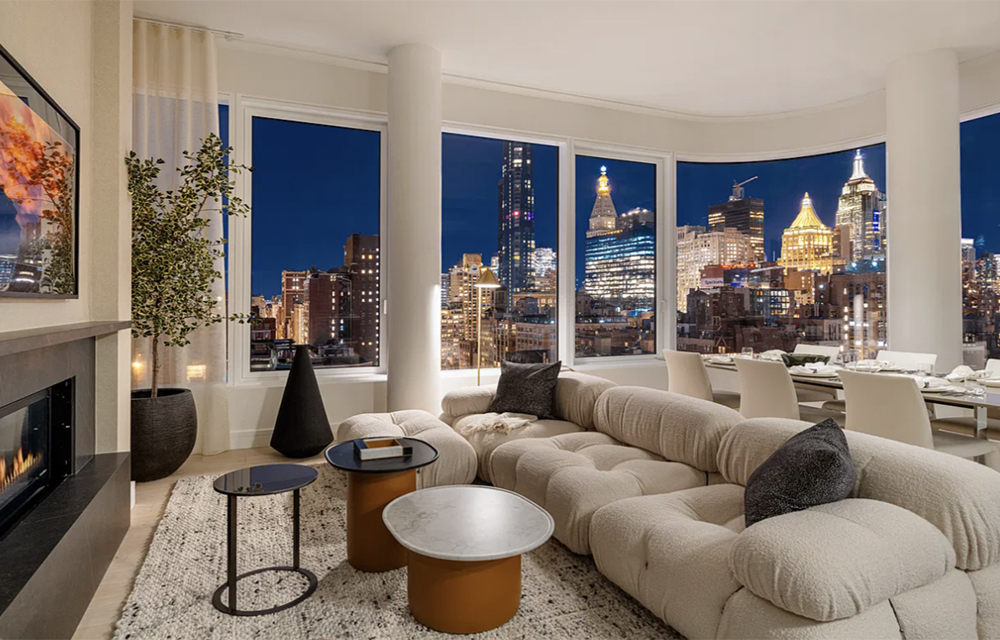
200E20TH sells out in Gramercy, penthouse A closes out sales at the CetraRuddy-designed condominium residences
Manhattan, NY 200E20TH, the CetraRuddy-designed architectural masterwork that brought a curved, contemporary sensibility to Gramercy’s Beaux-Arts streetscape, has



Quick Hits

Columns and Thought Leadership

Hunt commercial real estate question and answer: Fortune 500 wisdom - by David Hunt
Yes, there are lessons to be learned from the largest companies in America when comes to managing your real estate. But the decision to buy or lease real estate may not be one of

The art of investing in real estate - by Thomas Donovan
Real estate investing is as much an art as it is a skill. No one can time the market, or the factors that drive it, perfectly. Location, zoning, size, transportation, and neighborhood density give you a baseline for

New York’s streets are full again, and the retail numbers prove it - by Noam Aziz
Walk down any New York block this year and you can feel it. The sidewalks are crowded, the storefronts are lit, and the energy that defines this city is back at full volume.

Hunt CRE question and answer: Choosing a real estate agent - by David Hunt
First, we will only work with one agent exclusively. The primary reason is that we want that agent to legally represent our client’s interests. In New York State, a real estate agent has a fiduciary
.gif)