



News:
Brokerage
Posted: June 5, 2009
REBNY Retail Report Spring 2009: New retailer opportunity
The Real Estate Board of New York (REBNY) Retail Report Spring 2009 released last month shows declines in asking rents, but some opportunities for new retailers.
Manhattan average asking rents for all available space declined 11% from the fall 2008 to $115. Each of the borough's six geographic areas showed a decline in the average asking rent for all available space, ranging from 6% in Midtown to 22% on the west side compared to six months earlier. Double digit declines in the average asking rent for all available space were reported on the east side (12%), Midtown South (14%), downtown and upper Manhattan (13%).
These declines were expected given the economy. However, we must keep in mind that for a time N.Y.C. was insulated from the economic stress that was emerging in the other parts of the country.
These declines in the average asking rent for all space are from market highs in the fall 2008. The average rents for Manhattan and the borough's six areas are comparable to asking rents from a year ago.
Since September 2008, the turmoil in the financial markets has reverberated through the real estate industry and the retail market. Despite this uncertainty, our advisory group who provides insight about the activity in the market that is not captured completely by the numbers reports that leasing activity is occurring throughout Manhattan. More interestingly, new retail tenants are looking at store space in N.Y. for the first time.
The average asking rent for ground floor space in many of the major retail corridors highlighted in the report likewise showed declines compared to fall 2008. Madison Ave. declined 14%, Broadway on the Upper West Side declined 5% and Fifth Ave. in the 50's fell 3% from fall 2008.
In a few corridors, such as Fifth Ave. in the Flatiron District and Broadway in SoHo, the average asking rent for ground floor space showed a modest gain. Our advisory group noted that in this economy owners are uncertain about what is an appropriate asking rent. They do not modify the asking rent which could have been set as much as a year ago. Instead, they would offer a longer free rent period and a more generous build out allowance.
A few years ago, in our meeting to review the report, our advisory group began to express concern about the steep rise in asking rents. They believed that asking rent increases in the major retail corridors in Manhattan were outpacing overall economic growth and questioned the sustainability of these asking rent increases. They see the recent decline in asking rents as an anticipated market correction in a market that was experiencing unsustainable rent growth.
An emerging issue identified by our advisory group is the rise in sublet space. In earlier reports, this sublet space was indistinguishable from space marketed by the landlord and was included in our reports. Going forward, our advisory group will be examining the asking rents for sublet space listings. Those listings that reflect market conditions in a particular location will be included. In situations where there are sublet listings with shorter lease terms, we will attempt to determine if these subleases are likely to be converted to long-term leases with the participation of the building owner.
Going forward the growing presence of sublet space will impact the market, perhaps lengthening the time needed for landlords with direct lease space to secure a tenant. Tenants who secure even a short term lease will bring activity and vibrancy to a street that only an occupied storefront can. We are hopeful that the slowdown in unemployment and the modest uptick in spending in the first quarter of this year will resume following the unanticipated decline in April.
Steven Spinola is the president of the Real Estate Board of New York, N.Y.
Tags:
Brokerage
MORE FROM Brokerage
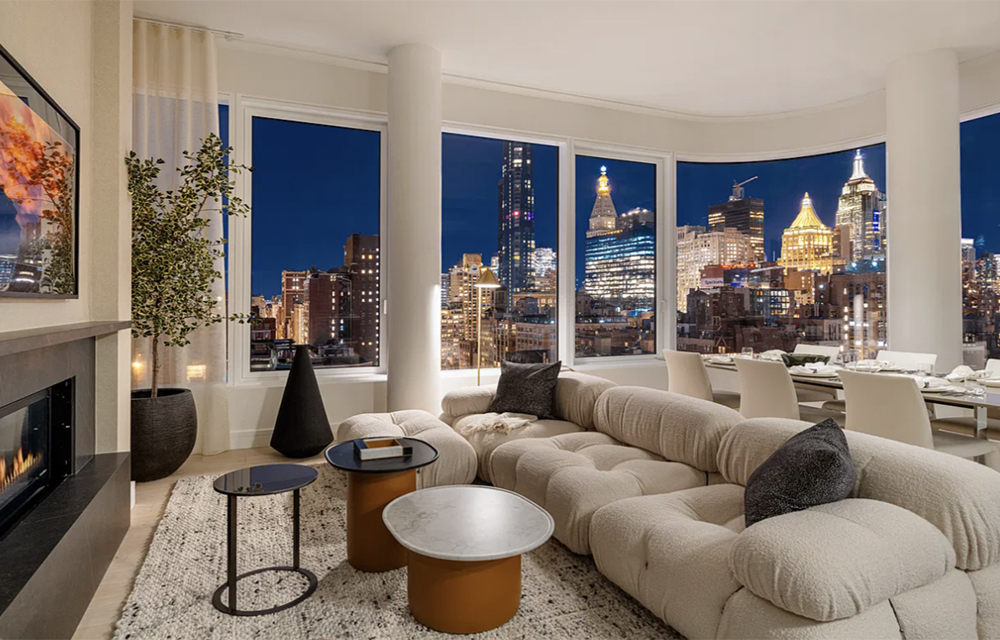
200E20TH sells out in Gramercy, penthouse A closes out sales at the CetraRuddy-designed condominium residences
Manhattan, NY 200E20TH, the CetraRuddy-designed architectural masterwork that brought a curved, contemporary sensibility to Gramercy’s Beaux-Arts streetscape, has



Quick Hits
 (2).gif)

Columns and Thought Leadership

Hunt CRE question and answer: Choosing a real estate agent - by David Hunt
First, we will only work with one agent exclusively. The primary reason is that we want that agent to legally represent our client’s interests. In New York State, a real estate agent has a fiduciary

The art of investing in real estate - by Thomas Donovan
Real estate investing is as much an art as it is a skill. No one can time the market, or the factors that drive it, perfectly. Location, zoning, size, transportation, and neighborhood density give you a baseline for

New York’s streets are full again, and the retail numbers prove it - by Noam Aziz
Walk down any New York block this year and you can feel it. The sidewalks are crowded, the storefronts are lit, and the energy that defines this city is back at full volume.

Hunt commercial real estate question and answer: Fortune 500 wisdom - by David Hunt
Yes, there are lessons to be learned from the largest companies in America when comes to managing your real estate. But the decision to buy or lease real estate may not be one of
.gif)