



News:
Construction Design & Engineering
Posted: November 11, 2025
Protecting design professionals from difficult clients: Contract strategies to avoid regret - by William Gati

Architects, engineers, and design professionals begin each project with optimism, creativity, and good faith. Yet, too often, those ideals collide with clients who turn adversarial — breaching contracts, fabricating claims, or issuing threatening letters as leverage. These encounters can be exhausting, expensive, and emotionally draining. How can we protect ourselves before trouble begins?
The key lies in using strong, protective, and enforceable contract language — crafted not just for deliverables and deadlines, but for behavior, expectations, and fair resolution.
1. Define Scope and Limit Liability Early
Vague scopes of work are the root of many disputes. Clients may claim “extra” services were implied while professionals insist otherwise.
Use language like:
• “Services beyond the described scope shall be considered additional services and billed at the hourly rates listed in exhibit B.”
• “Architect shall not be responsible for verifying the accuracy of existing site conditions or third-party data.”
• “Client acknowledges that design is an iterative process subject to professional judgment, code review, and municipal interpretation.”
Clear scope language prevents surprise disputes and aligns expectations from day one.
2. Create a Real Dispute Resolution Path
When emotions rise, some clients skip discussion and send legal threats. Defuse that with structure:
• “In the event of any dispute, the parties shall first engage in good-faith mediation administered by the American Arbitration Association (AAA) before initiating any arbitration or legal proceedings.”
• “Each party shall bear its own legal fees unless otherwise determined by arbitration.”
• “Venue for any claim shall be [your county], New York.”
This language inserts process before panic — and cost before confrontation.
3. Define Termination and Ownership Clearly
Protect your time and your work:
• “Either party may terminate this agreement upon seven days’ written notice; however, the client shall compensate the architect for all services performed and expenses incurred up to the effective date of termination.”
• “Drawings and instruments of service remain the property of the architect and may not be used, in whole or in part, until full payment is received.”
A fair exit strategy preserves your rights and your fee.
4. Add a “Stop Work” Clause
Nonpayment happens. Keep leverage:
• “If payment is not received within 30 days of invoice, architect may suspend performance until payment is received, and the schedule shall be equitably adjusted.”
Never keep working without pay — this clause makes that standard practice.
5. Require Client Cooperation
Delays often come from indecisive or unresponsive clients. Protect your schedule:
• “Client shall provide timely information, decisions, and approvals necessary for the architect to perform services. Delays in client response may result in schedule extensions and additional compensation.”
This puts accountability where it belongs — on both sides.
6. Address Defamation and False Allegations
Professionals deserve protection from baseless attacks:
• “Both parties agree to refrain from making any defamatory or disparaging statements, written or oral, regarding the other party or its employees.”
• “Client acknowledges that unsubstantiated complaints to professional boards or third parties constitute breach of good faith under this agreement.”
This helps preserve your reputation — your most valuable professional asset.
7. Limit Consequential Damages
Avoid financial exposure that exceeds your fee:
• “In no event shall the architect be liable for consequential, indirect, or special damages, including loss of profit or revenue.”
• “Architect’s total liability shall not exceed the total compensation received under this agreement.”
Reasonable limits promote fairness and prevent financial ruin.
8. Insist on Written Communication
Verbal instructions lead to chaos. Keep everything documented:
• “No oral modifications shall be binding. All changes to scope, schedule, or compensation must be documented in writing and signed by both parties.”
Written clarity eliminates the “he said, she said” trap that too often ends in dispute.
Conclusion: Build Contracts as Shields, Not Weapons
In an ideal world, every client relationship would be built on mutual trust and respect. In reality, some clients misuse that trust. Strong contracts act as shields, not swords — they create clarity, fairness, and accountability.
A good client may never test your contract. But a difficult one will — and when that happens, a well-written agreement can protect your livelihood, reputation, and peace of mind.
Architects, engineers, and design professionals should remember: our creativity builds skylines, but our contracts protect our foundations.
William Gati, AIA, RIBA, NCARB is an adjunct associate professor at NYIT and the founder of Architecture Studio, Queens, N.Y.
MORE FROM Construction Design & Engineering
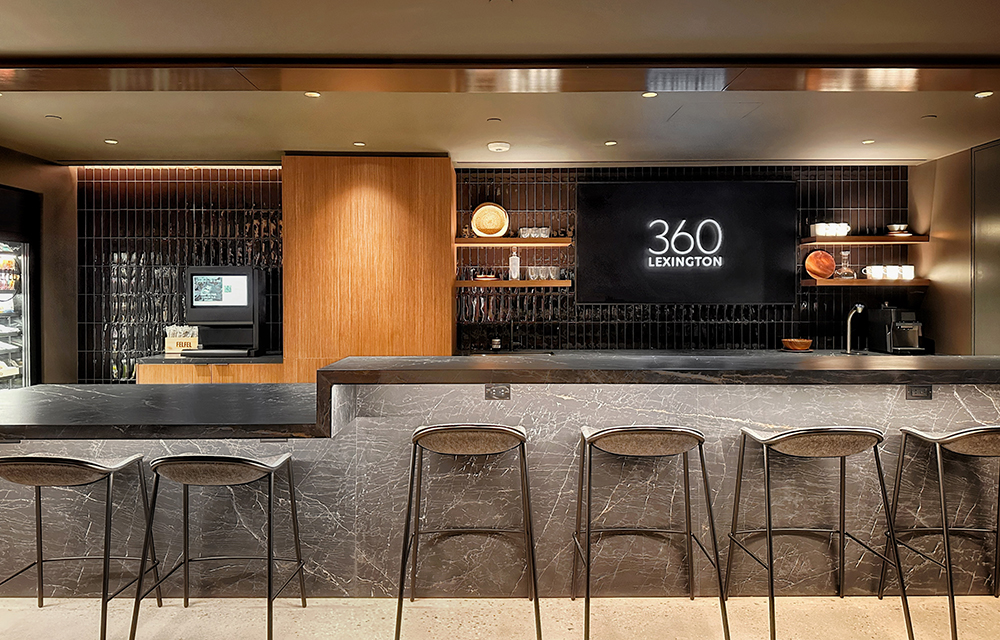
AmTrustRE and MdeAS Architects complete modernization of 360 Lexington Ave. in Midtown
Manhattan, NY AmTrustRE has completed a comprehensive modernization at 360 Lexington Ave. Led by New York-based architecture firm MdeAS Architects, the project reimagines the 268,000 s/f office building as a modern, hospitality-driven workplace designed to meet the evolving needs of tenants.


Quick Hits


Columns and Thought Leadership
Premium experiences, proven returns: The New revenue playbook for sports venues - by Terry McIntyre
Investing in the Fan Experience as a Revenue Strategy The sports and entertainment venues that bet on premium experiences years ago are now seeing those investments pay off in packed seats, increased revenue, and industry recognition.

We support green construction. Just not this kind - by Tammy Smith
Most people think of St. Patrick’s Day as a fun footnote on the calendar. In construction logistics, however, it’s a full-scale operational variable — especially if your work touches major metro areas with major parades and, let’s call it what it is, enthusiastic celebrants.

The Façade is no longer just a finish. It’s a risk strategy. - by Bentley Zhao
Twelve-billion-dollar weather disasters have already hit the U.S. through the first half of 2026, causing at least $31.9 billion in damage, according to Climate Central, the nonprofit that now maintains the disaster database NOAA discontinued.
