



News:
Brokerage
Posted: September 18, 2018
Outside the Region: Sterling Org. acquires 98,701 s/f Union Plaza
Phoenix, AZ The Sterling Organization has acquired Union Plaza, a grocery-anchored shopping center located at the intersection of W. Union Hills Dr. and N. 19th Ave. The property was purchased in an off-market transaction from a private investor on behalf of Sterling’s institutional grocery-anchored shopping center core fund, Sterling United Properties I, LP (SUP I), for $15.2 million or $154 per s/f.
The 98,701 s/f shopping center was built in 1977 and is anchored by a 56,594 s/f Fry’s Food & Drug. The property is currently 99% occupied. Other tenants at the property include junior anchor Ace Hardware, Great Clips, Little Caesar’s Pizza, H&R Block and Cricket Wireless.
“Sterling was attracted to this investment opportunity for our SUP I fund due to its strong real estate fundamentals and location at a highly trafficked intersection in a densely populated submarket with approximately 140,000 people in a 3-mile radius,” said Ed Senenman, senior managing director of investments and portfolio management for Sterling Org. “Fry’s Food & Drug, a division of Kroger, is the leading grocer in the Phoenix MSA and the Union Plaza store’s sales volume and health ratio are both particularly strong.”
“Union Plaza checks all the criteria boxes for our SUP I fund,” added Brian Kosoy, managing principal, president and CEO of Sterling Org. “We expect Union Plaza will generate the solid and consistent cash flow returns we target on behalf of our SUP I investor partners. Our team continues to curate an exceptional portfolio of assets for our SUP I fund with very attractive risk-adjusted return investment characteristics.”
The property is Sterling’s second property in the city after having acquired Palm Valley Marketplace in Goodyear in June of 2017. Sterling, which opened an office in Los Angeles less than three years ago, now owns nine properties in the western U.S. From coast to coast, the firm and its principals own 10 million s/f of retail and other commercial real estate approaching $2 billion in value.
Tags:
Brokerage
MORE FROM Brokerage
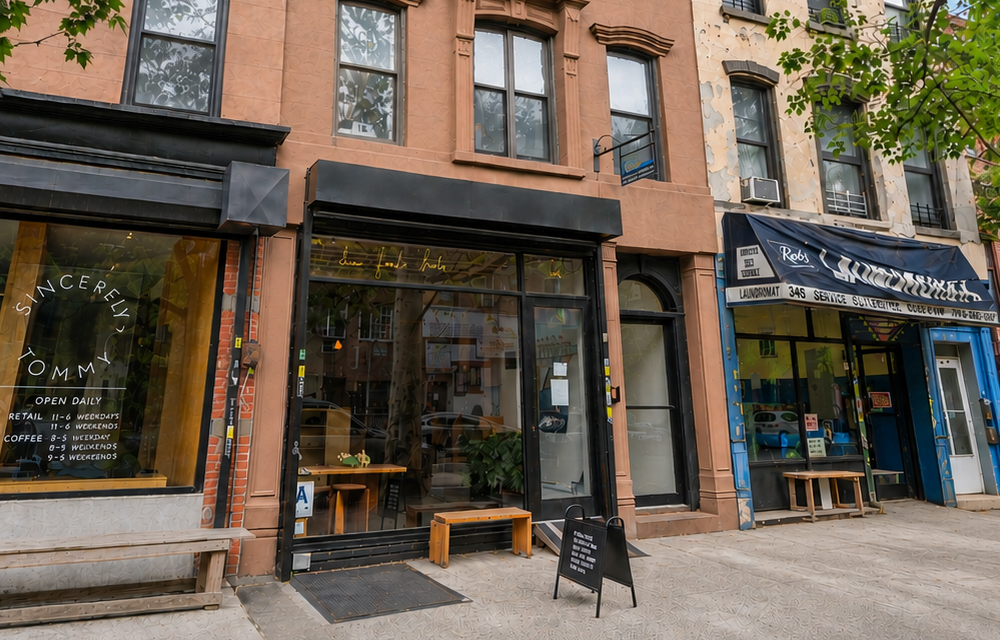
Bestreich, Reynolds, Davila, and Flaherty of Investment Property Realty Group close $1.97 million sale of 343A Tompkins Ave. in Bed-Stuy
Brooklyn, NY Investment Property Realty Group (IPRG) closed the sale of 343A Tompkins Ave., a mixed-use building located in the Bed-Stuy section of the borough, for $1.97 million.



Columns and Thought Leadership

Hunt commercial real estate question and answer: Fortune 500 wisdom - by David Hunt
Yes, there are lessons to be learned from the largest companies in America when comes to managing your real estate. But the decision to buy or lease real estate may not be one of

Hunt CRE question and answer: Choosing a real estate agent - by David Hunt
First, we will only work with one agent exclusively. The primary reason is that we want that agent to legally represent our client’s interests. In New York State, a real estate agent has a fiduciary

New York’s streets are full again, and the retail numbers prove it - by Noam Aziz
Walk down any New York block this year and you can feel it. The sidewalks are crowded, the storefronts are lit, and the energy that defines this city is back at full volume.

A guide to finding the right NYC property management company - by Sanjay Gandhi
Being a small to midsize landlord in NYC is an increasingly demanding endeavor. From navigating complex regulations, increased compliance demands to dealing with tenant issues and remediating violations. It is wise to enlist the assistance of a partner, a professional
.gif)