



News:
Brokerage
Posted: August 15, 2017
Outside the Region: Simone Development enters New Jersey market with Prospect Plaza acquisition
Hackensack, NJ Simone Development Companies has made its first in-road into Northern New Jersey with the acquisition of Prospect Plaza at 385 Prospect Ave., a three-story, 62,000 s/f medical office building close to Hackensack University Medical Center.
Simone Development acquired the property in a bank auction. Sale price was not disclosed. Joseph Simone, president of Simone Development, and Joseph Deglomini, Jr., a principal with the firm, arranged the acquisition.
The firm plans an extensive renovation of the property, including new lobbies, common areas, façade work and energy management upgrades to bring the asset up to the quality standards the company is known for throughout the its portfolio of medical office properties.
The property is 52 percent occupied by a diverse group of medical tenants including the New Jersey Imaging Network, offering an attractive value-add opportunity to an experienced owner/operator such as Simone Healthcare Development to re-position the building and increase NOI substantially via lease-up of immediately available space in a transforming Live/Work/Play community with an expanding healthcare presence and population.
James MacDonald, vice president of leasing for Simone Metro Properties, is handling the leasing of nearly 30,000 s/f of available space at the property.
Located less than a mile north of Hackensack University Medical Center and less than a half mile from the Anderson Street NJ Transit station, the property offers excellent accessibility to Interstate 80, Route 17, Route 4, the Garden State Parkway and Interstate 95/NJ Turnpike.
The property, situated on 1.6 acres and built in 1983, features parking for over 200 vehicles.
“The property at Prospect Plaza presented a unique opportunity to acquire a medical office building in a competition constrained market where existing medical office properties are more than 96 percent occupied,” said MacDonald. “The building is complimented by surrounding medical offices, senior-living communities and other healthcare specialists, and Hackensack has experienced a surge in multi-family development over the past five years, increasing the need for healthcare services in the area.”
Tags:
Brokerage
MORE FROM Brokerage
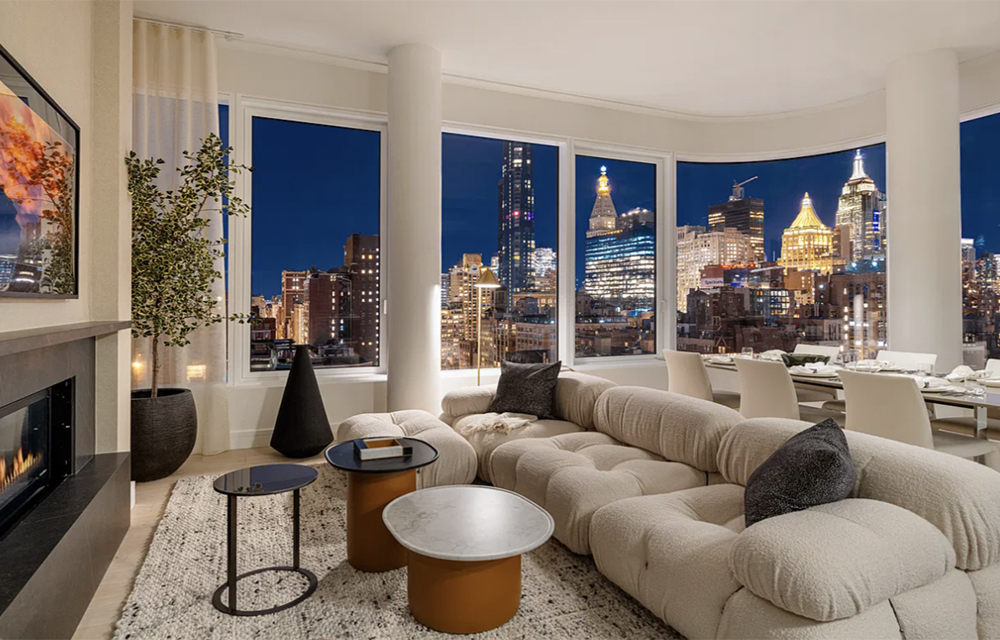
200E20TH sells out in Gramercy, penthouse A closes out sales at the CetraRuddy-designed condominium residences
Manhattan, NY 200E20TH, the CetraRuddy-designed architectural masterwork that brought a curved, contemporary sensibility to Gramercy’s Beaux-Arts streetscape, has




Quick Hits
 (2).gif)

Columns and Thought Leadership

The art of investing in real estate - by Thomas Donovan
Real estate investing is as much an art as it is a skill. No one can time the market, or the factors that drive it, perfectly. Location, zoning, size, transportation, and neighborhood density give you a baseline for

Hunt CRE question and answer: Choosing a real estate agent - by David Hunt
First, we will only work with one agent exclusively. The primary reason is that we want that agent to legally represent our client’s interests. In New York State, a real estate agent has a fiduciary

New York’s streets are full again, and the retail numbers prove it - by Noam Aziz
Walk down any New York block this year and you can feel it. The sidewalks are crowded, the storefronts are lit, and the energy that defines this city is back at full volume.

Hunt commercial real estate question and answer: Fortune 500 wisdom - by David Hunt
Yes, there are lessons to be learned from the largest companies in America when comes to managing your real estate. But the decision to buy or lease real estate may not be one of
.gif)