



News:
Brokerage
Posted: July 17, 2018
Outside the Region: Hunt Mortgage finances multifamily acquisition
Winston-Salem, NC Hunt Mortgage Group provided a $15.9 million Fannie Mae conventional mortgage to finance the acquisition of an affordable multifamily property. The Fields Parkside is a 433-unit, garden style apartment complex located at 5010 Split Rail Cir.
The borrower is Interurban Emerald Bay, LLP, backed by key principal William Doogan. The property was acquired from Elite Street Capital.
The property was built in two phases in 1984 and 1990. The property is located five miles from downtown and is comprised of 23 three-story apartment buildings.
The Fields Parkside is 100% affordable to 80% of the median income and 19.4% affordable to the 60% level.
“The Fields Parkside has been well maintained by the previous owner, and was performing well but the seller did not have any other properties in Winston-Salem so they decided to put this one on the market,” said Bryan Cullen, managing director at Hunt Mortgage Group.
“We executed a rate lock under the newly enhanced Streamlined Early Rate Lock (SERL) Program before receiving any third party reports or much of the required documentation,” said Cullen. “We also locked with Green pricing which was conditional upon receipt of a report, and the agreement to complete, utility conservation upgrades that would lower the utility expenses by 25%.”
The upgrades in this case are solely focused on water conservation but often will include LED lighting installation.
Over the past five years the property received $1.5 million in renovations including new siding, paint, double-paned windows and a remodeled clubhouse. In addition, 180 units have been renovated upon tenant turnover and the new owner plans to continue renovations as units are re-tenanted.
Property amenities include two community pools, a tennis court, and combination leasing office/clubhouse. The property also offers 689 open parking spaces.
Doogan has been investing in multifamily for over 30 years and owns seven properties in North Carolina. Doogan said, “I have worked with Hunt (and legacy companies) for over 19 years. This was my first early rate lock on an acquisition under the DUS Program and my first Green deal and everything went incredibly smooth.”
The Fields Parkside is located in the Stonewall/Salemtown submarket north of downtown, three miles north of Wake-Forest University, in a primarily single family residential neighborhood.
Tags:
Brokerage
MORE FROM Brokerage
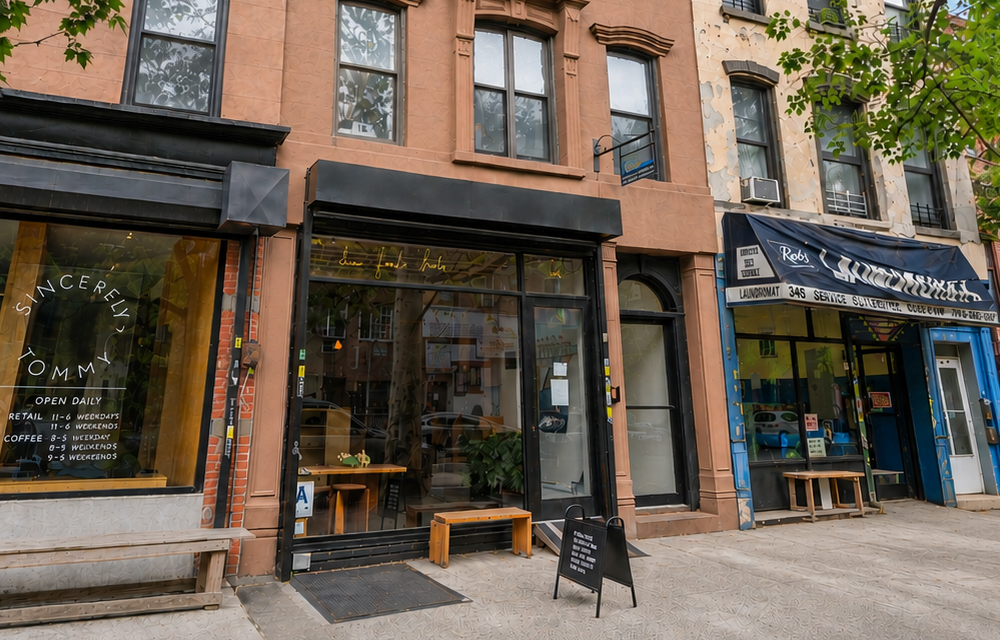
Bestreich, Reynolds, Davila, and Flaherty of Investment Property Realty Group close $1.97 million sale of 343A Tompkins Ave. in Bed-Stuy
Brooklyn, NY Investment Property Realty Group (IPRG) closed the sale of 343A Tompkins Ave., a mixed-use building located in the Bed-Stuy section of the borough, for $1.97 million.


Quick Hits

Columns and Thought Leadership

Hunt CRE question and answer: Choosing a real estate agent - by David Hunt
First, we will only work with one agent exclusively. The primary reason is that we want that agent to legally represent our client’s interests. In New York State, a real estate agent has a fiduciary

A guide to finding the right NYC property management company - by Sanjay Gandhi
Being a small to midsize landlord in NYC is an increasingly demanding endeavor. From navigating complex regulations, increased compliance demands to dealing with tenant issues and remediating violations. It is wise to enlist the assistance of a partner, a professional

Hunt commercial real estate question and answer: Fortune 500 wisdom - by David Hunt
Yes, there are lessons to be learned from the largest companies in America when comes to managing your real estate. But the decision to buy or lease real estate may not be one of

New York’s streets are full again, and the retail numbers prove it - by Noam Aziz
Walk down any New York block this year and you can feel it. The sidewalks are crowded, the storefronts are lit, and the energy that defines this city is back at full volume.
.gif)