



News:
Brokerage
Posted: July 18, 2017
Outside the Region: Arbor Realty Trust funds $27.354m construction loan for 216-unit project
Clearfield, UT Arbor Realty Trust, Inc. has funded a $27.354 million FHA 221(d) (4) loan for the new construction of Clearfield Station, a class A, 216-unit multifamily building. Clearfield Station will be a 216-unit class A multifamily property as part of a larger 72-acre master-planned development that will include office and residential spaces, an industrial park, a school and a park, as well as parking to support the existing rail station. The mixed-use project is adjacent to the Clearfield FrontRunner commuter rail station owned by the Utah Transit Authority (UTA).
The 24-month non-recourse construction loan converts to a 40-year self-amortizing permanent loan and was originated by Garth Davis, senior vice president, western regional director, based in Arbor’s San Francisco office.
“This transaction is a reflection of Arbor’s growing FHA new construction platform and represents HUD’s mission of creating strong, sustainable communities through promoting transit oriented developments,” Davis said. “Our strong relationship with HUD’s San Francisco regional office led to a seamless and expedited transaction. The fact that we were able to close this transaction within 30 days of a HUD’s firm commitment is a true testament to Arbor’s deep level of expertise within the HUD financing arena.”
As an approved FHA Multifamily Accelerated Processing (MAP) lender, Arbor’s FHA group provides all FHA-insured multifamily and healthcare facility loan programs on an expedited basis. Arbor also offers a unique “Bridge to HUD/FHA Exit” program. Effectively solving the timing issue associated with closing FHA loans, this program provides a bridge loan to facilitate quick acquisition financing. Borrowers who are looking to complete repairs and/or reposition a property can also use a bridge loan to facilitate optimal terms for an FHA refinancing.
Tags:
Brokerage
MORE FROM Brokerage
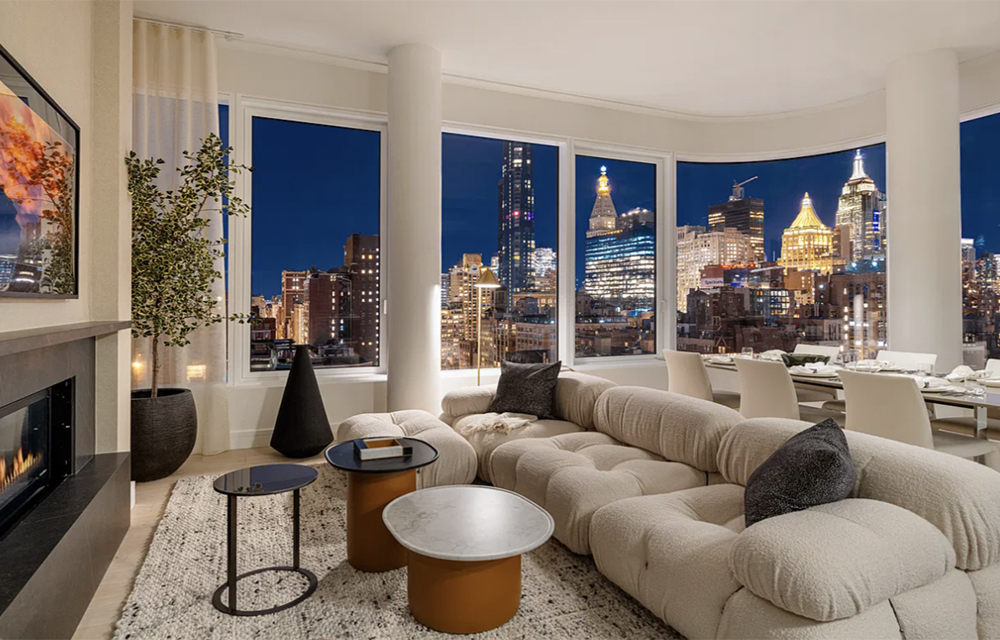
200E20TH sells out in Gramercy, penthouse A closes out sales at the CetraRuddy-designed condominium residences
Manhattan, NY 200E20TH, the CetraRuddy-designed architectural masterwork that brought a curved, contemporary sensibility to Gramercy’s Beaux-Arts streetscape, has






Columns and Thought Leadership

The art of investing in real estate - by Thomas Donovan
Real estate investing is as much an art as it is a skill. No one can time the market, or the factors that drive it, perfectly. Location, zoning, size, transportation, and neighborhood density give you a baseline for

Hunt CRE question and answer: Choosing a real estate agent - by David Hunt
First, we will only work with one agent exclusively. The primary reason is that we want that agent to legally represent our client’s interests. In New York State, a real estate agent has a fiduciary

New York’s streets are full again, and the retail numbers prove it - by Noam Aziz
Walk down any New York block this year and you can feel it. The sidewalks are crowded, the storefronts are lit, and the energy that defines this city is back at full volume.

Hunt commercial real estate question and answer: Fortune 500 wisdom - by David Hunt
Yes, there are lessons to be learned from the largest companies in America when comes to managing your real estate. But the decision to buy or lease real estate may not be one of
.gif)