



News:
Brokerage
Posted: November 2, 2021
Ogden CAP Properties completes 54,000 s/f lease at 1900 Broadway to Viam
New York, NY According to Ogden CAP Properties (Ogden CAP), a real estate owner and manager, Viam, a robotics software startup, signed a 10-year, 54,000 s/f lease encompassing the entire sixth floor at 1900 Broadway, located steps away from Lincoln Center.
“This lease showcases the strength in the product we are offering at 1900 Broadway – a boutique office building, with large floor plates, spacious bright and airy spaces in an ideal neighborhood,” said Lester Schwalb of Ogden CAP. “Viam clearly understood that this unique building was the perfect place to build their long-term offices and HQ.”
Serving as Viam’s headquarters, the light filled space will feature multiple conference and meeting rooms, a café, a wellness room, and views of Lincoln Center.
“We’re very excited to have signed our new office lease with Ogden CAP at 1900 Broadway,” said Eliot Horowitz, CEO founder of Viam. “This building offers the ideal workplace for our company in a culturally-stimulating neighborhood. We were immediately drawn to 1900 Broadway’s offerings and knew it was the right fit for our headquarters.”
Frank Doyle and Mitchell Konsker, vice chairmen; Barbara Winter, managing director; and Carlee Palmer, associate, of JLL represented Ogden CAP in the transaction. Viam was represented by Ephraim Setton and Troy Gordon with R New York.
At the intersection of commerce and culture, 1900 Broadway is an eight-story, 321,000 s/f luxury office building overlooking Lincoln Center, moments from Central Park, Deutsche Bank Center, and the Columbus Circle transit/retail hub. The building features a new lobby, 24/7 security and modernized elevators, and most importantly, spacious, flexible floorplates for a range of tenant layouts, with large windows and an abundance of natural light on all sides.
The seventh floor, also 54,000 s/f, is currently the only remaining availability in the building, and offers an exciting opportunity for a tenant to create a new, totally curated space.
1900 Broadway is near the 1 train at Lincoln Center and the A, C, B, and D trains at Columbus Circle, as well as a variety of bus routes. It is home to some of New York City’s best restaurants, including The Smith, Café Fiorello, Bar Boulud, Boulud Sud and Epicerie Boulud.
Tags:
Brokerage
MORE FROM Brokerage
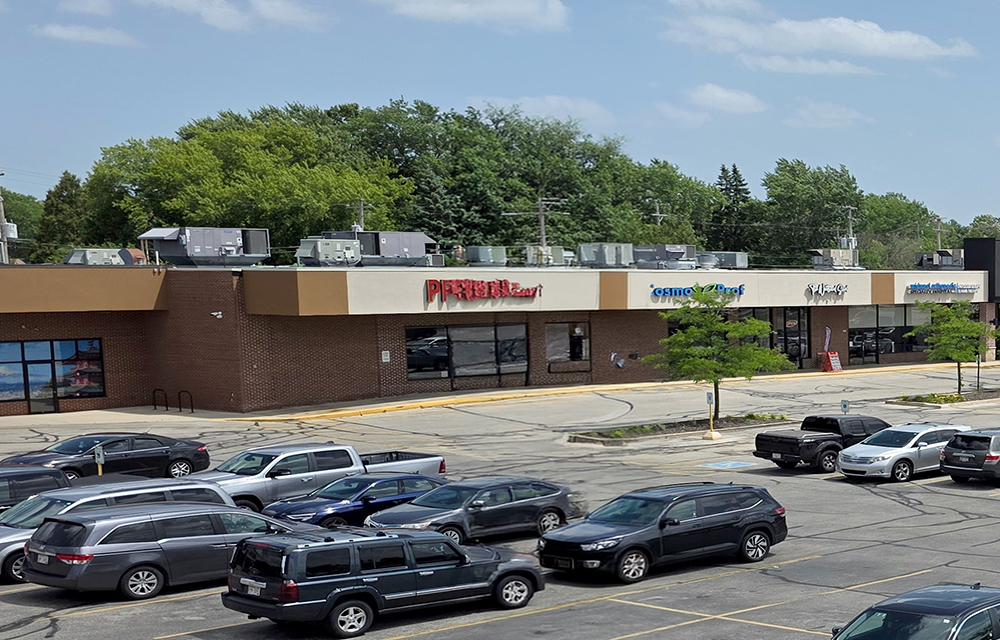
United Properties Corp. expands Wisconsin and Illinois retail presence adding 200,000 s/f
West Allis, WI United Properties Corp. completed two retail acquisitions totaling $27.4 million across Illinois and Wisconsin, adding 205,000 s/f of shopping center space to its portfolio


 (2).gif)

Columns and Thought Leadership

Positive forecast for New York’s pro-housing push? - by Philip Butler
New York’s housing crisis remains a hot button topic despite growing consensus that varied and affordable housing is desperately needed statewide. Governor Hochul has recently introduced several initiatives to overcome N.Y.’s anti-housing

New York’s streets are full again, and the retail numbers prove it - by Noam Aziz
Walk down any New York block this year and you can feel it. The sidewalks are crowded, the storefronts are lit, and the energy that defines this city is back at full volume.

Hunt commercial real estate question and answer: Fortune 500 wisdom - by David Hunt
Yes, there are lessons to be learned from the largest companies in America when comes to managing your real estate. But the decision to buy or lease real estate may not be one of

A guide to finding the right NYC property management company - by Sanjay Gandhi
Being a small to midsize landlord in NYC is an increasingly demanding endeavor. From navigating complex regulations, increased compliance demands to dealing with tenant issues and remediating violations. It is wise to enlist the assistance of a partner, a professional
.gif)