



News:
Brokerage
Posted: November 22, 2010
NYSERDA-supported research project receives $1.3 million from U.S. Department of Energy (DOE)
A team of research institutions that includes Cornell University and the University of Buffalo received a $1.3 million funding award from the U.S. Department of Energy (DOE) to study the potential of storing power plant gas emissions in underground rock formations, according to an announcement made by secretary of energy Steven Chu.
This initiative, which will also receive $250,000 of NYSERDA funding, will focus on storage options in eastern shale. It was among 15 projects that will receive Department of Energy funding to develop technologies that will safely and economically store carbon dioxide in geologic formations. The projects will support the goals of helping reduce U.S. greenhouse gas emissions by developing and deploying near-zero-emission coal technologies.
The NYSERDA funding includes $100,000 for Cornell University, $100,000 for the University at Buffalo, and $50,000 to Advanced Resources International, Inc. for project management.
"The projects announced are part of this administration's commitment to leading the world in carbon capture and storage technology," said Chu. "These projects will reduce greenhouse gas emissions, develop clean energy innovation and help produce jobs for Americans across the Nation."
"I congratulate Cornell University, the University of Buffalo and Advanced Resources International, Inc. This award will help further important research to find safe, secure and economic alternatives for storing carbon dioxide emissions," said NYSERDA president and CEO Francis Murray, "This award is a tribute to the world-class clean energy research being done at universities all across New York State."
Efforts are underway to demonstrate safety and permanence of geologic sequestration through initiatives such as the Regional Carbon Sequestration Partnerships. NYSERDA is a member of the Midwest Regional Carbon Sequestration Partnership.
This and 14 other selected projects will complement ongoing efforts by developing and testing technologies that address critical challenges for geologic storage including injectivity of CO2 into the reservoir, storage capacity, plume migration, and containment by caprock and other trapping mechanisms.
Tags:
Brokerage
MORE FROM Brokerage
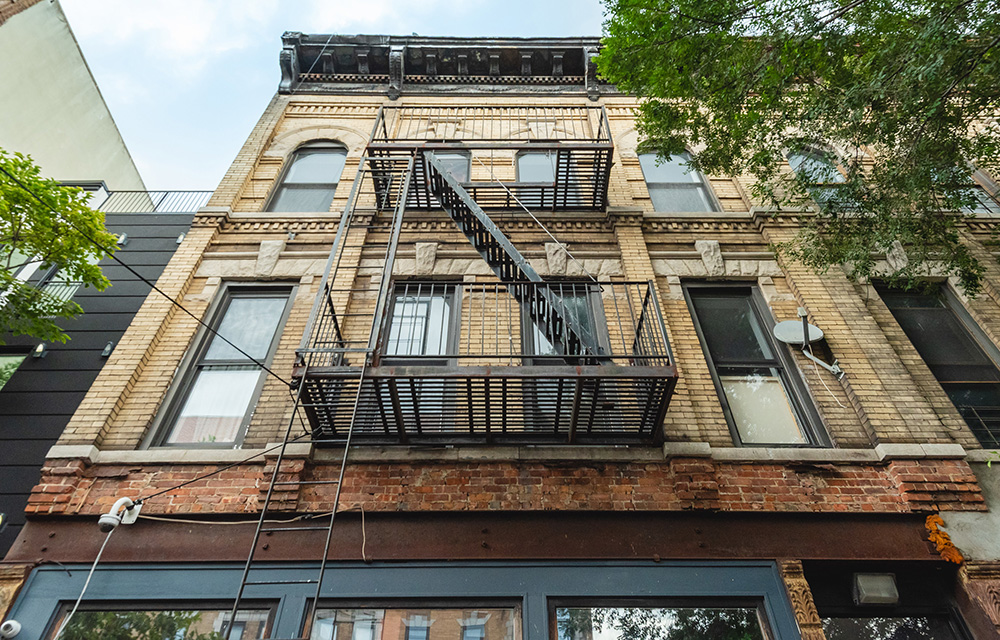
Marcus & Millichap brokers $2.8 million sale of free-market mixed-use property in Brooklyn
Brooklyn, NY Marcus & Millichap brokered the sale of 733 Dekalb Ave., a fully free-market multifamily and retail property in the Bed-Stuy neighborhood. The asset sold for $2.8 million.



Quick Hits

Columns and Thought Leadership

Positive forecast for New York’s pro-housing push? - by Philip Butler
New York’s housing crisis remains a hot button topic despite growing consensus that varied and affordable housing is desperately needed statewide. Governor Hochul has recently introduced several initiatives to overcome N.Y.’s anti-housing

Hunt commercial real estate question and answer: Fortune 500 wisdom - by David Hunt
Yes, there are lessons to be learned from the largest companies in America when comes to managing your real estate. But the decision to buy or lease real estate may not be one of

A guide to finding the right NYC property management company - by Sanjay Gandhi
Being a small to midsize landlord in NYC is an increasingly demanding endeavor. From navigating complex regulations, increased compliance demands to dealing with tenant issues and remediating violations. It is wise to enlist the assistance of a partner, a professional

New York’s streets are full again, and the retail numbers prove it - by Noam Aziz
Walk down any New York block this year and you can feel it. The sidewalks are crowded, the storefronts are lit, and the energy that defines this city is back at full volume.
.gif)
September Promotion
