



News:
Brokerage
Posted: May 9, 2008
New York City Council approves comprehensive 125th St. rezoning plan
Mayor Michael Bloomberg commended the New York City Council recently for its approval of the city's comprehensive plan to strengthen the 125th St. Corridor as a regional business district and bolster its historic role as an arts, entertainment and retail corridor. Developed by the Dept. of City Planning (DCP) with Harlem stakeholders over four years, the plan is designed to catalyze new mixed-use development while protecting the scale of the corridor's commercial and historic brownstone areas. The carefully crafted framework establishes height limits for the first time along the corridor. In order to ensure retail diversity, special regulations restrict the amount of the street frontage that may be occupied by banks and by office and residential lobbies. The zoning also requires the inclusion of arts and entertainment uses for developments over a certain size and it establishes an innovative arts bonus-one of the first in the city-to promote the development of more than 90,000 s/f of new non-profit visual arts and performance space. The rezoning is also expected to produce more than one million s/f of office space and more than 7,000 jobs.
"When I came into office, we promised to stimulate economic growth and strengthen neighborhoods across the city, and our plan for the area around Harlem's famed 125th St. is the latest example of how we're doing it," said mayor Bloomberg. "Not only does the plan lay the foundation for economic growth on Harlem's Main St., but also it preserves its noted brownstones and reinforces its arts and culture heritage. Commissioner Burden, council member Dickens, her colleagues in Harlem, speaker Christine Quinn, Council Land Use committee chair Melinda Katz and many others worked hard to ensure the plan would benefit the local community. I thank them for their efforts to develop the plan and the entire City Council for passing it today."
"Harlem is my home. The modifications to the 125th St. rezoning plan will protect the historic and cultural character of Harlem. My priority was to make sure that those who had laid down roots in Harlem both in business and as long time Harlem residents and who had stayed in Harlem in good times and bad would not be displaced. During the long negotiation process, I took my direction from my community boards. I am thankful for the support of my colleagues, most notably council members Robert Jackson and Melissa Mark-Viverito. Among the many protections, services and resources secured for Harlem, I am most pleased that we were able to create an unprecedented amount of affordable and income-targeted housing opportunities," said council member Inez Dickens.
The area's new zoning gives preference to commercial development in the central core of the district, reinforcing 125th St. as a commercial corridor, which will soon see the construction of its first new class A commercial office building in decades. More such office buildings will follow over time, providing thousands of jobs and helping 125th St. grow as a thriving regional business district. The city will also provide assistance to local businesses, enhance Marcus Garvey Park, address health challenges in Harlem, and ensure that 46% of all new housing units within the rezoned area and in the surrounding community on city-owned sites be income-targeted. In addition, DCP and the Dept. of Housing Preservation and Development (HPD) have committed to develop a groundbreaking new program to provide home ownership opportunities in permanently affordable housing generated through inclusionary zoning-an important enhancement to the city's New Housing Marketplace Plan to build and preserve 165,000 new affordable housing units by 2013.
"The plan, as modified after intensive negotiations, will revitalize Harlem while sustaining its rich history and culture. I believe this agreement will benefit our Harlem constituents for generations to come, and I want to thank everyone whose hard work contributed to this milestone agreement," said council member Melissa Mark-Viverito.
"The rezoning will protect the unique character of our Harlem neighborhoods while creating new jobs, supporting small businesses and the arts, and developing thousands of new units of affordable housing," said council member Robert Jackson.
"Council member Dickens and her colleagues helped shape this complex and vital plan to frame future development in a way that respects the diverse built character of 125th St., ensures a diversity of retail and continuing affordability of housing and reinforces the historic role of 125th St. as a center of arts, culture and entertainment," said city planning commissioner Amanda Burden.
Tags:
Brokerage
MORE FROM Brokerage
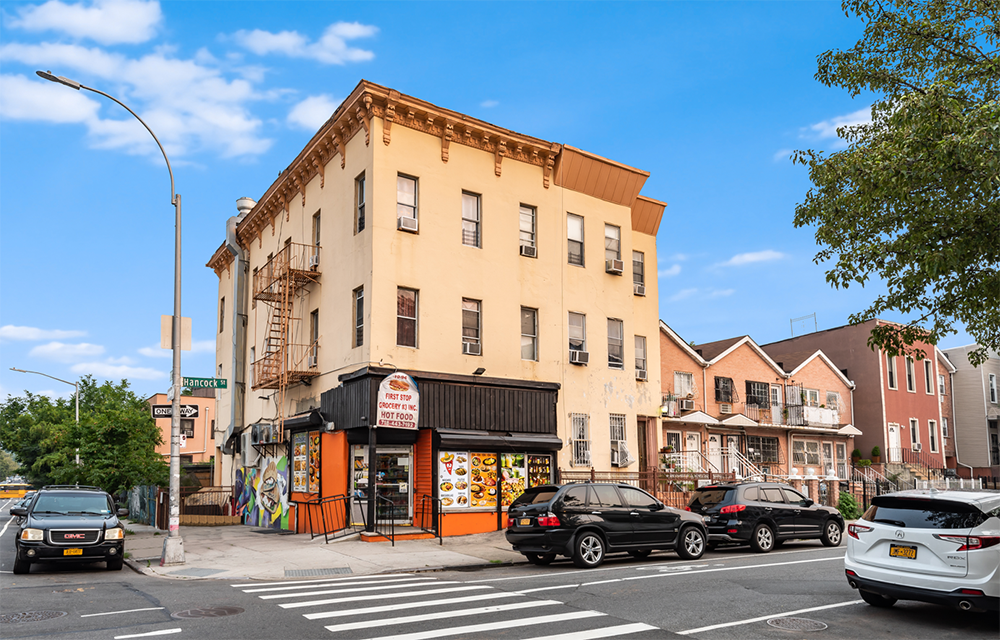
Investment Property Realty Group closes $1.75 million sale of 1094 Hancock Street in Brooklyn
Brooklyn, NY Investment Property Realty Group (IPRG), a New York-based commercial investment firm, has closed the sale of 1094 Hancock St., a mixed-use building in the Bushwick section, for $1.75 million.


Quick Hits

Columns and Thought Leadership

New York’s streets are full again, and the retail numbers prove it - by Noam Aziz
Walk down any New York block this year and you can feel it. The sidewalks are crowded, the storefronts are lit, and the energy that defines this city is back at full volume.

Hunt commercial real estate question and answer: Fortune 500 wisdom - by David Hunt
Yes, there are lessons to be learned from the largest companies in America when comes to managing your real estate. But the decision to buy or lease real estate may not be one of

A guide to finding the right NYC property management company - by Sanjay Gandhi
Being a small to midsize landlord in NYC is an increasingly demanding endeavor. From navigating complex regulations, increased compliance demands to dealing with tenant issues and remediating violations. It is wise to enlist the assistance of a partner, a professional

Hunt CRE question and answer: Choosing a real estate agent - by David Hunt
First, we will only work with one agent exclusively. The primary reason is that we want that agent to legally represent our client’s interests. In New York State, a real estate agent has a fiduciary
.gif)