



News:
Brokerage
Posted: August 20, 2010
New economy, new retail trends, new rules
Part 1 of 2As a commercial real estate broker specializing in retail, I am always faced with the same questions. "How is the economy?" "Are we out of the recession?" "How are the retailers doing these days?" And my favorite..."You seem to be so busy, looks like everything is back to normal, right?" The only way I can answer that last question is with another question. "What is normal?"
I started in the real estate industry fresh out of college in 2003. If you define "normal" as 2004-2007 when everything was priced above market value and buyers and tenants were bidding against each other just to make deals above the asking price, then it seems that we will not see "normal" for a very long time or maybe ever again. I think we can all agree that hopefully, late 2008-2009 is never defined as the norm for any industry. So where does that leave us? Here we are in 2010 with the dust clearing and I am left contemplating the lessons that I have learned from the past two years and how to apply it moving forward.
First and foremost, who is left standing? The majority of the retailers that made it are the ones that cater to necessity, not luxury. Some such as the dollar stores and fast food chains even thrived throughout the downturn and came out much stronger than they were going in. This is due not only to the fact that consumers searched out ways to save money, but also because much of the competition has been eliminated.
The landlords that came out the strongest have naturally have been the ones that have the tenant mix representing the aforementioned qualities. The perfect example of such a scenario is Crosstown Plaza in Schenectady. I believe that Crosstown Plaza is the perfect case study of a landlord successfully harnessing today's market conditions to their advantage.
Going into 2009, the Plaza had almost 50,000 s/f of vacancy.
* 10,000 s/f on a pad site formerly occupied by Old Country Buffet.
* 25,000 s/f former Sears Hardware which was vacant for over 4 years.
* Over 11,000 s/f of various in-line spaces where struggling tenants were taken down by the economy.
When we initially listed the Plaza, the landlord was frustrated because she had already reached out to every national chain that she could think of and the "for lease" sign was not generating calls from qualified tenants. Furthermore, the Plaza already had most of the major categories filled, such as retailer, discounter, gym, and a dollar store.
Most of the usual small retail players such as hair salon, nail salon, liquor store, etc... were already there as well.
As a landlord, you have to address the following;
1. Hire the right R.E. professional.
2. Assess your property honestly for what it is. If you are the tenant, would you rent the space? What kind of business can work here?
It was immediately apparent that there was an existing theme in Crosstown Plaza, and it was "discount" servicing the cost conscious consumer. This was a plus because it coincided with the trend of the economy. The obvious solution was to build on that trend. The Plaza already had a Chinese Restaurant but it was apparent that the dense, price sensitive population in Schenectady/ Rotterdam had a need for something more. The first move was to approach the existing tenant and see if they wanted to expand to a large buffet. They agreed and took over the 10,000 s/f out-parcel.
Part 2 will appear in the September 28th Upstate edition of the New York Real Estate Journal.
Alex Kutikov is director of real estate, associate broker for
Vanguard-Fine, LLC, Guilderland, N.Y.
Tags:
Brokerage
MORE FROM Brokerage
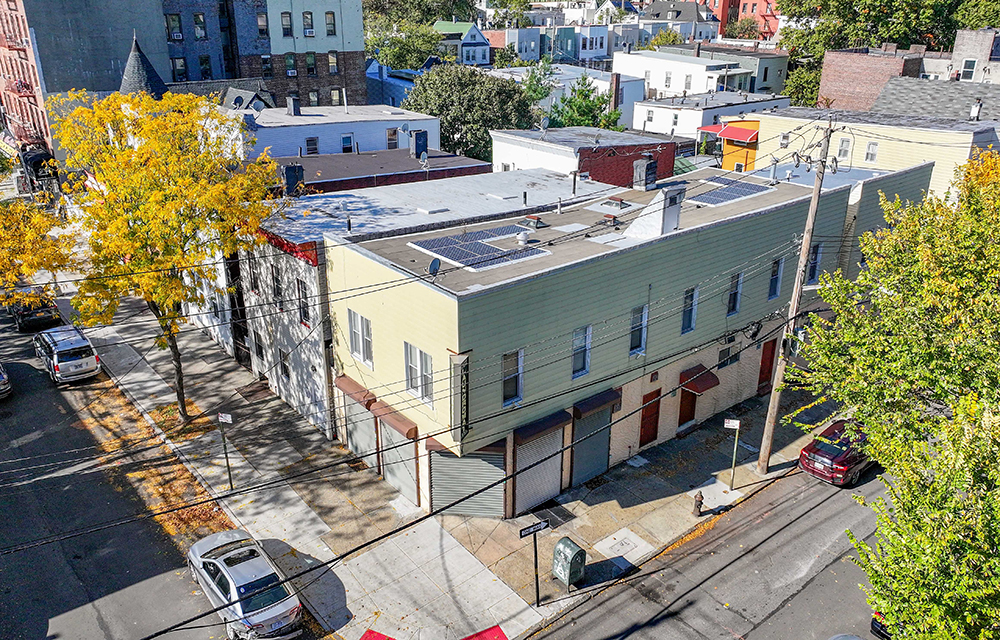
Investment Property Realty Group’s Team Friedman closes five Bronx sales totaling $5.3 million
Bronx, NY Investment Property Realty Group’s (IPRG) Team Friedman closed five sales totaling $5.3 million in the month of September. • 1707 Melville St. sold for $1.35 million. Located in Van Nest, the property





Columns and Thought Leadership

Positive forecast for New York’s pro-housing push? - by Philip Butler
New York’s housing crisis remains a hot button topic despite growing consensus that varied and affordable housing is desperately needed statewide. Governor Hochul has recently introduced several initiatives to overcome N.Y.’s anti-housing

Hunt commercial real estate question and answer: Fortune 500 wisdom - by David Hunt
Yes, there are lessons to be learned from the largest companies in America when comes to managing your real estate. But the decision to buy or lease real estate may not be one of

A guide to finding the right NYC property management company - by Sanjay Gandhi
Being a small to midsize landlord in NYC is an increasingly demanding endeavor. From navigating complex regulations, increased compliance demands to dealing with tenant issues and remediating violations. It is wise to enlist the assistance of a partner, a professional

New York’s streets are full again, and the retail numbers prove it - by Noam Aziz
Walk down any New York block this year and you can feel it. The sidewalks are crowded, the storefronts are lit, and the energy that defines this city is back at full volume.
.gif)