



News:
Spotlight Content
Posted: May 21, 2019
Nassau County grants preliminary approval for proposed tax-exempt bond sale for non-profit ACDS – $5 million
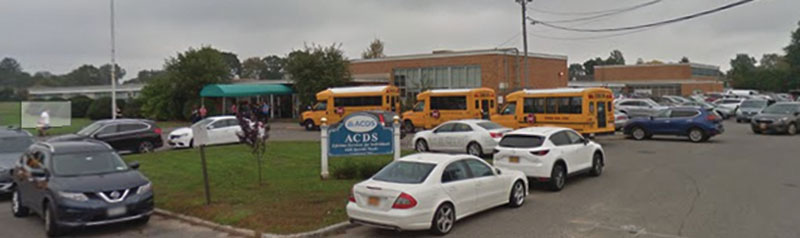
Plainview, NY According to Nassau County executive Laura Curran, the Nassau County Local Economic Assistance Corp. (LEAC) has given preliminary approval to a proposed tax-exempt bond sale for non-profit ACDS Inc.
ACDS, formerly the Association for Children with Down Syndrome, plans to use proceeds from the $5 million bond sale to purchase a school building at 4 Fern Pl. from the Plainview-Old Bethpage School District and renovate the property, which it now leases. ACDS also plans to purchase adjacent land from the town of Oyster Bay for parking and bussing.
The bond sale is subject to further staff review, a public hearing and a final authorizing resolution. The bonds would be repaid by ACDS. There is no out-of-pocket expense to Nassau County taxpayers.
“As an advocate of helping those with development disabilities, I am pleased that LEAC is considering providing financial assistance to an important social services agency such as ACDS,” said Curran.
“The Nassau Local Economic Assistance Corp. is vital to our not-for-profit community and I am happy it is considering assisting ACDS in its endeavor through this bond issuance,” said LEAC chairman Richard Kessel.
LEAC has provided financial support for existing and new non-profit entities in Nassau County since its creation in 2011. ACDS previously sold bonds through the Nassau County Industrial Development Agency, whose authority under state law to work with not-for-profits expired in 2008.
ACDS was founded in 1966 to provide services for young children with Down syndrome. Since then, it has grown and evolved into a lifetime services agency that serves families of individuals with a wide range of disabilities, from before birth until late adulthood. It has 298 full-time equivalent employees and 173 part-time workers.
The Nassau County Local Economic Assistance Corp. is dedicated to helping non-profit organizations prosper and grow within Nassau County and fulfill its mission of serving its residents. The LDC can offer incentives to help not-for-profit businesses and agencies — schools, hospitals, and religious organizations — relocate, expand, and build within Nassau County.
Tags:
Spotlight Content
MORE FROM Spotlight Content
The commercial classroom: 1031 tax-deferred exchanges - by Edwad Smith Jr.
The sale of real estate may trigger capital gains taxes on the net profits of that sale. These taxes may be deferred by participating in a 1031 tax exchange, in essence, by purchasing property(s) to replace the




.png)

Quick Hits


Columns and Thought Leadership

From vacancy to vitality: How adaptive reuse is reshaping Long Island’s CRE landscape - by Andrea Tsoukalas Curto
Adaptive reuse has become one of the most important conversations in commercial real estate today. Long Island has a large inventory of aging retail, office and industrial

2026 Developing Queens: Long Island Board of Realtors advances commercial growth and advocacy in Queens
The Long Island Board of Realtors (LIBOR) Commercial Network continues to play a key role in advancing opportunities and strengthening the commercial real estate landscape across Queens. Through targeted programming and global outreach

2026 Developing Long Island: ERG Commercial Real Estate launches its new Retail Leasing division
North Hempstead, NY ERG Retail Leasing is the dedicated leasing division of ERG Commercial Real Estate, an established full-service commercial real estate brokerage for over 35 years.

CRE Guide Featured Company: Merritt Environmental Consulting Corp.
Merritt Environmental Consulting Corp. (MECC) was established in June of 2009 after being part of a larger engineering firm for almost 20 years. The focus of the company is to assist lending institutions, attorneys, real estate investors, and property owners with environmental concerns. Today, MECC has offices in New York, Florida, and Vermont and has grown into a regional consulting firm serving clients along the East Coast.