



News:
Brokerage
Posted: February 25, 2008
Merlin Development creates Mill Condominiums in Glens Falls: A $21 million New Urbanist project
Taking a page from the adage, what is old becomes new again, owner/developer Bruce Levinsky and his Merlin Development Company aim to invigorate their piece of downtown Glens Falls with the $21 million Mill Condominiums. The "new" is the Mill Condominiums are taking a page from the New Urbanism approach.
"New Urbanism patterns development approaches used before World War II. With the Mill, we wish to reintegrate the pieces of our modern life; housing, work, retail, and recreation into a compact, friendly, mixed-use life-style. I am very bullish on this concept and its right for the times," said Levinsky.
The Congress for New Urbanism said, such (New Urbanism) development should be in the form of compact, walk able neighborhoods and/or districts. Such places should have clearly defined centers and edges. The center should include a public space - such as a square, green or an important street intersection - and public buildings - such as a library, church or community center, a transit stop and retail businesses.
Bovis Lend Lease LMB, Inc, is the general contractor for the project, located at the site of the former Clark Brothers Silk Glove factory. The original three-story building will grow to six featuring 52 residential units over four floors with commercial space on the first two. A parking garage is being added on the north side. The residential units will range in s/f starting at 1,200 s/f up to 3,000 s/f. The sixth floor will feature multi-story penthouses. Prices start at $286,000.
Construction started in August 2007 with a 15 month schedule for completion. "Things have been moving along quite well," said Dick White, Bovis' VP / project executive. "Our team has assembled a strong set of subcontractors and suppliers. We expect to make the delivery date we committed to. We are very pleased to be a part of the Mill and the vision Merlin Development has for the project."
The residences shall all feature; six-panel solid core doors, high-efficiency heating & cooling systems, recessed lighting, double hung windows, complete security and fire protection systems, advanced telecommunications wiring, mixed flooring of carpet, tile and an engineered floating system, hardwood cabinetry, gas or electric convection oven, side-by-side refrigerator and microwaves. Numerous optional upgrades are available.
The building will feature: historical exterior architecture of brick and stone construction, commercial/retail spaces on first floor (15,000 s/f), business conference center plus solariums on residence floors, rooftop sun deck and recreational spaces, large terraces with decorative railings, state of the art security and lighting, secure covered parking garage accessed by covered bridge, multi-elevator access to condominiums, optional secure storage space on first floor, elegant contemporary curtain wall and marble entry way, high speed Internet wiring, cable and phone and a rooftop garden.
Tags:
Brokerage
MORE FROM Brokerage
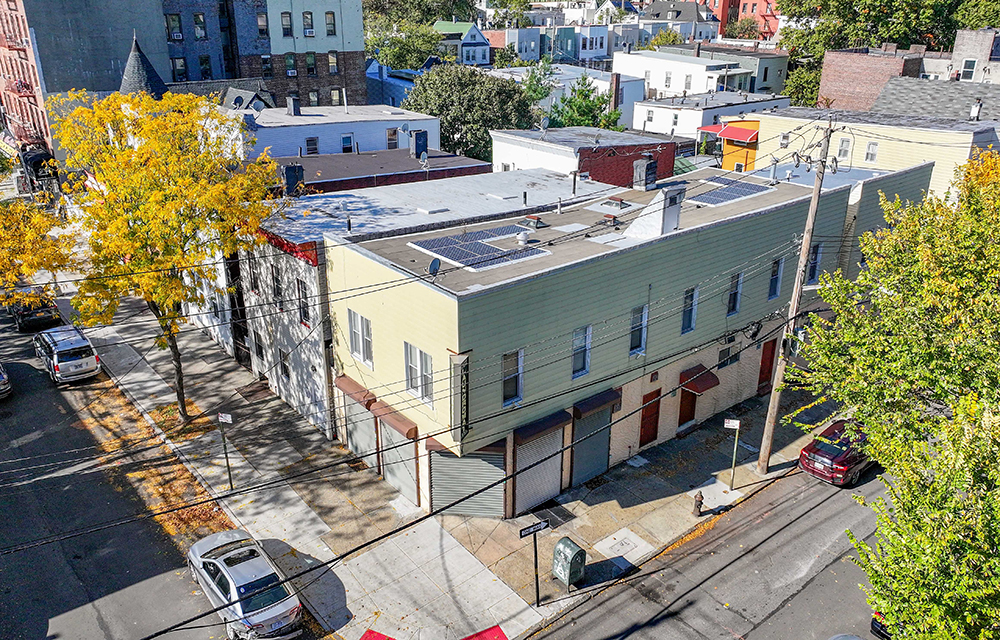
Investment Property Realty Group’s Team Friedman closes five Bronx sales totaling $5.3 million
Bronx, NY Investment Property Realty Group’s (IPRG) Team Friedman closed five sales totaling $5.3 million in the month of September. • 1707 Melville St. sold for $1.35 million. Located in Van Nest, the property



Quick Hits
 (2).gif)

Columns and Thought Leadership

A guide to finding the right NYC property management company - by Sanjay Gandhi
Being a small to midsize landlord in NYC is an increasingly demanding endeavor. From navigating complex regulations, increased compliance demands to dealing with tenant issues and remediating violations. It is wise to enlist the assistance of a partner, a professional

Positive forecast for New York’s pro-housing push? - by Philip Butler
New York’s housing crisis remains a hot button topic despite growing consensus that varied and affordable housing is desperately needed statewide. Governor Hochul has recently introduced several initiatives to overcome N.Y.’s anti-housing

New York’s streets are full again, and the retail numbers prove it - by Noam Aziz
Walk down any New York block this year and you can feel it. The sidewalks are crowded, the storefronts are lit, and the energy that defines this city is back at full volume.

Hunt commercial real estate question and answer: Fortune 500 wisdom - by David Hunt
Yes, there are lessons to be learned from the largest companies in America when comes to managing your real estate. But the decision to buy or lease real estate may not be one of
.gif)