News: Brokerage

Mayzlin of Kalmon Dolgin Affiliates chosen to market sale of Staten Island industrial property
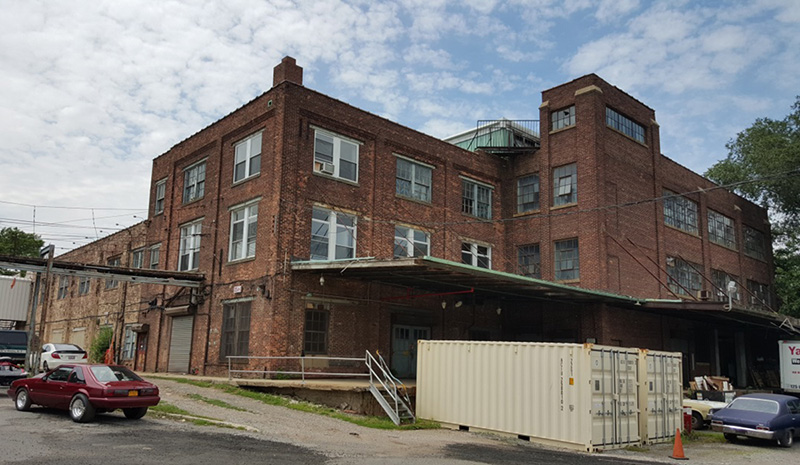
125 Lake Avenue - Staten Island, NY 125 Lake Avenue - Staten Island, NY
Staten Island, NY According to Neil Dolgin and Kalmon Dolgin, co-presidents of Kalmon Dolgin Affiliates (KDA), their firm was named the exclusive sales agent for 125 Lake Ave., an industrial property on the North Shore in Mariner’s Harbor. The total asset includes an eight-acre (340,000 s/f) plot of land, on which sits a 60,000 s/f, three-story loft building and a 40,000 s/f one-story building. KDA broker Gary Mayzlin is handling the listing. The property was the former mill for the Cross Siclare paper company. It’s now a multi-tenant industrial complex whose tenants include contractors’ warehousing, automotive and truck repairs and parking, and construction equipment storage. The property offers an abundance of on-site parking, loading docks and drive-in doors, sprinkler systems throughout, and heavy power. One Twenty Five Lake Ave. is zoned M3, allowing for unrestricted heavy and light industrial use, which is rarely available in an improved property of this size. One Twenty Five Lake Ave. is ideally suited for users in need of a combination of a large parcel of land and buildings.  The property also has the ability to be redeveloped and can support 680,000 SF of new buildings. The property offers a great opportunity for local or regional companies looking for an outpost on Staten Island to service a NYC/outer boroughs and New Jersey customer base. The site is just two blocks from Rte. 440/Staten Island Expressway, and offers easy access to the Verrazano Narrows, Goethals, and Bayonne bridges, and Port of Elizabeth. It is just minutes to the Global Container Terminal (187 Acre 3-Berth Terminal). Founded in 1904, Kalmon Dolgin Affiliates offers over a century's worth of experience in the management, sale, leasing and marketing of commercial and industrial property throughout the New York Metropolitan region. In addition to its staff of 35 brokers, Kalmon Dolgin Affiliates, through its subsidiary, KND Management Co., Inc., operates a portfolio of over six million square feet of industrial, office, medical and retail space in ten states. Their highly-trained professionals offer a practical, street-wise approach to real estate, supported by the latest in real estate management and research technology and four generations of unparalleled expertise.
READ ON THE GO
DIGITAL EDITIONS
Subscribe
Columns and Thought Leadership
The anticipated effect of Basel III and ISO 20022 implementation on commercial real estate - by Michael Zysman

The anticipated effect of Basel III and ISO 20022 implementation on commercial real estate - by Michael Zysman

July 1, 2025 is the deadline for US banks to begin to adopt Basel III banking standards and July 14, 2025 is the deadline for U.S. banks to adopt ISO 20022 messaging standards. Both will have a significant effect on the banking and commercial real estate (CRE) finance sectors.
The death of the generic offering memorandum: What buyers expect in 2025 - by Kimberly Zar Bloorian

The death of the generic offering memorandum: What buyers expect in 2025 - by Kimberly Zar Bloorian

There was a time when an offering memorandum (OM) was pretty bare bones, some photos, a few bullet points on income, and a rent roll thrown in at the back. That used to get the job done. Not anymore. In 2025, buyers are sharper, faster, and more selective. They’re looking
A fresh start - by Shallini Mehra and Amit Doshi

A fresh start - by Shallini Mehra and Amit Doshi

For the past several years, the New York City multifamily housing market has been defined by disruption. The combined impact of the HSTPA rent laws and a sharply higher interest rate environment has fundamentally reduced
Tri-state capital  migrates nationally amid  regulation pressure - by Reese Weaver

Tri-state capital migrates nationally amid regulation pressure - by Reese Weaver

New York tri-state multifamily investors are increasingly reallocating capital to less-regulated markets across the U.S. as rent control and legislative risk erode returns at home. With over 60% of New York City’s rental housing stock classified as rent-stabilized, the traditional value-add model — buying under-performing buildings,