



News:
Brokerage
Posted: April 20, 2021
Mayo joins KZA Realty Group as sales agent
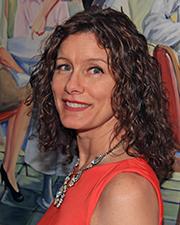
Bronx, NY KZA Realty Group has welcomed Westchester County, NY based Karen Mayo as the newest sales member to their team. Mayo has a wide range of client-facing skills that add value to the company’s goal of providing top real estate solutions for the Bronx and Westchester County.
“We are very excited to have Karen join our team at KZA Realty,” said Kathy Zamechansky, president of KZA Realty Group. “She has experience working in all parts of the real estate market, which will be very helpful when working with clients from all backgrounds and interests.”
Mayo’s passion for real estate began with her role at SLH Mortgage, where she served as one of the company’s top senior loan officers. In her role, she gathered valuable insight to the home loan process by getting first-hand experience processing underwriting documents. That, along with her natural aptitude for aiding clients, propelled her as one of the company’s top 10 loan officers for two years in a row.
Shortly after, she accepted a role as a home mortgage consultant for Wells Fargo where she continued to oversee all facets of the home-loan process. During this time, she realized the importance of tailoring her products to the financial profiles of her clients, and soon developed a system that identified their long-term goals and matched them with the best home loan option. This system allowed her to specialize as a private mortgage banker for Home Savings of America, where she educated high-status clients on solutions to purchase or refinance the home of their dreams.
In 2011, Karen decided to pursue other facets of the real estate market by becoming an Assistant Office and Project Manager for a construction company. During this time, she learned about building construction and potential cost reductions for property buyers – all while simultaneously studying to become a Licensed Real Estate Agent. Fortunately, her hard work paid off, and she became a Licensed Real Estate Agent in 2013, where she showed residential properties and successfully advised homebuyers on purchase procedures for the next seven years.
“After spending time in both residential and commercial real estate, working with KZA Realty has made me realize that I have finally found my passion for commercial real estate,” said Karen Mayo. “Kathy is epitome of a professional and at the same time truly a legend in commercial real estate. I’m excited to break the ceiling at KZA Realty.”
Tags:
Brokerage
MORE FROM Brokerage
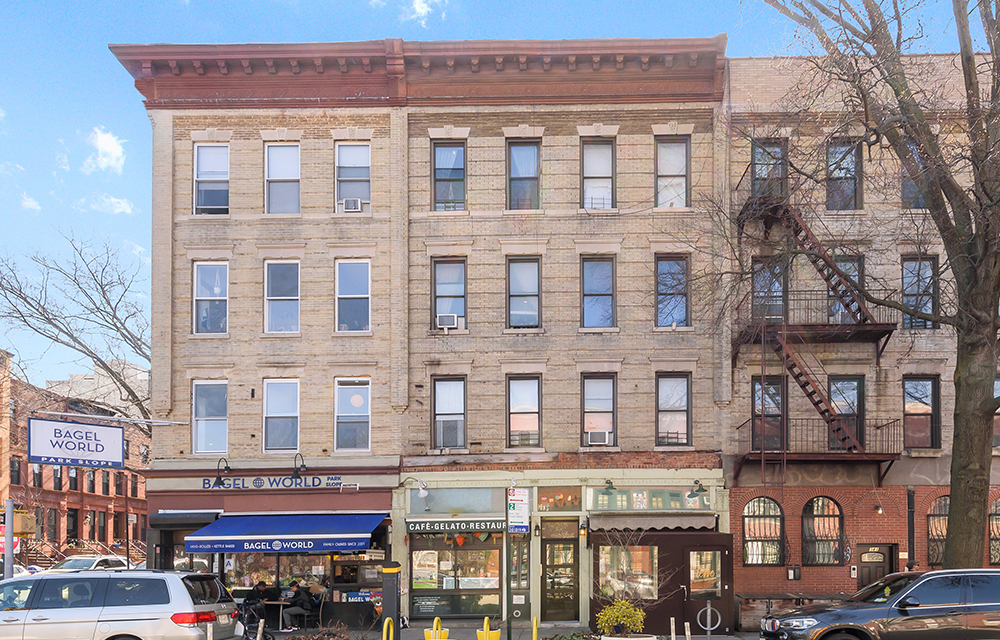
Investment Property Realty Group brokers $2.81 million sale of 341 5th Ave. in Park Slope
Brooklyn, NY Investment Property Realty Group (IPRG) closed the sale of 341 5th Ave., a mixed-use building located in Park Slope for $2.81 million. The transaction was negotiated by Derek Bestreich, Luke Sproviero,





Columns and Thought Leadership

Positive forecast for New York’s pro-housing push? - by Philip Butler
New York’s housing crisis remains a hot button topic despite growing consensus that varied and affordable housing is desperately needed statewide. Governor Hochul has recently introduced several initiatives to overcome N.Y.’s anti-housing

New York’s streets are full again, and the retail numbers prove it - by Noam Aziz
Walk down any New York block this year and you can feel it. The sidewalks are crowded, the storefronts are lit, and the energy that defines this city is back at full volume.

A guide to finding the right NYC property management company - by Sanjay Gandhi
Being a small to midsize landlord in NYC is an increasingly demanding endeavor. From navigating complex regulations, increased compliance demands to dealing with tenant issues and remediating violations. It is wise to enlist the assistance of a partner, a professional

Hunt commercial real estate question and answer: Fortune 500 wisdom - by David Hunt
Yes, there are lessons to be learned from the largest companies in America when comes to managing your real estate. But the decision to buy or lease real estate may not be one of
.gif)