


News:
Movers & Milestones
Posted: August 17, 2026
Manhattan: The city that never sleeps and never stops evolving
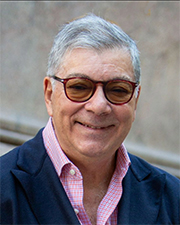
Manhattan, NY The power brokers who once ruled New York real estate are largely gone. Their personalities were oversized, their rivalries legendary, and their deals often completed through little more than instinct, persistence, and a handshake. Joseph Aquino came of age in that world — and helped shape it.
Today, Aquino considers Mary Ann Tighe of CBRE, Bruce Mosler of Cushman & Wakefield, and David Falk of Newmark to be among the last remaining figures from an era when individual brokers could influence not merely a transaction, but the direction of an entire neighborhood. Aquino knows that history because he lived it. Over four decades, he watched Manhattan repeatedly fall, recover, and reinvent itself, navigating eight real estate cycles while helping landlords and retailers recognize opportunities before the rest of the market caught on.
His story begins far from the boardrooms of corporate real estate. Raised in Brooklyn, the son of a longshoreman who also worked as a security guard, Aquino did not arrive in Manhattan with a college pedigree or a powerful family name. Before entering real estate in 1985, he sold watches door-to-door, peddled pots and pans on street corners, and managed health clubs. Those experiences taught him how to approach strangers, withstand rejection, and read people — skills that would become the foundation of his brokerage career.
For 28 years, Aquino worked alongside the late Faith Hope Consolo, one of the industry’s most recognizable personalities. Together, they were part of the luxury brokerage machine that introduced retailers to emerging districts and helped establish markets that are now taken for granted. Aquino founded JAACRES in 2017 and continues to build on the foundation he built with Consolo.
NoLita was once dismissed as an in-between neighborhood without a clear identity. NoHo was considered too quiet and unconventional. Bleecker St. had charm but not yet global status. DUMBO was still largely industrial. Lower Manhattan struggled to redefine itself after the Financial District emptied at the end of each business day. Meat packing, just a dream.
Aquino understood that retail does more than occupy space. The right store can give a block credibility, attract other tenants, increase pedestrian traffic, and change how an entire neighborhood is perceived. Long before “placemaking” became an industry term, he was practicing it — walking streets, studying storefronts, and evaluating what districts could become.
His career placed him at the intersection of some of New York’s most consequential transformations. In the early 1990s, Aquino served as a consultant to the Urban Development Corp. during the redevelopment of 42nd St., a corridor then associated with crime, pornography, and urban decay. The initiative involved approximately $150 million in condemnations and led to the restoration of nine Times Square theaters. It remains one of the most dramatic urban turnarounds in modern American history.
In the Financial District, he participated in the Big Box study for the Downtown BID, part of an effort to bring large-format retail into the third-largest business district in the U.S. The initiative challenged the idea that the neighborhood could function only as a nine-to-five office market. Years later, Lower Manhattan would emerge as a residential, hospitality, dining, and shopping destination.
While working on the redevelopment of Amtrak’s Penn Station level, Aquino saw Amtrak’s architect, HOK, discover that the railroad’s tracks extended beneath the General Post Office. That discovery helped pave the way for Amtrak’s move across the street into the Moynihan Train Hall.
Then came Brookfield Place, where luxury retail helped redefine the western edge of downtown. Hudson Yards followed, creating an entirely new neighborhood over active rail yards. DUMBO evolved from warehouses into one of Brooklyn’s most valuable residential and creative districts. Along Bleecker St. and throughout NoLita and NoHo, independent boutiques and international brands brought new energy — though rising rents eventually pushed out many early tenants.
That cycle of discovery, popularity, overpricing, and reinvention defines Aquino’s view of New York. He has seen landlords overreach, retailers expand too quickly, and once-thriving corridors lose momentum. He has also seen streets declared dead only to return in a new form.
The city never sleeps — but more importantly, it never stops evolving.
His transactions have ranged from luxury jewelers and fashion houses to major entertainment and fitness destinations. He has represented brands including Cartier, Buccellati, Celine, Van Cleef & Arpels, TOUS, Wempe, Paul & Shark, Judith Leiber, and Bond No. 9, as well as prominent property owners whose buildings define the Manhattan skyline.
Aquino’s career cannot be measured solely in square footage or commissions. It is the story of an independent broker navigating an industry that has consolidated around global firms, data platforms, and corporate structures. Many of the colorful figures who once defined New York real estate have disappeared, but Aquino remains.
His book, Memoirs of a Watch Salesman: A New York Real Estate Story, is not just about property. It is about ambition, resilience, and the cost of building a career without a safety net. Real estate provides the setting; New York provides the central character.
As Women’s Wear Daily noted, the book is ultimately a love letter to Manhattan — the city that gave Aquino his opportunities, tested his endurance, and proved that no neighborhood’s story is ever finished.
From 42nd St. to Hudson Yards, from the Financial District to NoLita, Aquino’s career traces the evolution of modern New York. Buildings changed, brands came and went, and entire districts were reborn. Through it all, he kept walking the streets, opening doors, and looking beyond what Manhattan is to what it might become next
MORE FROM Movers & Milestones
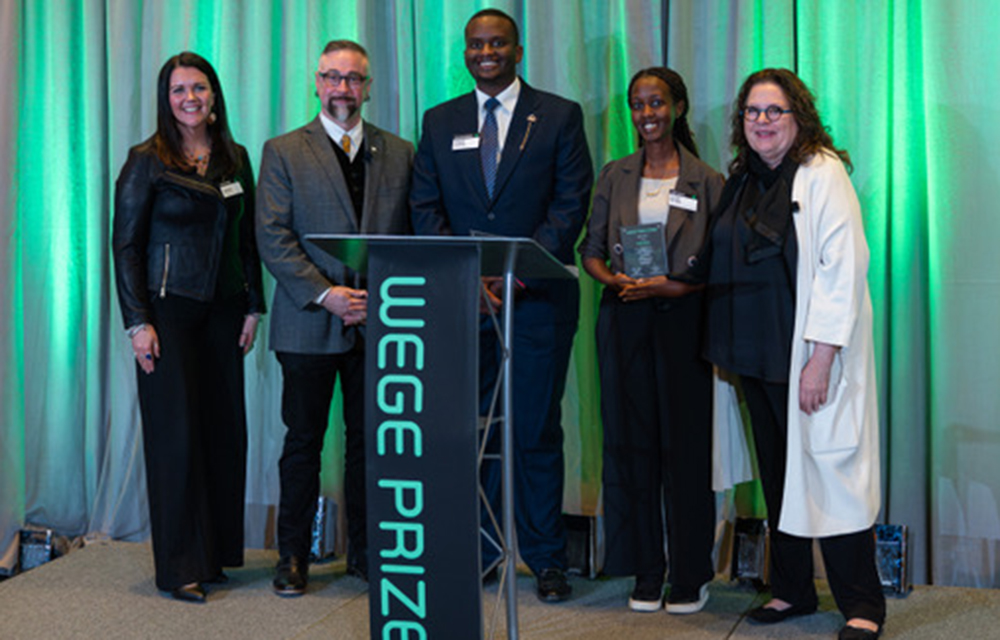
Wege Prize 2027 draws strongest, most diverse field to date in global design competition for the circular economy
Grand Rapids, MI Wege Prize returns for its 14th year to inspire a record-setting global cohort of university students to develop game-changing solutions to some of the world’s most pressing problems.



Quick Hits

