



News:
Brokerage
Posted: November 19, 2007
Manhattan market report: An economic analysis
Since around 2000 I've worked with Business360 on an economic analysis of residential real estate prices in Manhattan, and since 2002 we have published a report explaining why we think the market will remain robust.
It's true that the national housing market is struggling - rising inventory, unsustainable prices and the sub prime fiasco will combine to take back some of the gains of recent years. And perhaps it's understandable to expect prices to tumble in Manhattan too: after all, prices here are amongst the highest in the country and have risen strongly in recent years. Moreover, the financial sector, which drives much of the wealth of Manhattan, is having a rough year. The future markets are gloomy too. According to contracts on S&P/Case-Shiller Home Price Indices, median home prices are expected to fall in all 10 cities for which futures contracts are available. For New York, the projected decline is over 12% by 2011.
But so far, that's not happened. Indeed, prices on average keep rising, and in some segments (4+ bedroom apartments and studios), they have been rising very strongly. Square foot prices on average rose near 5% last year; for the hotter segments they rose over 20%. And 2007 is close to being a record year for sales in Manhattan.
So what's going on?
We think people in Manhattan can afford the prices, and more. Although record nominal prices get media attention, it was only in 2004 that square foot prices in real terms re-attained their 1987 high. The real estate slump of the late '80s and early '90s was especially severe in Manhattan, as people struggled with a weak economy, rising crime and high interest rates - losing faith in the city they looked to the suburbs. From peak to trough, prices fell over 50% in real terms, and in some respects they are still recovering. Over the last 25 years, prices in Manhattan still lag price rises in New York State.
At the same time, income levels in Manhattan have been increasing. Real estate prices have increased faster than income since about 1997, but over a longer period the opposite is true: nominal per capita income in Manhattan rose about 300% since 1982, representing compound growth of 5.7% per annum, a full percentage point above the annual rise in real estate prices. Moreover, while income levels are rising, they are rising much faster for the wealthy - the property buying segment in Manhattan where the average price exceeds $1 million. Manhattan, America's wealthiest county, is now also the most unequal, with the richest 20% earning 50x the income of the lowest 20%; up from 20x in 1980. As high earners no longer feel the need to leave the city and others in the suburbs return, this trend is set to continue, further driving the island's gentrification.
Alongside these changes we have a long-term fall in borrowing costs. In 1982 interest rates were about 16% and since then borrowing costs have more than halved. For Manhattan, assuming a constant sized condo and interest rates fixed at the then prevailing 30-year rate, the proportion of household income required to pay mortgage costs is today a touch less than the 25-year average.
Manhattan is certainly not immune from price declines, but while the wider housing market looks bleak, there are reasons to remain optimistic for this unusual market. It has a strongly improving living environment; little real estate investor activity; a large pool of wealthy (potential) buyers; rich overseas buyers; and strongly rising rents. I continue to expect price declines in many other metropolitan areas but believe those in Manhattan will advance, bringing a rebalancing that will leave Manhattan relatively more expensive. You can argue about whether this wholesale gentrification is a good thing, but the economic factors making it happen are beyond debate.
John Marchant is a principal at Business360, New York, N.Y.
Tags:
Brokerage
MORE FROM Brokerage
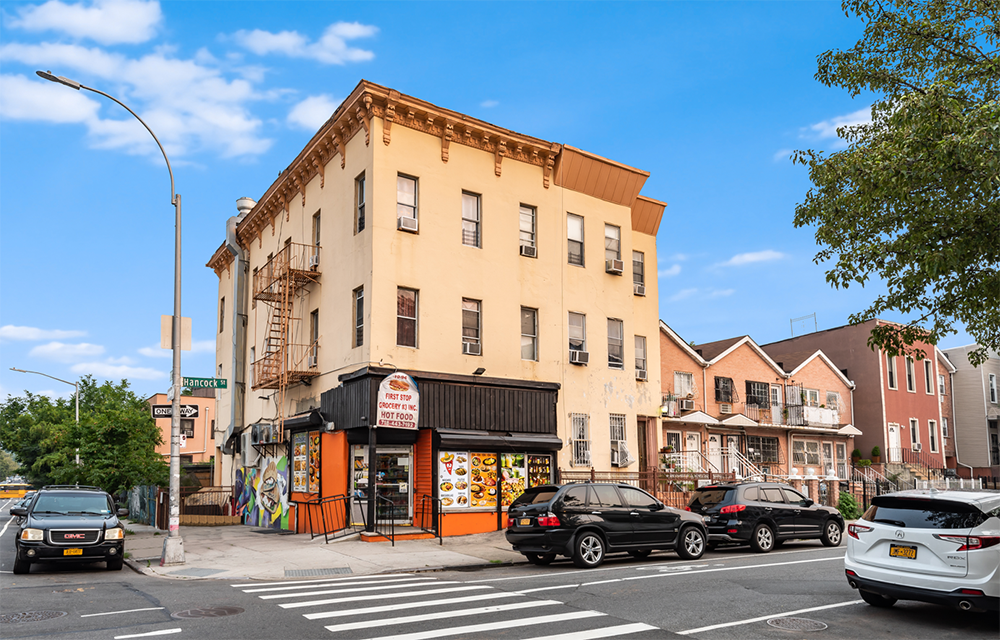
Investment Property Realty Group closes $1.75 million sale of 1094 Hancock Street in Brooklyn
Brooklyn, NY Investment Property Realty Group (IPRG), a New York-based commercial investment firm, has closed the sale of 1094 Hancock St., a mixed-use building in the Bushwick section, for $1.75 million.


Quick Hits
 (2).gif)

Columns and Thought Leadership

A guide to finding the right NYC property management company - by Sanjay Gandhi
Being a small to midsize landlord in NYC is an increasingly demanding endeavor. From navigating complex regulations, increased compliance demands to dealing with tenant issues and remediating violations. It is wise to enlist the assistance of a partner, a professional

New York’s streets are full again, and the retail numbers prove it - by Noam Aziz
Walk down any New York block this year and you can feel it. The sidewalks are crowded, the storefronts are lit, and the energy that defines this city is back at full volume.

Hunt commercial real estate question and answer: Fortune 500 wisdom - by David Hunt
Yes, there are lessons to be learned from the largest companies in America when comes to managing your real estate. But the decision to buy or lease real estate may not be one of

Hunt CRE question and answer: Choosing a real estate agent - by David Hunt
First, we will only work with one agent exclusively. The primary reason is that we want that agent to legally represent our client’s interests. In New York State, a real estate agent has a fiduciary
.gif)