



News:
Brokerage
Posted: May 30, 2023
MAG Partners signs 23,000 s/f lease with grocery operator Lidl at Penn South
Manhattan, NY MAG Partners and Lidl US negotiated a lease for a 23,000 s/f grocery store at 335 Eighth Ave., a mixed-income apartment building being developed within the Penn South campus, an affordable housing cooperative located in the Chelsea community.
The new ground-floor grocery store is expected to open in early 2026 and will use best efforts to work with Hire NYC to hire New York City residents. The store will create dozens of job opportunities for the local community. Lidl offers comprehensive benefits, including healthcare for all full and part-time employees, regardless of hours worked per week.
This is Lidl’s second signed lease in Manhattan. Its first opened in Harlem in February 2022 with positive feedback from the community. The store will offer a bakery, fresh produce, floral, meats and seafood sections, as well as other everyday grocery essentials.
Eighty percent of the store’s assortment consists of private label products and the majority are sourced in the U.S. USA Today 10Best Readers’ Choice Awards and Food & Wine Magazine have repeatedly ranked Lidl among the top grocers in the country. Based in Arlington, Virginia, Lidl operates more than 170 stores on the East Coast, with 25 in New York State. In New York City, Lidl currently operates stores in Staten Island, Harlem and Astoria, Queens.
The 188-unit residential building is being developed under the Affordable NY Program with 30% of its units reserved for low-and-middle income New Yorkers. Demolition on site is scheduled to begin soon and construction is expected to commence in the third quarter of 2023. The contextual 200,000 s/f, seven-story building is designed by COOKFOX.
“MAG Partners is thrilled to welcome a high-quality supermarket to the Penn South community,” said MaryAnne Gilmartin, founder and CEO of MAG Partners. “Lidl shares our commitment to the greater Chelsea community and will bring excellent service and products to this neighborhood.”
“We are excited to introduce Lidl’s fresh groceries, low prices and convenient shopping experience to the Chelsea community,” said Or Raitses, Senior Director of Real Estate for Lidl’s Northern Region. “We look forward to continuing our expansion in New York City and opening even more stores in the future, bringing our unique value proposition to additional areas of the city where New Yorkers for far too long have had to put up with high grocery prices.”
“Access to affordable groceries has been a big challenge for our community, so I’m thrilled that Chelsea will be getting a high-quality affordable supermarket,” said councilman Erik Bottcher. “I want to thank the Penn South Board of Directors, especially President Ambur Nicosia, and MAG Partners, for bringing this project to Chelsea.”
Penn South, also known as Mutual Redevelopment House, Inc., selected MAG Partners to transform a corner parcel into a mixed-use development project that will support Penn South’s core objective of maintaining long-term affordability and quality of life for its nearly 5,000 residents. Finding an affordable supermarket was a required term in the ground lease.
“As a NORC (a Naturally Occurring Retirement Community), it is vital that our seniors have access to a quality grocer on our campus. I am so pleased to be bringing this wonderful option to our residents of all ages,” said Board President Ambur Nicosia.
“We are excited to welcome Lidl to our community. Bringing an affordable and convenient grocery store to our neighborhood has always been a priority for Penn South,” said general manger Ryan Dziedziech.
MAG Partners was represented by Cushman & Wakefield’s Alan Schmerzler, Sean Moran, Catherine Merck and Patrick O’Rourke. Joshua Stein and Alexa Klein served as counsel on the lease on behalf of MAG Partners. Lidl US was represented by CBRE’s Stephen Sjurset, David LaPierre, Robert Bonicoro and Duane Davis. Marnie Kudon of Cozen O’Connor represented Lidl US.
Tags:
Brokerage
MORE FROM Brokerage
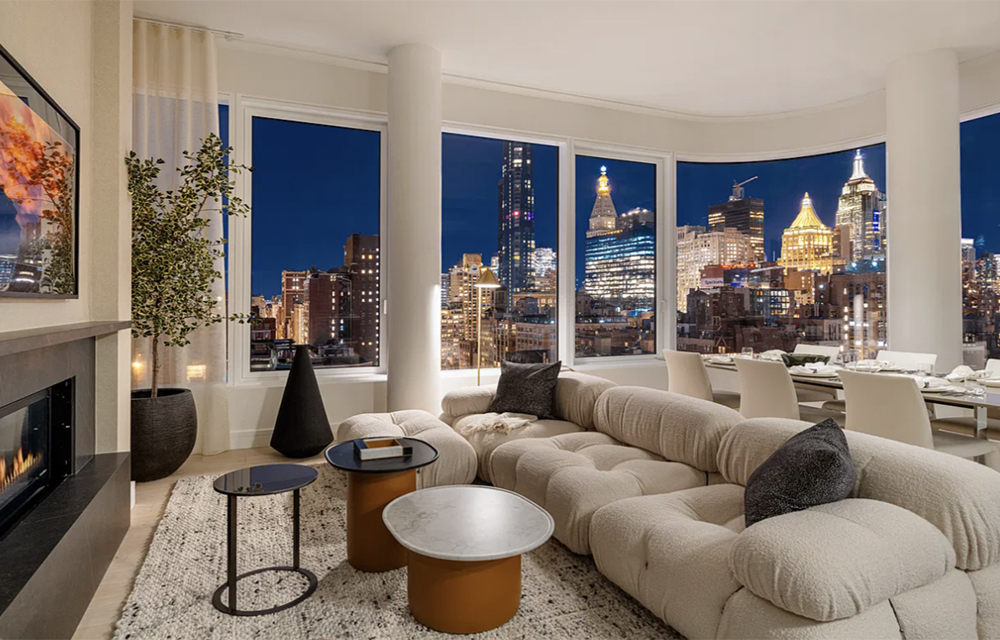
200E20TH sells out in Gramercy, penthouse A closes out sales at the CetraRuddy-designed condominium residences
Manhattan, NY 200E20TH, the CetraRuddy-designed architectural masterwork that brought a curved, contemporary sensibility to Gramercy’s Beaux-Arts streetscape, has



Quick Hits
 (2).gif)

Columns and Thought Leadership

Hunt commercial real estate question and answer: Fortune 500 wisdom - by David Hunt
Yes, there are lessons to be learned from the largest companies in America when comes to managing your real estate. But the decision to buy or lease real estate may not be one of

New York’s streets are full again, and the retail numbers prove it - by Noam Aziz
Walk down any New York block this year and you can feel it. The sidewalks are crowded, the storefronts are lit, and the energy that defines this city is back at full volume.

The art of investing in real estate - by Thomas Donovan
Real estate investing is as much an art as it is a skill. No one can time the market, or the factors that drive it, perfectly. Location, zoning, size, transportation, and neighborhood density give you a baseline for

Hunt CRE question and answer: Choosing a real estate agent - by David Hunt
First, we will only work with one agent exclusively. The primary reason is that we want that agent to legally represent our client’s interests. In New York State, a real estate agent has a fiduciary
.gif)