



News:
Long Island
Posted: June 7, 2016
Long Island commercial real estate market report - Q1 - by Ron Koenigsberg
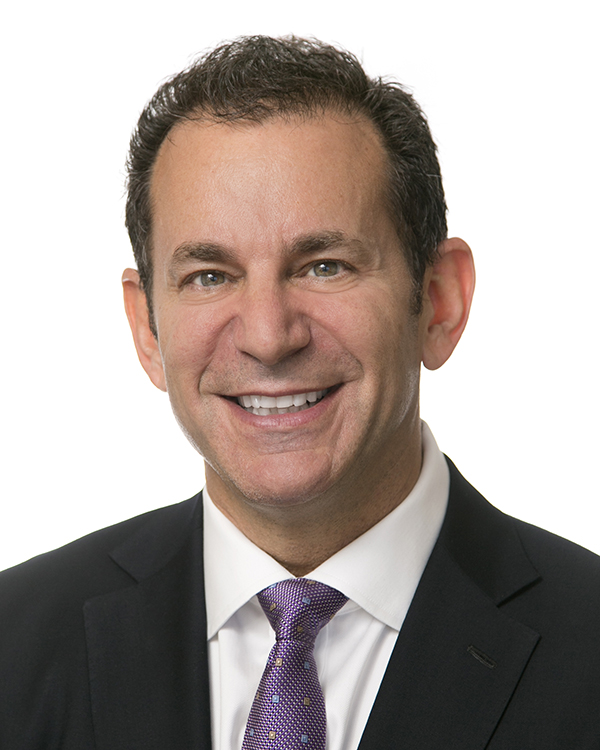 American Investment Properties" width="240" height="300" /> Ron Koenigsberg, American Investment Properties
Continuing to bring you quarterly market reports for L.I. commercial real estate is something that is important to us, as we believe that keeping you informed with up to date information is integral to L.I.’s commercial real estate community.
In this article we will provide you with L.I.’s commercial real estate market report for the first quarter of 2016, and will cover the activity and statistics of L.I.’s retail, office, and industrial markets. To most easily digest this information, we will break it down simply by market with a focus on vacancy rates, rental rates, and cap rates.
First, reporting on L.I.’s retail market, the Nassau and Suffolk retail market experienced minimal change in retail market conditions in the first quarter of 2016. The vacancy rate increased slightly from 3.9% in Q4 of 2015 to 4% in the current quarter. Even with this minimal increase, it is important to keep in mind that last year the retail market saw an overall decrease in the vacancy rate, another proof-point of a recovering economy, and despite this minimal increase, this market is still showing sure signs of strength. As for rental rates, they have increased from the fourth quarter of 2015 ending at $25.14 per s/f for the first quarter of 2016. This represents a 0.7% increase in rental rates in the current quarter, and a 1.95% increase from four quarters ago. These are very positive numbers for L.I.’s retail market. Regarding cap rates, cap rates had been lower in 2015, averaging 6.31% compared to the same period in 2014 when they averaged 7.06%.
Next, we look at L.I.’s office market where we continue to see a slight, yet positive change in L.I.’s office market in the first quarter of 2016. The vacancy rates in the Nassau and Suffolk County office market continue to decrease. Currently, they have decreased from 8.8% to 8.7% at the close of the first quarter, 2016. The vacancy rate was at 8.8% at Q4 2015, 9% at Q3 2015, and 9.4% at Q2 2015. This decreasing trend is a sign of a healthy office market and L.I. job market. Rental rates, however, are slightly down from Q4 2015 ending the first quarter of 2016 at $25.17 per s/f. This represents a 1.3% decrease in rental rates from the end of the fourth quarter, when rental rates were reported at $25.49 per s/f. As for cap rates, they had been higher in 2015, averaging at 8% compared to the same period in 2014 when they averaged 7.2%.
Last, let’s review the L.I. industrial market. The Nassau and Suffolk County industrial market ended the first quarter of 2016 with a vacancy rate falling to 3.3%. This is a decrease from the fourth quarter of 2015 where vacancy rates were reported at 3.4%. Reviewing previous vacancy rates for the past four quarters, in Q2 2015 vacancy rates were at 4.3%, in Q3 2015 vacancy rates fell to 3.8%, and in Q4 2015 rates fell even further to 3.4%. Vacancy rates for L.I.’s industrial market are remaining on a declining trend. As for rental rates, they continue to rise. The average rental rate for industrial space was $9.99 per s/f at the end of the first quarter of 2016. This represents a 0.2% increase in quoted rental rates from the end of Q4 2015 when the rental rate average was reported at $9.97 per s/f. Lastly, cap rates had been higher in 2015, averaging 8.04% compared to the majority of 2014 when they had averaged 7.61%.
Ron Koenigsberg is the president of American Investment Properties, Garden City, N.Y.
Tags:
Long Island
MORE FROM Long Island

Suffolk County IDA supports expansion of A&Z Pharmaceuticals
Hauppauge, NY The Suffolk County Industrial Development Agency (IDA) has granted preliminary approval of a financial incentive package that will assist a manufacturer in expanding its business by manufacturing more prescription (Rx) pharmaceuticals in addition to its existing over-the-counter





Quick Hits
 (2).gif)