


News:
Owners Developers & Managers
Posted: October 2, 2018
Local Law 88/134 and occupied spaces: The clock is ticking for those who are required to comply - by George Crawford

Green Partners
Local Law 88 and Local Law 134 are upon us. And they need to be addressed. These local laws require that all buildings, including residential and commercial properties in excess of 25,000 s/f, upgrade their lighting to LED. But the rules for residential and commercial differ. Compliance for residential properties is relatively straight forward, while multi-tenanted office buildings are another story altogether. The long and arduous process for office buildings will be covered in more detail later in this article.
For residential properties in excess of 25,000 s/f, the Local Law 88/134 requirement is to upgrade lighting to LED only in the common areas of the building – not the residential units. For commercial buildings, compliance requirements are far more challenging. Here Local Law 88/134 requires that all commercial buildings in excess of 25,000 s/f, upgrade 100% of their interior spaces to LED. This requirement translates to upgrading all of the common areas as well as all of the tenanted spaces, including offices as well as commercial.
While the common area upgrades can be addressed with one upgrade project, the tenanted spaces are another story altogether. Certainly vacant tenant spaces can be addressed along with the common area upgrade. But once you get to the occupied spaces, it becomes more involved. One strategy would be to wait for lease expirations and address the LED upgrades after the spaces have been vacated. Realistically, however, this vacated space approach will only address a portion of the spaces that need to be upgraded. For most buildings the process will involve going into occupied spaces to install these upgrades.
Take a step back and think though the process. Each building tenant will need to be contacted about the required lighting upgrade for their space, discuss a schedule for the upgrade and then coordinate with the contractor. This is before any work starts and before project supervision is required and the complaints start rolling in. Each upgrade will need to be documented and a stacking plan developed to record the progress of the upgrades until the work for the entire building has been completed. For a buildings with many tenants, Local Law 88/134 compliance will take years and be a very time consuming.
In terms of gaining the cooperation of existing tenants, there are certain advantages to a lighting upgrade for any tenancy:
1. Lower electric costs – most tenants are sub-metered, so LED lighting will reduce electric costs.
2. Upgraded lighting will enhance their office space.
In some cases the landlord might try to share the electric savings with the tenant to offset the cost of the upgrade. However, since Local Law 88/134 puts the obligation squarely on the landlords shoulders, there is little or no incentive for the tenant to agree unless the upgrade includes requests made by the tenant.
For landlords that are faced with hold-out tenants, there are legal remedies. Zachary Samton, member of Cozen O’Connor, who specializes in commercial leases, advises that there is usually language in tenant leases that gives the landlord certain rights in connection with entering a tenant’s space to perform work. In the “Building Work” clause, it states that the Landlord may perform alterations, additions, improvements etc.in a tenant’s space. This clause specifically includes new lighting. If a review of the Building Work clause with the tenant, doesn’t elicit cooperation, then the next step recommended by Samton is an “economic disincentive” which is “legalese” for a charge to the tenant for its failure to cooperate. This charge would be appropriate, especially when a landlord faces a violation because it cannot make required repairs or updates to a leased space. Last resort is the nuclear default clause which would terminate the lease. Samton advises against using this clause, but the fact that it is there may incentivize cooperation.
Bottom line, the clock is ticking for those who are required to comply and want to do so in a measured way – get going while there is time.
George Crawford is the principal of Green Partners, New York, N.Y.
MORE FROM Owners Developers & Managers
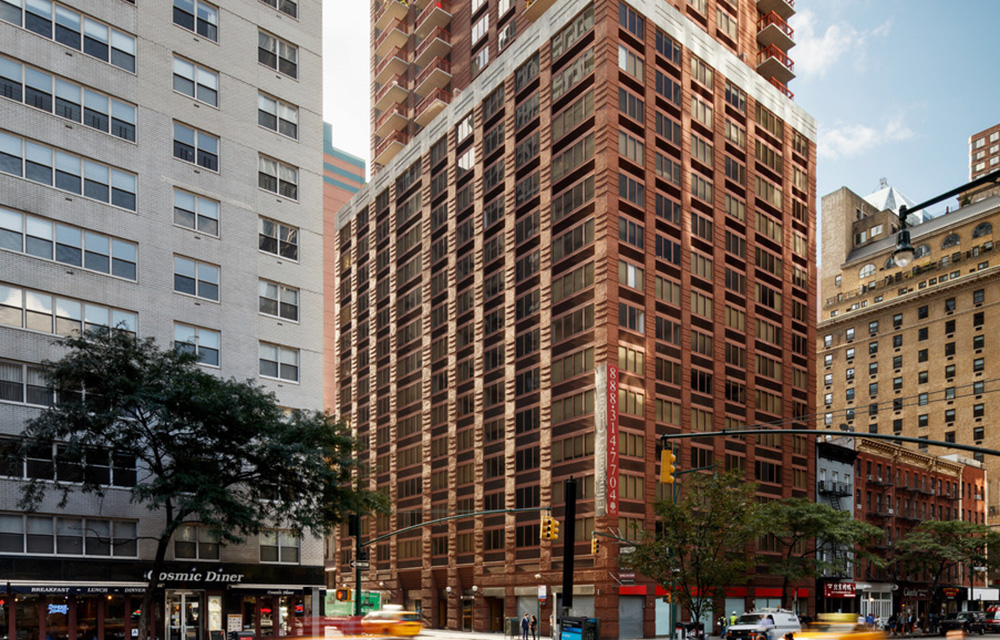
Rose Assocs. partners with Morgan Stanley Real Estate Investing to recapitalize The Ellington
Manhattan, NY Rose Associates, Inc., the New York-based multifamily real estate developer and manager, has partnered with a fund managed by Morgan Stanley Real Estate Investing (MSREI) in the recent recapitalization


Quick Hits


Columns and Thought Leadership

Hunt Commercial Real Estate Q&A: Location, location, location? - by David Hunt
In working with our clients, we break down our search objectives into two categories. The first category involves the specific needs of your business such as warehouse height, amount of office space and number of loading

NYC's Community Opportunity to Purchase Act is back - and multifamily owners should pay attention - by Ron Cohen
New York City’s Community Opportunity to Purchase Act (COPA) is back, and this latest version could have a much better chance of becoming law. The proposal would give qualified nonprofit organizations
New York City’s historic rent freeze now rests with the courts - by Ron Cohen
New York City’s first-ever two-year rent freeze is now in the hands of a state Supreme Court judge, and the decision could reset income for owners of roughly one million rent-stabilized apartments housing some 2.4 million residents.

Don’t leave severance damages behind - by Sebastian Jablonski
When the government takes a portion of a landowner’s property, most assume just compensation stops at the value of the land taken. However, in partial takings, that is only half of the equation.