



News:
Brokerage
Posted: October 14, 2025
Lee & Assocs. NYC assists SH NY Hospitality Group in 3,600 s/f lease at 109 Ludlow St.
Manhattan, NY Lee & Associates NYC has represented SH NY Hospitality Group in securing its first independent location for Tin’s, a hybrid Sheng Jian Bao restaurant and cocktail bar. Tin’s will occupy a total of 3,600 s/f across the ground floor, lower level, and sub-lower level of 109 Ludlow St. on the Lower East Side. SH NY Hospitality Group began the 10-year lease last month and is expected to open Tin’s in Q1 of 2026.
Jordan Cohen and David Scher of Lee & Associates NYC represented the tenant, SH NY Hospitality. The landlord, DNY2 109 Ludlow LLC (IMH NY), was represented by Noam Aziz and Carson Shahrabani of Meridian Retail Leasing.
“109 Ludlow was the perfect space for SH NY Hospitality to open its first independent location,” said Cohen, associate director at Lee & Associates NYC. “The separation of space between the ground, lower, and sub-lower levels will allow SH NY Hospitality to develop a restaurant, cocktail bar, and private bar all at one location.”
Tin’s will offer a one-of-a-kind cocktail bar and restaurant experience. The ground floor of the space will be utilized as a Sheng Jian Bao restaurant, offering pan-fried crispy soup dumplings, while the lower level will serve as a cocktail bar, and the sub-lower level as a private bar.
Tin’s will be the first independent location for SH NY Hospitality Group, a new endeavor led by managing partner, Phillip Dizard, a 15-year veteran of the New York City food and beverage industry. Dizard has worked at a variety of notable restaurant groups, including Altamarea Group, Quality Branded, and Starr Restaurant Group, and previously served as managing partner of award-winning cocktail bar, Shinji’s. As director of operations, Dizard was a critical member of the team at Noda when it received its first Michelin star in 2022.
Tags:
Brokerage
New York City
MORE FROM Brokerage
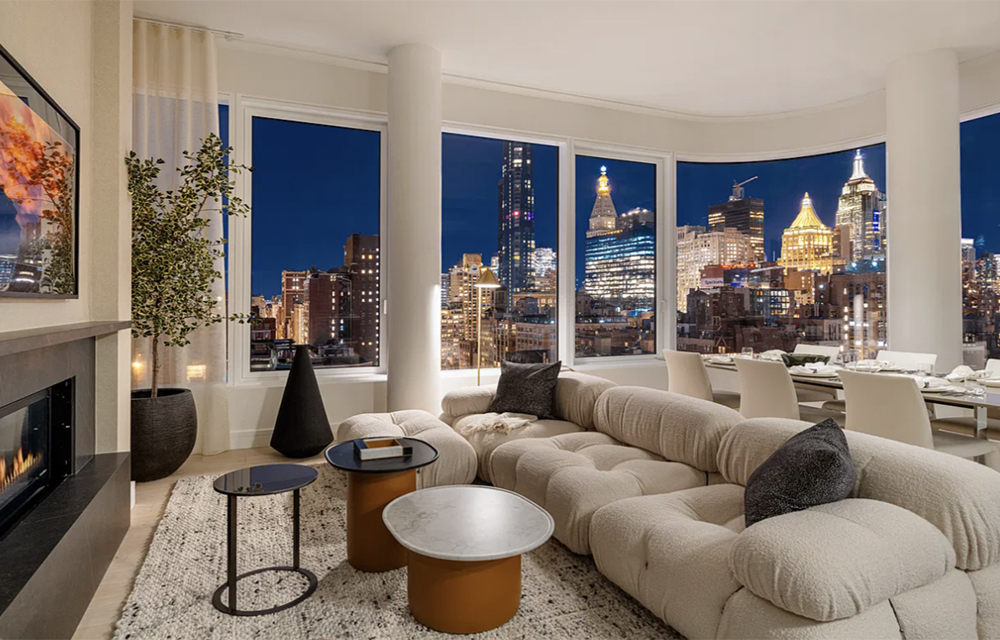
200E20TH sells out in Gramercy, penthouse A closes out sales at the CetraRuddy-designed condominium residences
Manhattan, NY 200E20TH, the CetraRuddy-designed architectural masterwork that brought a curved, contemporary sensibility to Gramercy’s Beaux-Arts streetscape, has




Columns and Thought Leadership

The art of investing in real estate - by Thomas Donovan
Real estate investing is as much an art as it is a skill. No one can time the market, or the factors that drive it, perfectly. Location, zoning, size, transportation, and neighborhood density give you a baseline for

Hunt CRE question and answer: Choosing a real estate agent - by David Hunt
First, we will only work with one agent exclusively. The primary reason is that we want that agent to legally represent our client’s interests. In New York State, a real estate agent has a fiduciary

Hunt commercial real estate question and answer: Fortune 500 wisdom - by David Hunt
Yes, there are lessons to be learned from the largest companies in America when comes to managing your real estate. But the decision to buy or lease real estate may not be one of

New York’s streets are full again, and the retail numbers prove it - by Noam Aziz
Walk down any New York block this year and you can feel it. The sidewalks are crowded, the storefronts are lit, and the energy that defines this city is back at full volume.
.gif)