



News:
Construction Design & Engineering
Posted: June 13, 2011
Layne Frank - Metro Fiber helps buildings add value for tenants without any added project costs
Voice over IP. Video conferencing. Digital media signage. Cloud computing. All of these emerging technologies, along with bandwidth-intensive web applications such as streaming video, are pushing office Internet connectivity to the limit. Thanks to a resurgence in the fiber-optic network business1, building owners have new opportunities to lure tenants by providing Fiber to the Building (FTTB), which provide that "last mile" of connectivity to the Internet.
During the mid 1990s - the "Telecom Bubble" years - thousands of miles of fiber-optic cable were run across the world, creating the communications network that serves homes and businesses today. Before the ultimate goal to bring fiber directly to all office buildings could be reached, the bubble burst. A decade later, several regional exchange carriers have arisen that are competitively expanding their fiber offerings to meet business demands for increased bandwidth.
The entire fiber optic network in Manhattan runs through a conduit and manhole infrastructure system managed by the Empire City Subway Company (ECS). The fiber cables terminate in data centers, some of which are located in buildings filled with data centers that are called "carrier hotels." Usually, the fiber can be picked up at one of the ECS manholes and extended through an existing conduit into an office building's main point of entry (MPOE). If there is no conduit to the building, a licensed DOT contractor will trench the street from the manhole to the building and install one. Once inside the building, the fiber can be run through existing risers or conduits to the tenant destinations.
The good news for building owners that want to bring the last mile of fiber into their building is the up-front costs can be offset or eliminated by agreeing to a 36 month contract for carrier services. Individual tenants may also seek permission from property management to bring their own fiber optic cable into the building. In this scenario, all installation costs will be borne by the tenant. For both landlord and tenant situations, the permitting and installation process can take anywhere from 30 to 90 days.
In the age of IP Communications, building owners and management firms recognize the importance of having connectivity options, or carrier diversity, available to tenants. One fiber connection alone can service the needs of several tenants, and the initial cost to the owner can be nominal or nothing to bring it into the building. It's a great selling point to offer prospective tenants the capability to connect to the Internet without any added project costs or move in delays.
1Wall Street Journal, Dec. 29, 2010, "Fiber-Optic Networks Regain Some Glow."
Layne Frank is director of sales for BBH Solutions, Inc., New York, N.Y.
MORE FROM Construction Design & Engineering
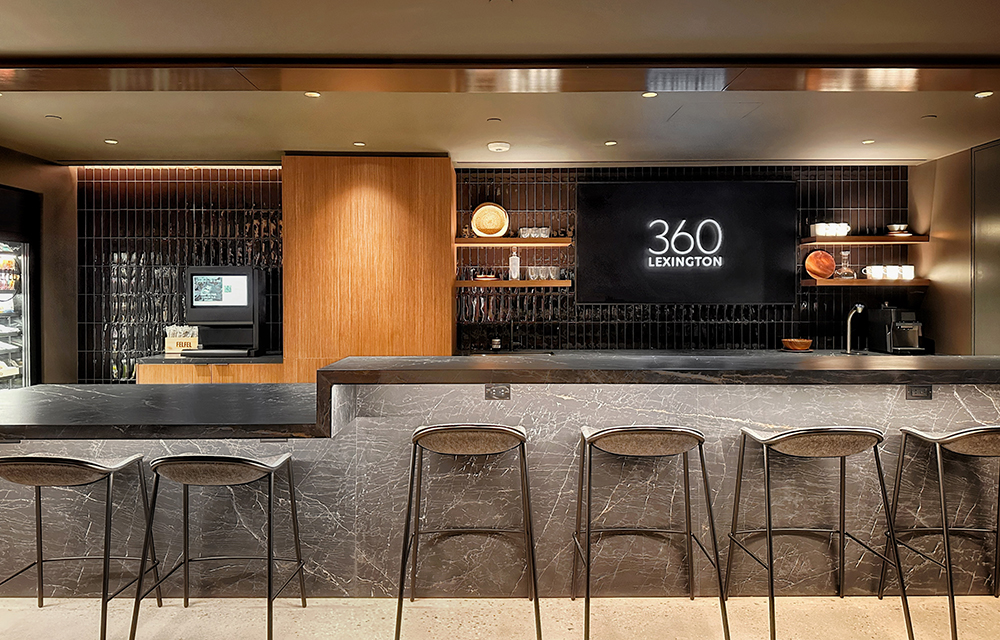
AmTrustRE and MdeAS Architects complete modernization of 360 Lexington Ave. in Midtown
Manhattan, NY AmTrustRE has completed a comprehensive modernization at 360 Lexington Ave. Led by New York-based architecture firm MdeAS Architects, the project reimagines the 268,000 s/f office building as a modern, hospitality-driven workplace designed to meet the evolving needs of tenants.


Quick Hits

Columns and Thought Leadership

We support green construction. Just not this kind - by Tammy Smith
Most people think of St. Patrick’s Day as a fun footnote on the calendar. In construction logistics, however, it’s a full-scale operational variable — especially if your work touches major metro areas with major parades and, let’s call it what it is, enthusiastic celebrants.

The Façade is no longer just a finish. It’s a risk strategy. - by Bentley Zhao
Twelve-billion-dollar weather disasters have already hit the U.S. through the first half of 2026, causing at least $31.9 billion in damage, according to Climate Central, the nonprofit that now maintains the disaster database NOAA discontinued.

Premium experiences, proven returns: The New revenue playbook for sports venues - by Terry McIntyre
Investing in the Fan Experience as a Revenue Strategy The sports and entertainment venues that bet on premium experiences years ago are now seeing those investments pay off in packed seats, increased revenue, and industry recognition.
