



News:
Brokerage
Posted: September 21, 2021
Law: Prevailing wage law for IDA projects goes into effect on Jan. 1, 2022 - by John Gordon

Starting January 1, 2022, certain construction projects receiving tax benefits as a result of the involvement of an IDA must pay prevailing wage.
Industrial development agencies (IDAs) are public benefit corporations established under the New York General Municipal Law to foster local economic development. IDAs are empowered to provide financial assistance to qualified construction projects in the form of a real estate tax exemption (with a beneficial payment in lieu of taxes (PILOT) agreement), a sales tax exemption on building materials and FF&E, and a partial mortgage recording tax exemption on project financing. In certain situations, IDAs can also provide tax-exempt bond financing.
Under the New York Labor Law, all workers under any “public work” contract are entitled to receive prevailing wage, but receiving financial assistance through an IDA did not make a construction project a “public work” subject to prevailing wage.
However, in April of 2020, Section 224-a of the New York Labor Law was enacted, broadening the scope of construction projects subject to prevailing wage requirements. With respect to construction projects having a cost exceeding $5 million, where public funds (including the value of the financial assistance provided by the IDA) account for 30% or more of the “total construction project costs,” contractors and subcontractors must pay prevailing wage.
Notable exceptions include not-for-profit developments and affordable housing developments meeting the criteria set forth in the law.
The applicability of the new requirement to projects which have been approved and are either awaiting closing, or which have closed and are in construction, is not clear under the new law. To avoid uncertainty, it would be advisable to advance projects as far as practicable prior to the effective date.
John Gordon is an attorney in Forchelli Deegan Terrana LLP’s IDA and Real Estate practice groups, Uniondale, N.Y.
Tags:
Brokerage
MORE FROM Brokerage
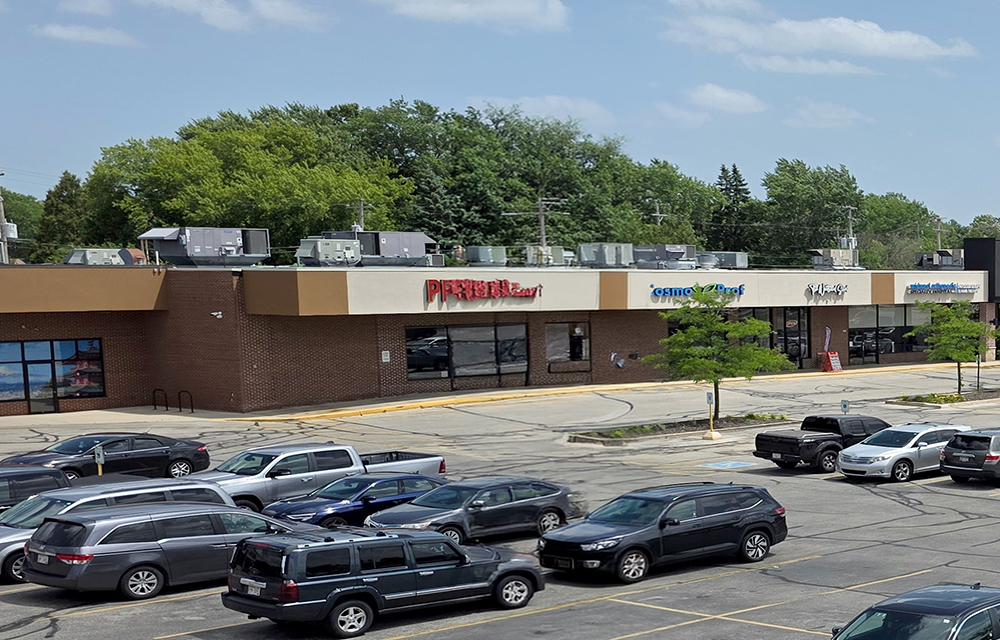
United Properties Corp. expands Wisconsin and Illinois retail presence adding 200,000 s/f
West Allis, WI United Properties Corp. completed two retail acquisitions totaling $27.4 million across Illinois and Wisconsin, adding 205,000 s/f of shopping center space to its portfolio






Quick Hits

Columns and Thought Leadership

A guide to finding the right NYC property management company - by Sanjay Gandhi
Being a small to midsize landlord in NYC is an increasingly demanding endeavor. From navigating complex regulations, increased compliance demands to dealing with tenant issues and remediating violations. It is wise to enlist the assistance of a partner, a professional

New York’s streets are full again, and the retail numbers prove it - by Noam Aziz
Walk down any New York block this year and you can feel it. The sidewalks are crowded, the storefronts are lit, and the energy that defines this city is back at full volume.

Hunt commercial real estate question and answer: Fortune 500 wisdom - by David Hunt
Yes, there are lessons to be learned from the largest companies in America when comes to managing your real estate. But the decision to buy or lease real estate may not be one of

Positive forecast for New York’s pro-housing push? - by Philip Butler
New York’s housing crisis remains a hot button topic despite growing consensus that varied and affordable housing is desperately needed statewide. Governor Hochul has recently introduced several initiatives to overcome N.Y.’s anti-housing
.gif)