



News:
Brokerage
Posted: August 16, 2016
Law: Passive means savings by Brian Sahn
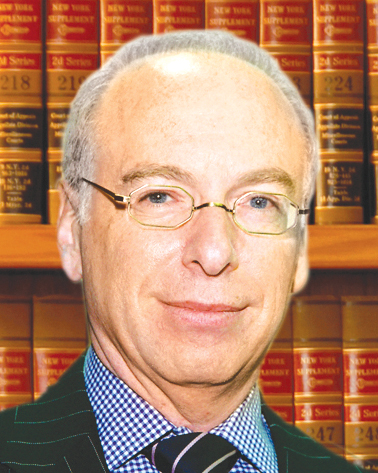 Brian Sahn, Forchelli, Curto, Deegan, Schwartz, Mineo & Terrana, LLP
When is green not enough? When it is passive. The “Passive House” standard takes it up a notch by implementing construction and design techniques for energy efficient buildings that require miniscule amounts of energy for heating and cooling, and can be applied to any structure, a residential building, school, factory, etc.
Compared to existing building stock, a passive structure uses 90% less energy for heating and cooling and up to 75% lower overall energy usage. Other benefits include greater indoor air quality, quieter indoor environment and a thermally balanced storm resilient structure. The added construction cost of 5% to 10% is offset by a reduction in heating and cooling system sizing and energy costs. It is estimated that the savings in energy costs will offset the added construction costs within a 10-year period.
Passive structures achieve such energy efficiency levels by designing tightly sealed and superior insulation, minimizing and controlling thermal bridges (i.e. areas from which heat escapes due to poor insulation), creating an airtight building envelope and the using of appropriate sealing material to ensure airtight junctions, and using high performance windows and doors and ventilation systems that allow heat recovery and energy recovery to supply a stream of fresh air and exhaust the stale air without losing heat in the winter or adding heat in the summer.
In our own backyard, Cornell University is constructing a 250-ft. tall residential high-rise on Roosevelt Island which will be so energy efficient that its impact on the construction industry may resonate long after the building opens to its 520 residents. When done, it reportedly will save 882 tons of CO2 each year compared to a normal building. Years ago, LEED was relatively new and unknown and its standard was questioned. Today LEED is the industry standard. Passive house may one day be synonymous with new construction, just as LEED is today.
Brian Sahn, Esq. is a partner at Forchelli, Curto, Deegan, Schwartz, Mineo & Terrana LLP, Uniondale, N.Y.; law clerk Shahroz Ahmed contributed to the article.
Tags:
Brokerage
MORE FROM Brokerage
Marcus & Millichap releases fourth-quarter 2026 NYC industrial market report
Manhattan, NY Marcus & Millichap has published its fourth-quarter 2026 New York City Industrial Market Report. “New York City’s industrial market is showing a clear





Columns and Thought Leadership

Hunt commercial real estate question and answer: Fortune 500 wisdom - by David Hunt
Yes, there are lessons to be learned from the largest companies in America when comes to managing your real estate. But the decision to buy or lease real estate may not be one of

The art of investing in real estate - by Thomas Donovan
Real estate investing is as much an art as it is a skill. No one can time the market, or the factors that drive it, perfectly. Location, zoning, size, transportation, and neighborhood density give you a baseline for

Hunt CRE question and answer: Choosing a real estate agent - by David Hunt
First, we will only work with one agent exclusively. The primary reason is that we want that agent to legally represent our client’s interests. In New York State, a real estate agent has a fiduciary

New York’s streets are full again, and the retail numbers prove it - by Noam Aziz
Walk down any New York block this year and you can feel it. The sidewalks are crowded, the storefronts are lit, and the energy that defines this city is back at full volume.
.gif)