



News:
Brokerage
Posted: May 2, 2017
Krupic of SWBR Architects named level 2 CIT; firm promotes Blaya-Fornataro, Vekasy, Bucci, and O’Shea to associate

SWBR Architects
Rochester, NY According to SWBR Architects, Elvedin Krupic was recently named a Level 2 Certified Infrared Thermographer (CIT) by the Infrared Training Center (ITC), and promoted Leticia Blaya-Fornataro, AIA; Jim Vekasy, AIA, LEED AP; Jamie Bucci, AIA; and Jennifer O’Shea, AIA to associate
Krupic, who serves as technical coordinator at SWBR, has been with the firm for more than 20 years. In 2013, he received his level 1 CIT. Level 2 Infrared Thermography Certification (CIT) is the second of three levels of infrared training the ITC offers. Certified professionals can operate infrared cameras and software and identify and measure anomalies based on thermal patterns, comparisons with similar equipment and their own experience. Krupic attended a training course, passed the required exams and submitted a field assignment to successfully complete his certification. He studied architecture at the College of Architecture in Sarajevo, capital of Bosnia and Herzegovina.
Blaya-Fornataro specializes in senior housing with a particular focus on creating communities for active and independent residents and has been with the firm since 2008. Her most recent projects include The Highlands at Pittsford, St. Ann’s Community and St. John’s Home for the Aging. Prior to joining SWBR, Blaya-Fornataro’s design experience included work in Brazil, Utah and Miami. She holds Master and Bachelor degrees in Architecture from The University of Utah.
Vekasy joined SWBR in 2015. His innovation, attention to detail and organizational skills enable him to successfully manage large, complex projects. Although he has worked throughout the Northeast for more than 10 years, his most recent work includes projects for Cloverwood Senior Living and Southern Tier Environments for Living. He received his Bachelor of Architecture from Syracuse University.
As an architect and designer, Bucci has managed several large projects for clients in New York state. His design experience includes commercial, industrial and education projects for Victor Central School District, Rochester City School District and McQuaid Jesuit High School. In addition to his design work at SWBR, Bucci is heavily involved in the community. He is an active mentor for the ACE Mentor Program of Rochester, has been a guest critic for senior thesis presentations at Alfred State College and has volunteered with Habitat for Humanity.
A project manager and new associate, O’Shea recently earned her Leadership in Energy and Environmental Design (LEED) Accreditation and joined SWBR in 2016. Previously she worked internationally in Russia and Ireland. She specializes in design and construction on pharmaceutical, high-tech and semiconductor facility projects and is working with Eastman Kodak Company, DuPont, Thermo Fisher and others. She received her Bachelor of Architecture from Cornell University and resides in Geneseo.
Tags:
Brokerage
MORE FROM Brokerage

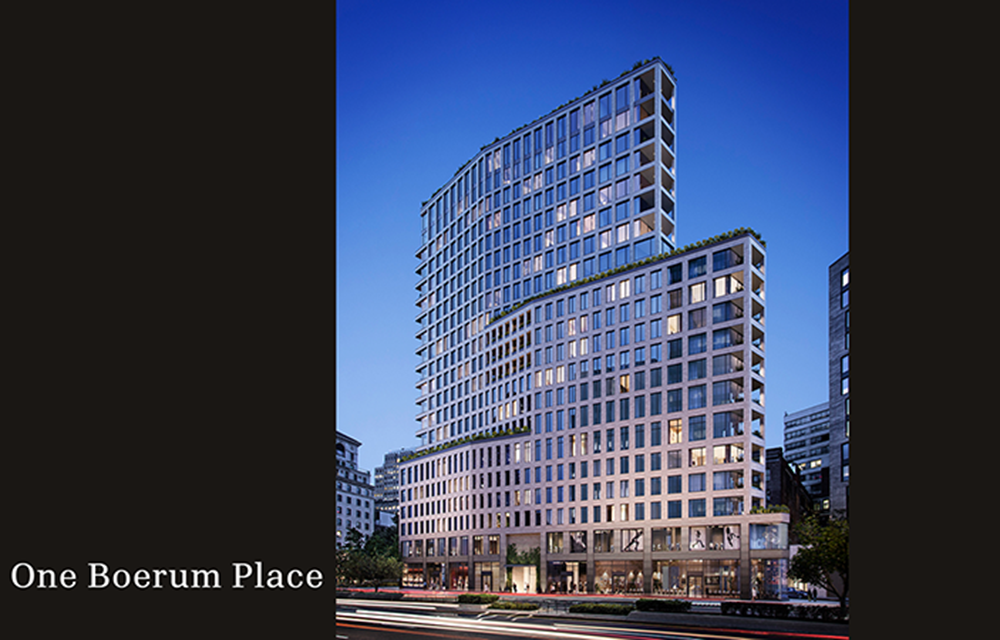
200E20TH sells out in Gramercy, penthouse A closes out sales at the CetraRuddy-designed condominium residences
Manhattan, NY 200E20TH, the CetraRuddy-designed architectural masterwork that brought a curved, contemporary sensibility to Gramercy’s Beaux-Arts streetscape, has




Columns and Thought Leadership

Hunt commercial real estate question and answer: Fortune 500 wisdom - by David Hunt
Yes, there are lessons to be learned from the largest companies in America when comes to managing your real estate. But the decision to buy or lease real estate may not be one of

The art of investing in real estate - by Thomas Donovan
Real estate investing is as much an art as it is a skill. No one can time the market, or the factors that drive it, perfectly. Location, zoning, size, transportation, and neighborhood density give you a baseline for

New York’s streets are full again, and the retail numbers prove it - by Noam Aziz
Walk down any New York block this year and you can feel it. The sidewalks are crowded, the storefronts are lit, and the energy that defines this city is back at full volume.

Hunt CRE question and answer: Choosing a real estate agent - by David Hunt
First, we will only work with one agent exclusively. The primary reason is that we want that agent to legally represent our client’s interests. In New York State, a real estate agent has a fiduciary
.gif)