



News:
Brokerage
Posted: September 27, 2022
KPG Funds reports 85% occupancy rate throughout its office buildings
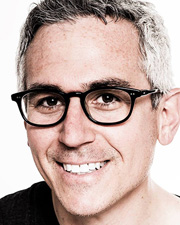
New York, NY KPG Funds is bucking the trend when it comes to attracting and retaining tenants these days, post pandemic with most office buildings reporting lower occupancy rates.
While the pandemic has caused a shift in what the workplace looks like with many companies cutting back on space and usage patterns by up to 20% or more, at KPG Funds’ office buildings the rate of occupancy is 85%, more than double the city’s occupancy rate (as reported in June) of 42.5%.
The office development firm buys class B and C architecturally significant buildings in need of rehabilitation and transforms them into class A boutique office buildings that tenants, and workers want to come to work at with high quality amenities more often found in boutique hotels or high-end luxury apartments.
“The office sector has seen the greatest shift as result of pandemic in investors’ priorities,” said KPG Funds co-founder and CEO Greg Kraut, who remains positive. Kraut and KPG have advice for office building owners and investors. While it is too early to say what a post-COVID world looks like, in KPG Funds’ buildings, tenants are filling the buildings with rents upward of $100 per s/f, even during the pandemic. “We are seeing a return closer to the pre-pandemic normal,” said Kraut, who last year announced a $1 billion fund to buy office and retail space.
Kraut says it is time for building owners and tenants/employers to work together to redesign existing office space, and for companies to seek efficiency gains in what they occupy and make the old “static” office a healthy, functional place where workers want to come back to offices that are conducive to employee’s wellbeing and productivity.
“Employers want more than a place for employees to go online and sit in front of a computer,” said Kraut. Tenants, he said, are requesting more thoughtful, efficient use of space including more communal areas, amenities, collaborative meeting spaces and breakout rooms to welcome back employees and attract top talent.
“There continues to be a desire by tenants to create a work environment that gives their employees a reason to want to be in the office,” Kraut said. “They use it as a recruitment and retention tool to attract talent in highly competitive sectors. We have seen clear demand for non-commodity, bespoke space which has only increased as employers want to give employees every reason to be in the office for training, community, or business generation.”
Kraut and KPG have developed a brand like hotels that have different themes for each of their office buildings with many amenities designed to attract women-owned businesses, high end kitchens and bathrooms, lactation rooms and sleep pods.
Businesses continue to see the office as the central hub of business activity and are making long-term commitments and expansions. ‘’Even if a company adopts a hybrid work week, everybody still has a desk,” said Kraut.
Kraut believes strongly in New York and a greater influx of tenants. “Around 70 % of employees in New York City are under 35 years old and they want to get out of their apartments and back to the office, but it has to be the right office building near transit hubs and cool, safe neighborhoods with nice restaurants and shopping.”
Older buildings in other parts of the city like Midtown that have not been modernized, will be left behind, as available space increases at a record rate,” said Kraut.
Tags:
Brokerage
MORE FROM Brokerage

200E20TH sells out in Gramercy, penthouse A closes out sales at the CetraRuddy-designed condominium residences
Manhattan, NY 200E20TH, the CetraRuddy-designed architectural masterwork that brought a curved, contemporary sensibility to Gramercy’s Beaux-Arts streetscape, has





Quick Hits

Columns and Thought Leadership

The art of investing in real estate - by Thomas Donovan
Real estate investing is as much an art as it is a skill. No one can time the market, or the factors that drive it, perfectly. Location, zoning, size, transportation, and neighborhood density give you a baseline for

Hunt commercial real estate question and answer: Fortune 500 wisdom - by David Hunt
Yes, there are lessons to be learned from the largest companies in America when comes to managing your real estate. But the decision to buy or lease real estate may not be one of

Hunt CRE question and answer: Choosing a real estate agent - by David Hunt
First, we will only work with one agent exclusively. The primary reason is that we want that agent to legally represent our client’s interests. In New York State, a real estate agent has a fiduciary

New York’s streets are full again, and the retail numbers prove it - by Noam Aziz
Walk down any New York block this year and you can feel it. The sidewalks are crowded, the storefronts are lit, and the energy that defines this city is back at full volume.
.gif)