



News:
Brokerage
Posted: July 3, 2018
Kontis and Amato launch TEK Realty Advisors LLC

Queens, NY Commercial real estate brokers Theo Kontis and Vincenzo Amato have launched of TEK Realty Advisors LLC (TEKRA).
TEKRA is a boutique commercial real estate brokerage and advisory firm that specializes in the sale and leasing of investment properties, industrial/warehouses, development sites, self-storage facilities, retail stores and mixed-use/multifamily properties. TEKRA represents owners, sellers, purchasers and lessees of commercial estate assets throughout the NYC Metro area.
Kontis, partner and co-founder of TEKRA said, “We are dedicated to providing the best-in-class brokerage service to our clients by combining our extensive local market experience with a technology driven approach to provide critical insight and market information in order to maximize their real estate decisions.”
The principals behind TEKRA have over 15 years combined experience and have brokered over 1.3 million s/f across 120+ transactions in New York, New Jersey and Massachusetts.
Kontis and Amato were recently retained as exclusive agents to sell a mixed-use property located on the corner of 23rd Ave. and 29th St. in the Ditmars section of the Astoria neighborhood.
The duo has been busy on the industrial front as well, representing the purchaser in the $12 million sale of a portfolio industrial buildings totaling 23,177 s/f on 2.66 acres in New Hyde Park. The partners also secured a 10,000 s/f lease at 48-35 36th St. in Long Island City for Atlas Floral Decorators. Atlas is relocating from their existing facility in Woodside, Queens, which is part of Madison Realty Capital’s planned residential development currently seeking a rezoning.
“We decided to locate our office in Astoria because we are bullish on New York City. Our thesis has been reaffirmed by the tremendous amounts of interest we’re receiving from private investors and mid-market investment companies seeking properties in transit-oriented neighborhoods.” Vincenzo said. “We’re marketing a 20-unit apartment building on 43rd Street and bringing a nearby 6-unit building with on-site parking to the market as well.”
Tags:
Brokerage
MORE FROM Brokerage
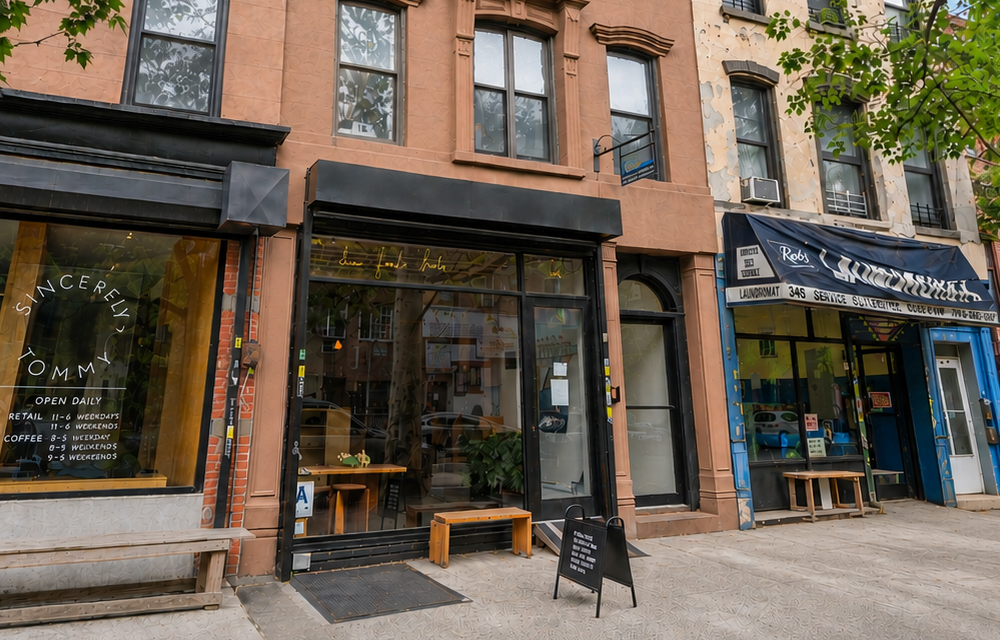
Bestreich, Reynolds, Davila, and Flaherty of Investment Property Realty Group close $1.97 million sale of 343A Tompkins Ave. in Bed-Stuy
Brooklyn, NY Investment Property Realty Group (IPRG) closed the sale of 343A Tompkins Ave., a mixed-use building located in the Bed-Stuy section of the borough, for $1.97 million.


Quick Hits

Columns and Thought Leadership

A guide to finding the right NYC property management company - by Sanjay Gandhi
Being a small to midsize landlord in NYC is an increasingly demanding endeavor. From navigating complex regulations, increased compliance demands to dealing with tenant issues and remediating violations. It is wise to enlist the assistance of a partner, a professional

Hunt commercial real estate question and answer: Fortune 500 wisdom - by David Hunt
Yes, there are lessons to be learned from the largest companies in America when comes to managing your real estate. But the decision to buy or lease real estate may not be one of

New York’s streets are full again, and the retail numbers prove it - by Noam Aziz
Walk down any New York block this year and you can feel it. The sidewalks are crowded, the storefronts are lit, and the energy that defines this city is back at full volume.

Hunt CRE question and answer: Choosing a real estate agent - by David Hunt
First, we will only work with one agent exclusively. The primary reason is that we want that agent to legally represent our client’s interests. In New York State, a real estate agent has a fiduciary
.gif)