



News:
Brokerage
Posted: January 27, 2009
Infrastructure developments: Bring value into the process
We all know that the downturn in the market is cyclical, that given the right trigger things will improve. The incoming president will attempt to jump start re-growth by devoting billions of dollars to help fill the growing infrastructure gap that is affecting our efficiency: highways and transit routes from ports as a growing proportion of our consumable goods arrives from other countries; repairs to aging, ill-maintained bridges and structures; and social infrastructure such as schools that account for the way demographics have changed, and will change in the future. This is not an American phenomenon, every country, from China to India to Canada faces a need for more or improved infrastructure, and because of the lack of public funding, had sought private sector investment and development expertise from banks, pension funds and large international contractors, through the public private partnership development process. With the private sector somewhat tainted and weakened by the recent financial implosion, the stimulus package will likely rely more on traditional project delivery of "shovel ready" projects that have been sitting on wish lists but did not have the local political will or funding to commence.
The big picture is that the asset creation process must be more efficient, and needs to consider the overall cost of ownership through the intended lifespan. Research has shown that between 70-75% of public projects finish over budget or schedule or both, which is unsustainable in the long term. We need to restructure and improve the development process, to improve the confidence investors and public appropriations have in the team's ability to meet the targets, while addressing social conscience issues like sustainability along the way. How, then, can we begin to improve quickly, to start this program on the right footing and build efficient practices? Here are some suggestions:
* Improve the design process: Adopt methods that allow contractor awards earlier, to share the design stage responsibility and speed delivery without huge cost to unsuccessful bidders. This allows for innovation and lower cost, and maintains bidder interest while retaining public accountability.
* Use current technology: Integrated management systems and building information modeling platforms are becoming main-stream, and when applied can outstrip traditional concept design and estimating methods. There still isn't one silver bullet that provides all that is needed in one package, but interoperability means you can get an efficient result by integrating systems.
* Identify risks and value: Risks can be managed if they are known, so establish structured risk reviews and allocate them to team members for action. Combine value management with whole life cost reviews to ensure ongoing maintenance and replacement needs are minimized, rather than focusing on initial cost cutting.
* Share risks with the team: Projects succeed when strong teams are built, and one party is not left carrying the can for others. Use single point project liability insurance, to allow contractor involvement in design to add innovation; share risk with contractors by taking quantity and scope risk leaving them with performance risk; create partnering arrangements to align teams and capture expertise. There are good examples of these methods, including N.Y. Dept. of Design and Construction, but widespread adoption in the U.S. is still lacking.
There are many more ways, but the point is to stop wasteful practices and work together to achieve the results we need by adopting change that adds value. I think the incoming president would appreciate that.
Simon Taylor, FRICS, is a senior director of Altus Group and chairman of RICS Americas Construction & Project Management Council, New York, N.Y.
Tags:
Brokerage
MORE FROM Brokerage
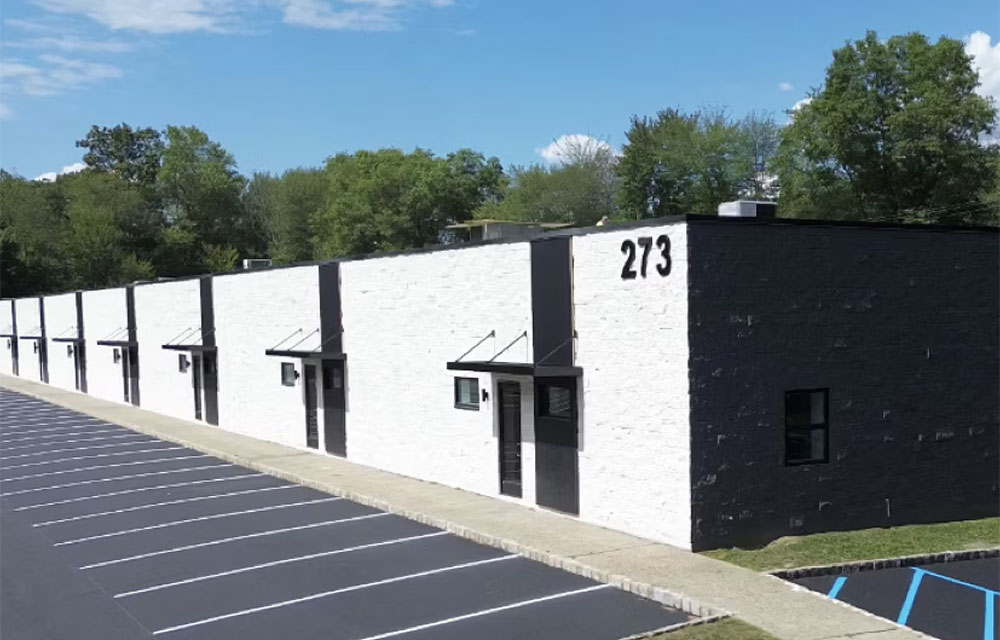
Resource Realty of Northern NJ delivers complete lease-up of 235 Franklin Rd. for Commerce Park Investors
Randolph, NJ Resource Realty of Northern New Jersey (RRNNJ) has completed the lease-up of a 10-unit small-bay industrial property at 273 Franklin Rd., marking the culmination of an investment strategy that began





Columns and Thought Leadership

Hunt commercial real estate question and answer: Fortune 500 wisdom - by David Hunt
Yes, there are lessons to be learned from the largest companies in America when comes to managing your real estate. But the decision to buy or lease real estate may not be one of

New York’s streets are full again, and the retail numbers prove it - by Noam Aziz
Walk down any New York block this year and you can feel it. The sidewalks are crowded, the storefronts are lit, and the energy that defines this city is back at full volume.

A guide to finding the right NYC property management company - by Sanjay Gandhi
Being a small to midsize landlord in NYC is an increasingly demanding endeavor. From navigating complex regulations, increased compliance demands to dealing with tenant issues and remediating violations. It is wise to enlist the assistance of a partner, a professional

Positive forecast for New York’s pro-housing push? - by Philip Butler
New York’s housing crisis remains a hot button topic despite growing consensus that varied and affordable housing is desperately needed statewide. Governor Hochul has recently introduced several initiatives to overcome N.Y.’s anti-housing
.gif)