



News:
Brokerage
Posted: April 27, 2015
Industry Leaders: Drones are taking over the world - and the real estate industry
These are heady days if you are a video professional who loves aviation, and now today, drones. Coming from my previous life as both a military and commercial helicopter pilot, and then more recently having owned and operated a promotional video production company for the last five years, I really never had much interest in 'RC' (remote controlled) aircraft. That all changed when one of my cameramen offered to bring a 'quadcopter' - camera solution on set and I said, "Sure, why not."
It truly is amazing what these craft can do, with their small size, maneuverability, and stabilized camera onboard - especially in the hands of a capable pilot/operator. UAV camera platforms (aka drones) don't just fly over their subjects or points of interest, they are immersive. With each shot considered, planned and then properly executed, the video captured from a drone explores the environment, and reveals scenes way beyond what a (much more pricey) manned helicopter could ever accomplish.
Whether you call them drones, or UAV's, or 'quadcopters,' what's key is that there are two modes of flying a UAV. The first, is hands on flying by a pilot / operator. This will typically be the type of operation when it comes to creating a video for presentation or marketing purposes. The pilot and/or cameraman (advanced drones utilize two operators), needs to fly the camera as any director or camera operator would do - with a cinematic vision of what the shot is trying to portray. The other form of operation is 'semi-autonomous,' where the UAV will utilize it's internal GPS hardware and will fly on its own according to inserted GPS waypoints or path, with a pilot following the flight, and ready to disengage and take over manual control, if needed.
For real estate marketing, that elusive emotional attachment to a property, home or commercial site for the real estate sales and marketing effort, is just one successful drone production away from being realized. Drone video moves you and creates that emotional tug.
Beyond that, the potential for autonomous UAV flight, is probably limitless. One example is the capture of GEO-tagged images that are seamlessly stitched together. The process can be duplicated on repeat flights or over a prolonged period of time. Infrastructure inspection, 2D mapping, 3D mapping, real-time viewing, survey, thermal imaging, the list goes on.
Insurance carriers and agents are beginning to write aviation insurance policies for commercial UAV operators. Such policies will include liability for persons and property, as well as full coverage for the UAV craft. On February 15, the FAA issued a letter of proposed rules for commercial UAV operation to the general public. The FAA has asked the public to weigh in on such, and then the regulations should soon be forthcoming. As proposed, the regulations are overall supportive of the growth in this business, and reasonable for professional and proficient would-be operators to adopt. Working closely with the manufacturers, the FAA can further insure that GPS enabled drones do not approach restricted airspace, or high-security or dangerous areas.
It is already clear that early implementers of UAV technology - offered by professional operators - will find distinct advantages and opportunities to grow their business.
David Sanders is the chief pilot / COO at Rotor Air Cam LLC, East Meadow, N.Y.
Tags:
Brokerage
MORE FROM Brokerage

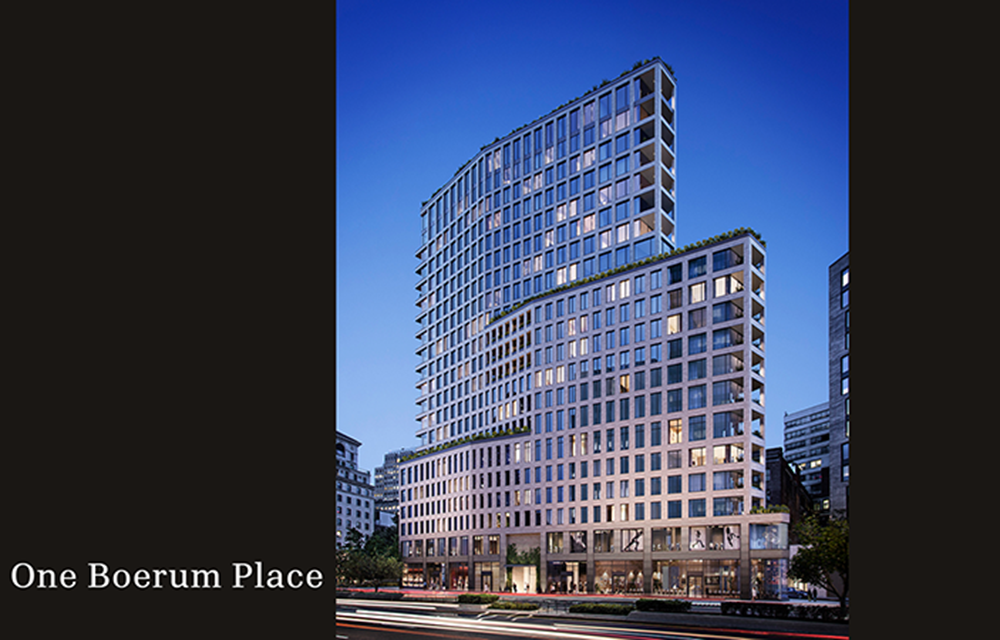
200E20TH sells out in Gramercy, penthouse A closes out sales at the CetraRuddy-designed condominium residences
Manhattan, NY 200E20TH, the CetraRuddy-designed architectural masterwork that brought a curved, contemporary sensibility to Gramercy’s Beaux-Arts streetscape, has




Columns and Thought Leadership

The art of investing in real estate - by Thomas Donovan
Real estate investing is as much an art as it is a skill. No one can time the market, or the factors that drive it, perfectly. Location, zoning, size, transportation, and neighborhood density give you a baseline for

New York’s streets are full again, and the retail numbers prove it - by Noam Aziz
Walk down any New York block this year and you can feel it. The sidewalks are crowded, the storefronts are lit, and the energy that defines this city is back at full volume.

Hunt CRE question and answer: Choosing a real estate agent - by David Hunt
First, we will only work with one agent exclusively. The primary reason is that we want that agent to legally represent our client’s interests. In New York State, a real estate agent has a fiduciary

Hunt commercial real estate question and answer: Fortune 500 wisdom - by David Hunt
Yes, there are lessons to be learned from the largest companies in America when comes to managing your real estate. But the decision to buy or lease real estate may not be one of
.gif)