



News:
Brokerage
Posted: April 5, 2016
Tax assessement indicators: Property value vs. sales price by Steven Glassberg
 Steven Glassberg, Glassberg & Associates
In 2014 the Court of Appeals set the ground rules for an Article 7 RPTL proceeding to challenge a property tax assessment. Matter of Board of Mgrs. of French Oaks Condominium v. Town of Amherst, 23 N.Y.3d 168 (2014).
Just recently, the Second Department weighed in on how to determine if the property was overvalued in any way. Surprisingly, a price set in a recent arm’s length transaction is not always a “proper indicator of value” for assessment purposes.
In Matter of Hampshire Recreation, LLC v Board of Assessors, (2016 N.Y. App. Div. LEXIS 1842), the Second Department reviewed an assessment of a golf course and surrounding area totaling approximately 117 acres. Significantly, the property, during the relevant periods, was improved only with “a golf course, a clubhouse and separate golf and tennis shops.” It is zoned for residential use but is not improved with any residential properties.
The previous owner of the real property, a company known as Hampshire Country Club, Inc. commenced an action challenging the 2010 tax year assessment of the relevant real property. In June of 2010, Hampshire Country Club, Inc. sold the real property to Hampshire Recreation, LLC, the petitioner in this action for $12.1 million of which $12 million was attributed to the real property. Hampshire Recreation commenced actions challenging the 2011 and 2012 tax assessments of the real property at issue here. All the cases were consolidated for trial.
At trial, the petitioner’s expert submitted an appraisal valuing the real property, based upon the income capitalization method, at $4.8 million for 2010 and $4.7 million for 2011 and 2012. The respondents did not submit an appraisal of their own, instead relying on the sales price as the best indicator of value.
After trial, the Supreme Court determined that the sales price attributed to the real property, $12 million, was the best indicator of the value of the property. The petitioners appealed.
The Appellate Court, reversed the trial court. Despite the fact that the purchase price for the real property was $12 million, the Appellate Court ruled that the value of the property for assessment purposes was significantly lower. The Appellate Court stated that the price in an arm’s length transaction represented the “highest rank” of the value of the real property and not necessarily its value for assessment purposes. The value for assessment purposes is the value of the real property in its current condition, not the value at its highest rank.
Therefore, using the sales price as the assessment price was in error. The value of its current condition, was the correct valuation for assessment purposes and the property was overvalued by the respondents.
Steven Glassberg is the founder of Glassberg & Associates, LLC, New York, N.Y. and Port Washington,N.Y.
Tags:
Brokerage
MORE FROM Brokerage

Bestreich, Reynolds, Davila, and Flaherty of Investment Property Realty Group close $1.97 million sale of 343A Tompkins Ave. in Bed-Stuy
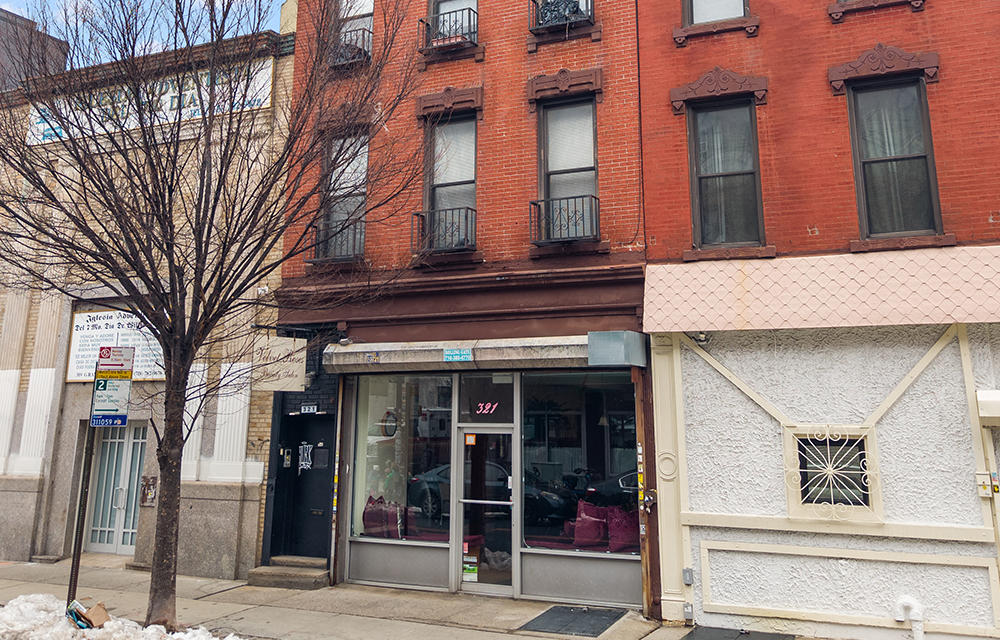
Brooklyn, NY Investment Property Realty Group (IPRG) closed the sale of 343A Tompkins Ave., a mixed-use building located in the Bed-Stuy section of the borough, for $1.97 million.



Quick Hits

Columns and Thought Leadership

Hunt commercial real estate question and answer: Fortune 500 wisdom - by David Hunt
Yes, there are lessons to be learned from the largest companies in America when comes to managing your real estate. But the decision to buy or lease real estate may not be one of

A guide to finding the right NYC property management company - by Sanjay Gandhi
Being a small to midsize landlord in NYC is an increasingly demanding endeavor. From navigating complex regulations, increased compliance demands to dealing with tenant issues and remediating violations. It is wise to enlist the assistance of a partner, a professional

Hunt CRE question and answer: Choosing a real estate agent - by David Hunt
First, we will only work with one agent exclusively. The primary reason is that we want that agent to legally represent our client’s interests. In New York State, a real estate agent has a fiduciary

New York’s streets are full again, and the retail numbers prove it - by Noam Aziz
Walk down any New York block this year and you can feel it. The sidewalks are crowded, the storefronts are lit, and the energy that defines this city is back at full volume.
.gif)