



News:
Brokerage
Posted: July 15, 2013
Rebny study reveals excessive landmarking of Manhattan properties stifling economic growth; More than one in four Manhattan properties are landmarked making neighborhoods less affordable and driving up costs for property owners
Nearly 30% of Manhattan properties are now protected by regulations governing landmarks - a milestone that will stifle job creation and important economic development initiatives, increase the cost of living in New York, and further homogenize much of the borough's neighborhoods.
A total of 11,857 - or 27.7% - of Manhattan properties are designated landmarks, according to the comprehensive analysis released today by the Real Estate Board of New York (REBNY). In some neighborhoods, such as the Upper West Side and SoHo/Greenwich Village, of Manhattan, the level of protected properties has reach a staggering 70%.
As the ability to develop housing is constricted, housing prices increase and wealth concentrates in heavily-landmarked areas. Owners must expend time and resources on the administrative and discretionary process that landmarks designation represents, while also paying the hard costs of complying with landmarks standards. These regulations impose a special burden on those buildings that have a population whose income is unable to support the cost of complying with the largely unsubsidized Landmark regulations as well as those rent regulated buildings whose annual rent increases are set by the Rent Guidelines Board.
Other key findings of the study include:
· 70% of properties in Community Districts 2 (SoHo, Village area) and 7 (Upper West Side) are landmarked
· 93% of all landmarked properties in Manhattan are located in historic districts, indicating how this broad brush approach to landmark designation undermines the landmark process by capturing numerous properties that have no historic significance, by including buildings that lack any architecturally noteworthy style or that have been so significantly altered that they lack distinction
· 48 vacant lots and 50 parking lots representing approximately 2.6 million s/f of development potential are on landmarked properties in Manhattan
The study also noted that landmarks affect efforts to create a more sustainable New York. As property owners attempt to increase energy efficiency in landmarked buildings, it is becoming harder to find affordable fixtures that comply with landmarks standards.
Tags:
Brokerage
MORE FROM Brokerage
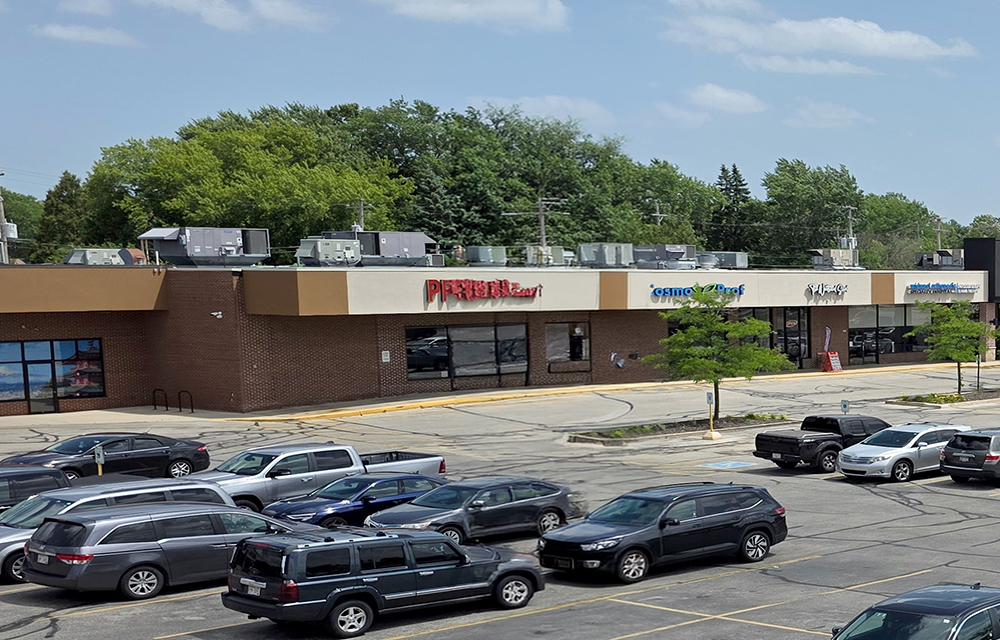
United Properties Corp. expands Wisconsin and Illinois retail presence adding 200,000 s/f
West Allis, WI United Properties Corp. completed two retail acquisitions totaling $27.4 million across Illinois and Wisconsin, adding 205,000 s/f of shopping center space to its portfolio


Quick Hits
 (2).gif)

Columns and Thought Leadership

New York’s streets are full again, and the retail numbers prove it - by Noam Aziz
Walk down any New York block this year and you can feel it. The sidewalks are crowded, the storefronts are lit, and the energy that defines this city is back at full volume.

Hunt commercial real estate question and answer: Fortune 500 wisdom - by David Hunt
Yes, there are lessons to be learned from the largest companies in America when comes to managing your real estate. But the decision to buy or lease real estate may not be one of

Positive forecast for New York’s pro-housing push? - by Philip Butler
New York’s housing crisis remains a hot button topic despite growing consensus that varied and affordable housing is desperately needed statewide. Governor Hochul has recently introduced several initiatives to overcome N.Y.’s anti-housing

A guide to finding the right NYC property management company - by Sanjay Gandhi
Being a small to midsize landlord in NYC is an increasingly demanding endeavor. From navigating complex regulations, increased compliance demands to dealing with tenant issues and remediating violations. It is wise to enlist the assistance of a partner, a professional
.gif)