



News:
Brokerage
Posted: April 25, 2011
Brian Sheldrick: Commercial financing is looking up for Upstate markets
When will we have reasonable access to capital? This was the leading concern for Upstate Borrowers until the tides turned in the 4th quarter of 2010. With the economy on a slow road to recovery institutional lenders found themselves sitting on large amounts of capital which was generating little if any return. Contributing to the surplus of capital was the fact that they had been fearful of lending into a commercial real estate market for the previous few years which by all reports was painted as pure doom and gloom. During that period most commercial property investors held onto their assets and focused on maintaining cash flow as best as possible. Everyone suspected that the crisis could not last forever. What they didn't realize was that when capital did return to the market that it would be more plentiful than ever with attractive terms and rates.
As a resident of the Capital Region and actively involved in financing commercial real estate, I witnessed first-hand how this credit freeze impacted the world around me. The Capital Region has traditionally been a very stable commercial real estate market. This has been a function of our core regional employers' and institutions including state government, medical and universities. The Capital Region has also been perceived as a local/regional banking market, insulated from the "eyes of Institutional lenders" such as national banks, life companies, REITS, and Conduits. Now that institutional lenders are returning to the market they look at stable markets such as the Capital Region as an attractive area for investment. While this region did not see tremendous growth over the period leading up to the recent recession it did weather the storm better than most markets.
So has the tide turned with regards to investors' most pressing need...available capital? Globally, as the national economy strengthens and grows, the performance of underlying assets will help boost values and in turn lead to increased liquidity within commercial real estate. On a local level, the real estate market is benefiting from the influx of institutional lenders seeking lending opportunities in markets which performed well during the recent recession. With national lenders armed with capital the local banks are going to have to sharpen their pencils to continue to be the primary source of capital in the region. The tides have turned dramatically for the highest quality performing properties. Lenders are slowly increasing leverage and taking on what may be perceived as more risk; however, they are nowhere close to the aggressive nature we witnessed in the peak lending period of a few years ago.
In 2010 a few CMBS originators re-entered the market. Today there are at least 30 originators. This has certainly helped create liquidity for commercial real estate. Most importantly, the market has accepted the CMBS securitization's which has helped bring in spreads, increase leverage and provide acceptable terms and conditions. Life companies have followed suit with more competitive terms. We have found that life companies will compete with aggressive rates while CMBS originators will be more aggressive with leverage. In any event, competition is good news for borrowers.
There is a flight to quality. Lenders are becoming extremely competitive on the "best" deals but still shying away from the mediocre. A key economic concept that bodes well for the Capital Region is the fact that it has made significant inroads on the technology front. This has attracted the eyes of the institutional lenders looking to invest in growth areas. National and international development projects such as the Sematech campus adjacent to the University at Albany-SUNY, and the $3 billion and chip manufacturing plant in Malta, N.Y., will only bolster the visibility and viability of the Capital Region for Institutional lenders. These projects and the numerous other projects throughout the Capital Region will bring supplier and supply chain companies to the market and region over time. With these additional forces comes employment, and jobs which strengthen both our local and national economic environments. With the Capital Region growing and bringing quality assets into the market, capital will continue to become more available. Owners must look "outside the box" and navigate capital sources other than their typical banking institutions.
Brian Sheldrick is managing director for Largo Real Estate Advisors, Albany, N.Y.
Tags:
Brokerage
MORE FROM Brokerage
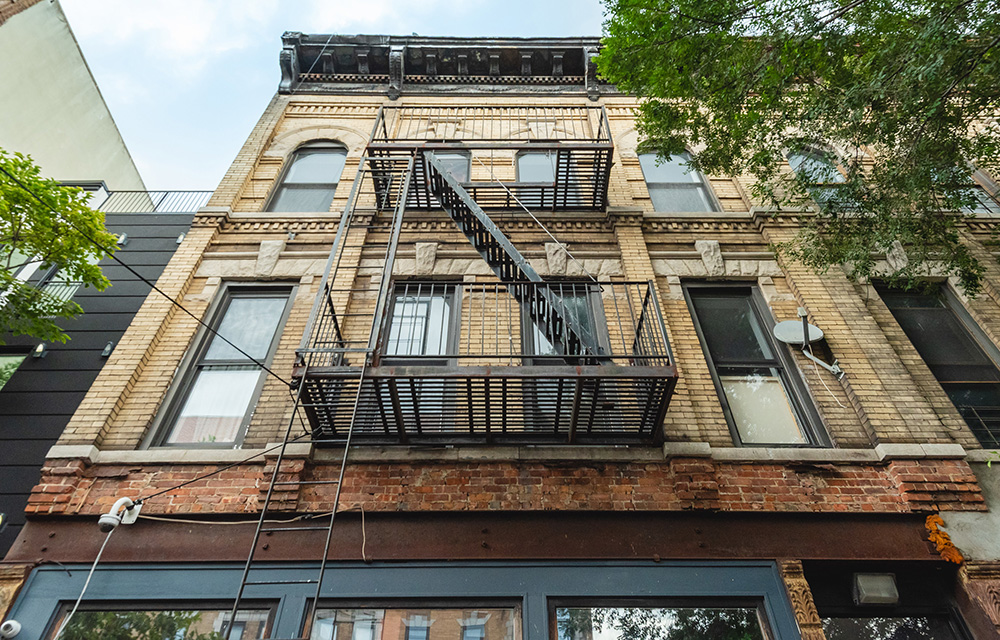
Marcus & Millichap brokers $2.8 million sale of free-market mixed-use property in Brooklyn
Brooklyn, NY Marcus & Millichap brokered the sale of 733 Dekalb Ave., a fully free-market multifamily and retail property in the Bed-Stuy neighborhood. The asset sold for $2.8 million.




Quick Hits

Columns and Thought Leadership

New York’s streets are full again, and the retail numbers prove it - by Noam Aziz
Walk down any New York block this year and you can feel it. The sidewalks are crowded, the storefronts are lit, and the energy that defines this city is back at full volume.

A guide to finding the right NYC property management company - by Sanjay Gandhi
Being a small to midsize landlord in NYC is an increasingly demanding endeavor. From navigating complex regulations, increased compliance demands to dealing with tenant issues and remediating violations. It is wise to enlist the assistance of a partner, a professional

Hunt commercial real estate question and answer: Fortune 500 wisdom - by David Hunt
Yes, there are lessons to be learned from the largest companies in America when comes to managing your real estate. But the decision to buy or lease real estate may not be one of

Positive forecast for New York’s pro-housing push? - by Philip Butler
New York’s housing crisis remains a hot button topic despite growing consensus that varied and affordable housing is desperately needed statewide. Governor Hochul has recently introduced several initiatives to overcome N.Y.’s anti-housing
.gif)
September Promotion
