



News:
Brokerage
Posted: May 21, 2019
Governor Cuomo celebrates opening of 94-unit Morris Ave. Apartments: Mixed-income, affordable housing development
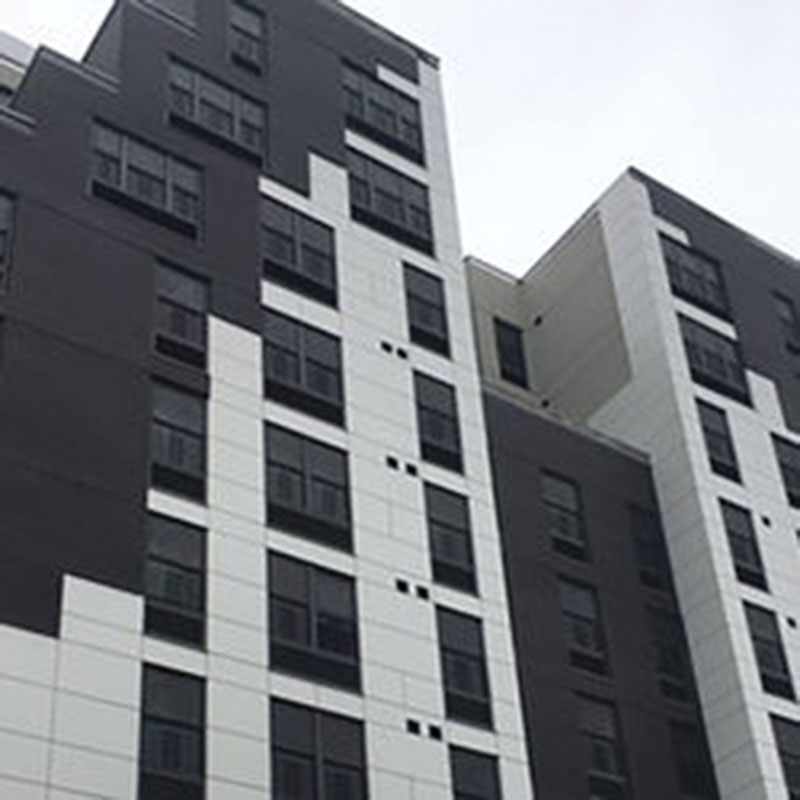 Bronx, NY Governor Andrew Cuomo celebrated the opening of the Morris Ave. Apartments, a new 11-story, 94-unit, mixed-income, affordable housing development with supportive services in the University Heights neighborhood. In addition to 63 affordable apartments, the building has 31 supportive apartments: 17 for young adults with mental illness who are aging out of foster care and 14 for homeless adults with mental illness.
“Every New Yorker deserves a safe and decent place to call home, and we are making significant investments in affordable housing to help make that happen,” governor Cuomo said. “This investment in the Bronx will not only add a new building and residents to the neighborhood, it will also allow vulnerable New Yorkers to live securely and independently in their community.”
The new building at 2264 Morris Ave., between East 182nd and East 183rd Sts., has 31 studio apartments, 23 one-bedroom apartments, 25 two-bedroom apartments and 14 three-bedroom apartments. There is one two-bedroom apartment for the building’s superintendent. The development also has community rooms with computers, on-site laundry facilities, multiple outdoor recreation areas and on-site parking.
State financing for Morris Ave.Apartments includes $13.9 million of tax-exempt bonds, of which $9.3 million has debt service supported by the New York State Office of Mental Health (OMH), federal Low-Income Housing Tax Credits that generated $15.9 million in equity, and $2.1 million in subsidy from New York State Homes and Community Renewal. Governor Cuomo’s New York State Medicaid Redesign Team supplied $5.8 million. OMH also provides $857,800 in annual funding for on-site supportive services. The NYC Department of Housing Preservation and Development delivered more than $7 million in financing. The project was co-developed by Services for the UnderServed and Bronx Pro Group. The Corporation for Supportive Housing provided the pre-development funds for the project and Chase provided the Letter of Credit.
The Morris Ave. Apartments are part of the governor’s $20 billion, five-year housing plan to make housing accessible and combat homelessness by building or preserving more than 100,000 affordable homes and 6,000 with supportive services. The plan is a comprehensive approach to statewide housing issues and includes multifamily and single-family housing and community development. Since 2011, New York State Homes and Community Renewal has invested more than $1 billion in the Bronx that has created or preserved affordable housing for more than 39,000 people.
Tenants have access to on-site supportive services through Services for the UnderServed, (S:US) one of the largest social service and housing organizations in New York. S:US staff will provide a wide range of supports aimed at guiding tenants toward their personal goals, long-term stability and health. Services include personalized support tailored to each tenants’ needs, daily life skills training, job placement, financial planning and support in healthy living and wellness.
New York State Homes and Community Renewal commissioner RuthAnne Visnauskas said, “Since 2011, HCR has financed more than 14,000 affordable apartments in the Bronx - providing homes for more than 39,000 people. With the $47 million investment in Morris Ave. Apartments, we are reducing homelessness and helping individuals with special needs live independent, stable and successful lives in the community they call home.”
New York State Office of Mental Health commissioner Dr. Ann Sullivan said, “The 31 supportive housing units in the Morris Ave. Apartments will help people with mental illness make their way on the road to recovery with greater independence and dignity. This beautiful apartment building is another example of governor Cuomo’s commitment to helping vulnerable New Yorkers, and we at OMH are proud to have played a role in its construction.”
HPD commissioner Louise Carroll said, “The affordable housing we are financing at record pace under Housing New York are delivering real results for New Yorkers. Through our collective efforts, 31 formerly homeless households and 63 low-income households now have the security of a new, affordable home. I want to thank Services for the Underserved, Bronx Pro, our partners at the state, and local elected officials for their commitment to building a more affordable New York City.”
Tags:
Brokerage
MORE FROM Brokerage
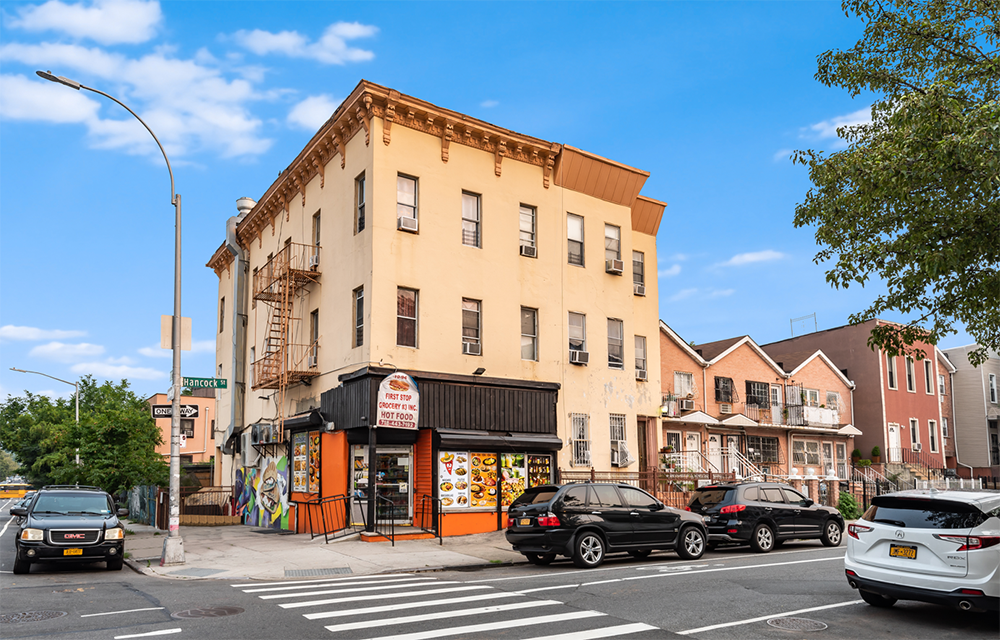
Investment Property Realty Group closes $1.75 million sale of 1094 Hancock Street in Brooklyn
Brooklyn, NY Investment Property Realty Group (IPRG), a New York-based commercial investment firm, has closed the sale of 1094 Hancock St., a mixed-use building in the Bushwick section, for $1.75 million.


Quick Hits
 (2).gif)

Columns and Thought Leadership

A guide to finding the right NYC property management company - by Sanjay Gandhi
Being a small to midsize landlord in NYC is an increasingly demanding endeavor. From navigating complex regulations, increased compliance demands to dealing with tenant issues and remediating violations. It is wise to enlist the assistance of a partner, a professional

New York’s streets are full again, and the retail numbers prove it - by Noam Aziz
Walk down any New York block this year and you can feel it. The sidewalks are crowded, the storefronts are lit, and the energy that defines this city is back at full volume.

Hunt commercial real estate question and answer: Fortune 500 wisdom - by David Hunt
Yes, there are lessons to be learned from the largest companies in America when comes to managing your real estate. But the decision to buy or lease real estate may not be one of

Hunt CRE question and answer: Choosing a real estate agent - by David Hunt
First, we will only work with one agent exclusively. The primary reason is that we want that agent to legally represent our client’s interests. In New York State, a real estate agent has a fiduciary
.gif)