



News:
Spotlight Content
Posted: November 19, 2007
Going global: Transparency matters for every investor regardless of acquisition location
Going global is becoming the mainstream concept in the real estate investment market. The world economy is in its sixth year of expansion and capital flows into real estate have not only increased in volume but have become increasingly international in character. In its latest Global Real Estate Capital research report, Jones Lang LaSalle revealed that commercial investment throughout the world is at an all-time high-reaching US $690 billion in 2006.
North and South America, Europe, the Middle East and Southeast Asia continue to see record levels of transactions. This expansion is clearly being driven by the global real estate securities funds (REITs) market. It has grown exponentially over the last four years. Other players contributing to global growth include international commercial mortgage-backed securities products and global commingled vehicles making high-quality equity investments.
As investors, developers, banks, REITs, owners, occupiers and service providers increasingly engage in offshore investments, the demand for reliable information also increases. They require accurate market studies, clear financial data, clarity regarding taxation and regulation, high ethical standards among professionals hired to execute or assist with the transaction, enforceable contracts and property rights, and access to title records and title insurance. Title insurance is one of the critical elements in the information chain that defines and highlights the transparency of a market.
There is a direct correlation between market transparency and the volume of direct foreign investment in a country. However, while less transparency can present risks and costs, it does not necessarily mean that a given country or real estate market should be avoided. With risk and reward in mind, less transparency in real estate is a minor issue relative to the larger opportunity-gaining access to an emerging market with favorable pricing or higher returns. To an investor, high transparency eases the free flow of quality information and capital, yet also makes it harder to find undiscovered bargains or to earn a "risk premium."
Currently, metrics exist to track transparency of political risk, financial/accounting systems, currency risk and overall business environments, but metrics and information on the transparency of real estate markets are sometimes ambiguous or just not available. Typically, the lack of transparency on real estate markets is due to a shortage of historical or current market data on rents, supply and demand, the absence of financial performance benchmarks, inequities in government eminent domain procedures and subsequent fair compensation to owners, differing accounting standards that do not meet International Accounting Standards (IAS), lax or selectively enforced building and zoning codes, taxation ambiguity or deficient title records.
Not all countries stand on equal footing on transparency matters. The 2006 edition of Jones Lang LaSalle's Real Estate Transparency Index (RETI) gives their current definition of real estate transparency:…any open and clearly organized real estate market operating in a legal and regulatory framework that is characterized by a consistent approach to the enforcement of rules and regulations and that respects private property rights. The RETI index profiles 56 countries according to a scale of transparency ratings: High transparency, transparency, semi-transparent, low transparency and opaque. The five most transparent countries in 2006 were Australia, the U.S., New Zealand, Canada and the United Kingdom. The largest transparency improvers were Brazil, Italy, Japan, Mexico and Romania. At thebottom of the list (in the opaque category) were Egypt, Venezuela and Vietnam. However, overall transparency has improved in two-thirds of the nations studied.
Without transparency, there can be no lasting public markets. Whether it's on the debt side (through mortgage securitization) or on the equity side (REITs), managers, analysts and attorneys have a fiduciary duty to perform extensive due diligence on the technical, legal, economic, financial and tax aspects of any transaction. Sam Zell, chairman and founder of the world's largest REIT, Equity Office Properties, has stated in the past that the future of liquidity in global real estate investment would be based on a global standard. Cross-border transactions in the first half of 2007 reaching US $382 billion, giving further evidence of improved real estate transparency in many parts of the world. Perhaps this is proof of an inexorable march towards the global standard.
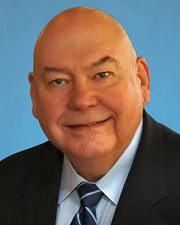
John Markunas is the international business development manager at LandAmerica Financial Group, New York, NY.
Tags:
Spotlight Content
MORE FROM Spotlight Content

The commercial classroom: 1031 tax-deferred exchanges - by Edwad Smith Jr.
The sale of real estate may trigger capital gains taxes on the net profits of that sale. These taxes may be deferred by participating in a 1031 tax exchange, in essence, by purchasing property(s) to replace the



.png)

Quick Hits
 (2).gif)

Columns and Thought Leadership

From vacancy to vitality: How adaptive reuse is reshaping Long Island’s CRE landscape - by Andrea Tsoukalas Curto
Adaptive reuse has become one of the most important conversations in commercial real estate today. Long Island has a large inventory of aging retail, office and industrial

CRE Guide Featured Company: Merritt Environmental Consulting Corp.
Merritt Environmental Consulting Corp. (MECC) was established in June of 2009 after being part of a larger engineering firm for almost 20 years. The focus of the company is to assist lending institutions, attorneys, real estate investors, and property owners with environmental concerns. Today, MECC has offices in New York, Florida, and Vermont and has grown into a regional consulting firm serving clients along the East Coast.

2026 Developing Queens: Long Island Board of Realtors advances commercial growth and advocacy in Queens
The Long Island Board of Realtors (LIBOR) Commercial Network continues to play a key role in advancing opportunities and strengthening the commercial real estate landscape across Queens. Through targeted programming and global outreach
2026 Developing Long Island: ERG Commercial Real Estate launches its new Retail Leasing division
North Hempstead, NY ERG Retail Leasing is the dedicated leasing division of ERG Commercial Real Estate, an established full-service commercial real estate brokerage for over 35 years.