



News:
Brokerage
Posted: November 21, 2011
FHA 203(k) financing offers good flexibility for purchasing not so desirable properties
Since the downturn in the economy many properties for sale have remained unsold for extended periods of time. Some of these properties are unoccupied and suffer damage as a result of decay or vandalism. Others are in need of general maintenance or repairs and sellers today do not have the extra funds available to pay for these items to attract homebuyers. One solution has been the resurgence of the FHA 203(k) loan program. This program has been available since 1978 and was created by the federal government in an effort to preserve and restore America's existing housing stock. Homebuyers today have been flocking to the 203(k) loan program in greater numbers since the economic downturn. In 2008 the FHA endorsed just 6,751 of these loans for the year. By the end of fiscal 2010 FHA endorsed 22,491 of these loans. In part the program has regained its popularity because of the ease that a homebuyer can obtain funds for repair projects relative to other financing options and the overall flexibility of the program to address both small and large repair projects.
What is the difference between traditional financing and the FHA 203(k) program? Traditional mortgage
financing only provides financing based upon the current condition and value of the property. If a homebuyer needs or wants to repair, update or modernize a property he has to either pay for the repairs out of his own pocket or obtain alternative financing after he purchases the property. In contrast, FHA 203(k) financing allows a homebuyer to purchase a property and include the cost of the repairs as part of one permanent loan. The lender provides the financing based on the projected value of a property after the proposed repairs are complete.
Contrary to popular belief the program does not require a homebuyer to refurbish an entire property to qualify for the program. The FHA 203(k) program allows great latitude to the homebuyer for the amount and type of work performed on a property. The homebuyer can use the eligible funds to repair, update or modernize a property. Funds can be used for one small project up to rehabilitating an entire dwelling. Eligible work includes but is not limited to upgrading kitchens, bathrooms, heating systems, insulation, appliances (refrigerators, stoves, etc), certain landscaping projects, painting and any structural repairs. The program allows a homebuyer to finance costs relating to converting a property from a one family home to a multifamily home or vice versa. A homebuyer can also use the program to demolish an entire dwelling and rebuild it as long as the existing foundation remains in place and is used in the rebuilt dwelling. The program even allows the cost of moving the entire dwelling to a new site.
The FHA 203(k) program, however, does have its limitations and extra requirements. Eligible properties must be a one to four family dwelling that has been complete for at least a year. Dwellings under construction and new construction are not eligible for this program. The program does not allow a homebuyer to use funds for luxury items such as swimming pools, hot tubs or barbecue pits. There is a minimum of $5,000 of eligible improvements required to be spent on a property and the homebuyer must use a licensed contractor for the proposed project. In addition, the homebuyer must otherwise financially qualify for the loan.
For that homebuyer who is purchasing that dated or defective property, the FHA 203(k) does offer a useful financing option. It offers good flexibility for purchasing not so desirable properties in a down economy. The increase in the FHA 203(k) program may not solve our country's housing problem but hopefully it is a step in the right direction.
Frank Lombardi, Esq., is vice president of Cascade Settlement Agency, Rochester, N.Y.
Tags:
Brokerage
MORE FROM Brokerage
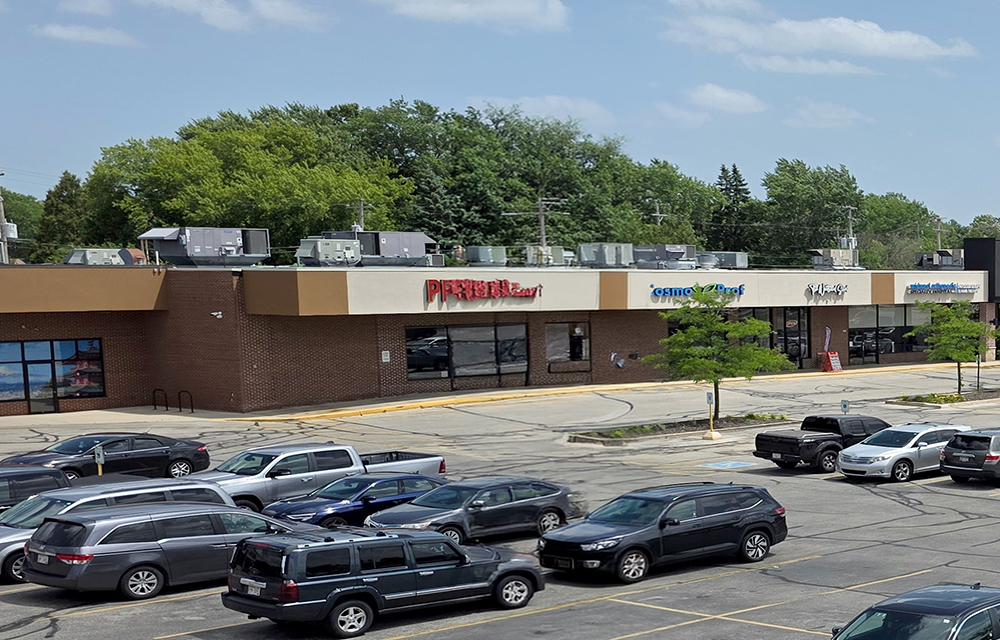
United Properties Corp. expands Wisconsin and Illinois retail presence adding 200,000 s/f
West Allis, WI United Properties Corp. completed two retail acquisitions totaling $27.4 million across Illinois and Wisconsin, adding 205,000 s/f of shopping center space to its portfolio




Quick Hits

Columns and Thought Leadership

Hunt commercial real estate question and answer: Fortune 500 wisdom - by David Hunt
Yes, there are lessons to be learned from the largest companies in America when comes to managing your real estate. But the decision to buy or lease real estate may not be one of

Positive forecast for New York’s pro-housing push? - by Philip Butler
New York’s housing crisis remains a hot button topic despite growing consensus that varied and affordable housing is desperately needed statewide. Governor Hochul has recently introduced several initiatives to overcome N.Y.’s anti-housing

A guide to finding the right NYC property management company - by Sanjay Gandhi
Being a small to midsize landlord in NYC is an increasingly demanding endeavor. From navigating complex regulations, increased compliance demands to dealing with tenant issues and remediating violations. It is wise to enlist the assistance of a partner, a professional

New York’s streets are full again, and the retail numbers prove it - by Noam Aziz
Walk down any New York block this year and you can feel it. The sidewalks are crowded, the storefronts are lit, and the energy that defines this city is back at full volume.
.gif)