


News:
Movers & Milestones
Posted: April 28, 2026
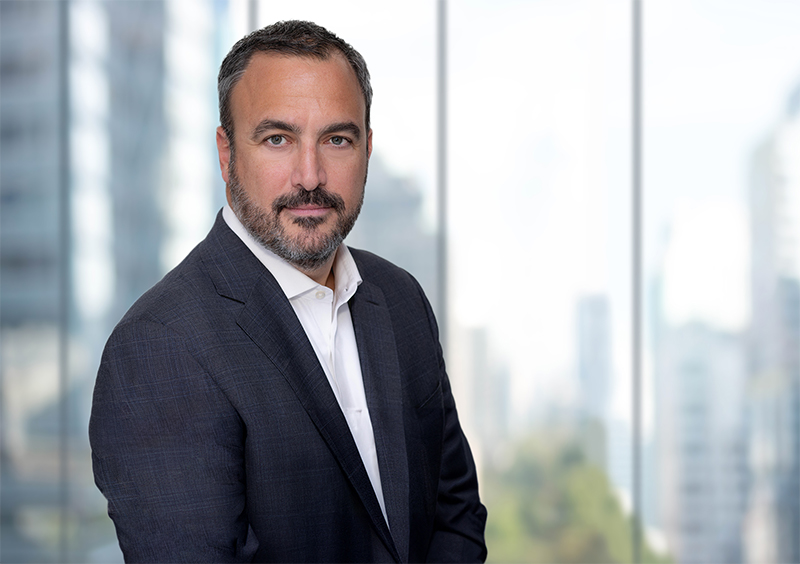
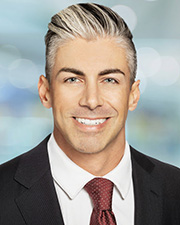
Featured Executive: Jeffrey Poirot, SVP, New Development Group, FirstService Residential New York
Career & Perspective
Q. Your career uniquely bridges your experience in luxury hospitality and residential real estate. How has that crossover shaped the way you approach managing and advising high‑end residential developments today?
A. Yes, absolutely. I believe the word “hospitality” translates across many different genres of business, from hotels to restaurants, commercial and residential buildings. To be hospitable means not only to provide excellent service, but to deliver comfort in all aspects. Whether you’re looking at a hotel or a luxury condominium, in order to execute your deliverables, you always have to understand the “why” behind the vision and anticipate the needs of both the client and the residents. This way, everyone from our residents to our boards to our developers is confident that we can be relied upon to handle anything that comes our way. This perspective has contributed to my career successes in both the hotel world and within luxury residential real estate.
Q. Was there a defining moment or project early in your career that confirmed you’d found your long‑term path in luxury real estate operations and advisory work?
A. I started my career at The Plaza and 20 years later returned to be the general manager of the Master Condominium and the residential section. Coming back to the Plaza brought me joy and such pride in the building. It also brings me joy that we are a part of so many amazing buildings and impressive teams and to know that we are doing our very best every single day to elevate services and lifestyle within those walls to the satisfaction of both our residents and our developers.
Current Role & Promotion
Q. You were recently promoted to Senior Vice President of FirstService Residential New York’s New Development Group. How does this new role expand your scope of influence with developers and ownership teams?
A. We take pride in, and often talk about, being a trusted advisor to each of our clients. Our president Marc Kotler has led our New Development consulting services for the last 20 years. Marc has built the foundation of our division and while I’m stepping into very big shoes and an important leadership role, I’m very focused on elevating services and expectations for our developers, residents and boards. Our developers are looking for new, luxurious, sustainable operations so we try and provide solutions and our knowledge to help them achieve those goals.
Expectations are high and we push forward to meet those demands. The way we do that is through effective manpower; having the right people in the right places to deliver excellence.
Right now, we are working on projects that will take us through 2030 and we have a great opportunity now to shape operations with our developer teams. You can look back and see how much has changed in this space since 1990. Today, having sophisticated technology to service your package rooms, having refined processes to be able to support a multitude of alterations, understanding elevator technology and destination dispatch control – to be able to advise and execute on these core components driving the heart of operations, you need to have true expertise. My team and I want to be that positive influence, that driving force in providing solutions.
Q. What are the most critical priorities for you as you scale the New Development Group’s advisory and pre‑development services across New York City?
A. While I’m focused on service excellence for our developers, at the same time, shaping this business vertical is extremely important to me. Property management wasn’t viewed as a “sexy” or “glamorous” job. In today’s market, we have residential buildings that rival 4- to 5-star hotels. In such a space, you have to focus on the level of service from day one. We talk about price per square foot and carrying costs, quality of vendors, local laws, sustainability, but service level and expectations need to be built into that conversation across all aspects of a building.
Development, Conversions & Market Shifts
Q. You’ve been closely involved in some of New York’s most complex mixed‑use developments and office‑to‑residential conversions. What lessons from these projects are most applicable to today’s development environment?
A. I think with regard to mixed-use developments, you need to have a solid understanding how “the sauce is made”, so to speak. When you have a building that is a hotel, or retail, or residential development, as a consultant and managing agent, you need to go in with expertise around how the framework of operations is going to be implemented, how to secure utilities, how processes should be developed and refined. When we are engaged as a consultant from inception, we’re able to advise at our maximum capacity around significant areas such as labor laws, insurance, and utilities – some of the largest areas impacting budgets.
From offices to condos, we’ve also found there is tremendous opportunity to build out amenities. There are multiple spaces throughout a building that may not necessarily get window access or direct light, but it’s an opportunity to transform the space into community-driven amenity areas. And when you go this route, let’s say you have a total of 75,000 s/f of space transformed into amenities, you need to know who to bring in to oversee your amenity spaces, to activate, regulate, maintain, and elevate. You need a qualified team for this, such as our affiliate partner, LIVunLtd, who have deep expertise in the amenity space.
Q. Office‑to‑residential conversions continue to gain momentum in New York. From an operator’s standpoint, what do developers often underestimate, and how can early planning improve long‑term asset performance?
A. Early planning, and effective planning, is crucial for long-term asset performance. Without expert guidance, areas can be overlooked or design sometimes outweighs function and that has a significant impact on operations, aspects such as the need for staff space (staff meal areas, break rooms, etc.) or appropriate trash routes. When we come in as consultants, we’re able to proactively advise early on to optimize these areas.
Luxury, Operations & Resident Experience
Q. Many of the properties you oversee are iconic, globally recognized addresses. How do you balance brand integrity, operational efficiency, and evolving resident expectations in these environments?
A. Setting and managing expectations is extremely important. If you’re aiming for luxury but you have a budget challenge, expectations need to be managed around cost versus services. A building may aspire towards providing its community with a certain caliber of service but do not have the resources to allow their staff to do so. In a luxury hotel setting, you may have a ratio of 1 employee to 2 guests whereas in a 2- or 3-star hotel, it may be 1 employee to 7 guests and a challenge is created. Of course, scenarios may change as each building comes alive. My goal is always to make sure we understand the vision of a building and place the right people in the right environments so our teams can deliver the best possible services.
Q. How has the definition of “luxury living” changed over the past five years, and how is FirstService Residential helping developers future‑proof their buildings from day one?
A. I think luxury living has become more demanding. People’s expectations are more instantaneous now. Everything is driven by the “cell phone world,” where if you don’t respond right away, you’re considered late. But that’s not always realistic. True luxury is not about immediacy alone; it’s about thoughtful communication, setting clear expectations, and delivering consistently against them.
If someone wants something highly bespoke, like planning a private jet to Brazil for a picnic in the forest, that’s going to take time. Exceptional service lies in transparently guiding residents through timelines, keeping them informed, and ensuring a seamless experience from request to execution. Ultimately, luxury today is defined less by excess and more by how well residents feel cared for, understood, and supported in their daily lives.
Luxury isn’t always about having the biggest or flashiest amenities. It’s about making people feel cared for, looked after, and supported in getting what they need. That’s where you really strike gold.
From a future-proofing perspective, the “newest” is not always the best. What may have once been considered cutting-edge (like certain lighting trends or finishes) doesn’t always hold up over time. Residents today don’t necessarily want to be sold a pre-packaged lifestyle; they want the ability to bring their own preferences into their home. So it’s about making sure the infrastructure is there to support customization and change over time, building in flexibility, and staying nimble.
Technology is constantly evolving and continues to drive how we operate buildings. It’s about delivering on today’s needs without overbuilding too far into the future.
At FirstService Residential, we partner with developers from day one to ensure buildings are future-ready, not just for today’s expectations, but for tomorrow’s shifts. That means prioritizing operational agility, investing in adaptable technology, and staying ahead of evolving living trends and making smart, informed decisions with developers to ensure buildings can adapt and continue to deliver long-term value.
Leadership & Culture
Q. You’ve been described as both a visionary and a disciplined operator. How do you instill that balance within your teams while managing highly complex, high‑profile properties?
A. My philosophy on management is that I would never ask my team to do something I would not do. My past experiences allow me to both guide execution and continuously teach as we open buildings and manage people. And that’s important for me; I want to make sure that I am teaching all the time. When we teach, we challenge our team members to think outside the box to provide solutions and work closely to make sure that the team members feel supported.
Sometimes one of the hardest things to do is making sure you remain available for your team. When you’re available and open, you have the ability to get the best out of your team. When you’re closed and demanding, there’s no reciprocity. You want to make sure they can walk into your office and cry if they need to and celebrate the wins when they happen.
I come from the hospitality world where we operated 24/7, with phone calls at all hours, 2:00 A.M. emergencies, dealing with a multitude of different things. As a hospitality-driven leader, effective leadership is about distinguishing between what’s urgent and what can be responded to but does not need to be resolved immediately. There’s a difference between needs and wants; fire, flood, etc. In the end we need to show up and have a presence.
Q. What leadership skills have become more important as you’ve moved into a senior advisory role working directly with developers, architects, and ownership groups?
A. I try to listen a lot more than I speak. I want to be able to help solve the issues at hand. I try to think outside the box. I focus on being a trusted advisor to our developers, a reliable resource to my team, and a steady partner to the boards we serve. I make myself available and offer perspective when it’s welcomed, and when it’s not, I respect that. But if I can provide valuable insight on important areas that may have been overlooked, I believe it’s my responsibility to raise it. Whether it’s taken or not, that perspective can help inform stronger decisions.
Technology, Innovation & Strategy
Q. From smart building systems to data‑driven operations, how is technology influencing the way new luxury residential assets are planned, launched, and managed today?
A. Good question, because, while we’re evaluating technology available today, we’re often delivering buildings three years from now. The real consideration becomes what that technology will look like at delivery, and whether it will already be obsolete.
I believe it ultimately comes down to ensuring the right infrastructure is in place from the outset. Even something as straightforward as incorporating a chase running through the building allows for future wiring upgrades, whether that’s Cat 6 or whatever comes next. Planning for that level of flexibility enables buildings to evolve over time and truly future-proof their operations.
In many cases, developers are working with the best technology available at a given moment. One technology that brings real value lies in implementing fully integrated building management systems, the “brains” of the building, that connect and optimize all mechanical systems.
These systems are critical for managing utility usage, as well as monitoring and maintaining key equipment like motors and pumps. When done effectively, they help prevent failures, extend equipment life cycles, and ultimately reduce long-term operating costs.
Q. Where do you see the greatest opportunity for innovation in property management during the pre‑development and launch phases?
A. When developers bring us in earlier, before plans are fully finalized, it allows us and the sponsor to properly program the space. When the sponsor completes the plans without our input, it limits our ability to add additional value.
Having a resident manager or superintendent engaged during the construction phase benefits everyone involved in the project. They bring practical insight into how the building will ultimately function, including opportunities for mechanical refinements, operational input, and commissioning support.
Having that on-site presence is important because they are the ones who will be operating the building’s mechanical systems day-to-day. The more involvement they have leading up to opening, the stronger and more prepared they will be, with the knowledge base required to operate the building effectively from day one.
Looking Ahead
Q. Looking ahead to the next several years, how do you envision the evolution of FirstService Residential’s New Development Group — and your role in shaping its impact across the city?
A. I think it is about bringing a sense of urgency, but also a sense of hospitality, and mirroring the sensibilities of ownership and stakeholders.
I want to bring a strong sense of hospitality, luxury, and service, and package it together while still keeping it unique to each building.
Every building and operation is different. Every board or developer has a different vision for their building, but there is a level of service that should always be elevated in its delivery.
When you open new buildings, you have the ability to start fresh. It is a clean slate, and maintaining that standard is much easier than when you are taking over a building with bad habits or outdated infrastructure. The ability to establish and maintain that level of service is, for me, a great attribute of a building that we can build on and drive forward for years to come for owners.
Not all operators have the ability to consistently deliver that level of service, and in today’s environment, we are seeing higher expectations. Residents want curated service packages delivered seamlessly, from amenity programming to fitness offerings and beyond.
For me, it is about elevating the level of what my team does when we open buildings, when we consult, when we drive operations, and continuously elevating ourselves for our clients.
Advice & Industry Insight
Q. What advice would you give to young professionals who want to build careers at the intersection of hospitality, real estate operations, and development advisory?
A. I went to Penn State University’s School of Hospitality Management. I believe strongly in understanding hospitality at a large scale. The property management world has traditionally been somewhat outside of that, but there is real value in bringing those disciplines together for young professionals.
It’s important to experience different aspects of the business. In hotels, you might work in banquets, sales, housekeeping, all of it, and that builds a well-rounded foundation. In property management, you’re dealing with many of those same components, just in a different way. You’re still managing an asset, still operating a building, still delivering hospitality, but through a different lens.
For anyone who wants to make this a career, it’s incredibly valuable to understand the differences across areas like accounting, AP/AR, compliance, and operations. Having that base knowledge of the business is critical because it ultimately makes you a stronger manager. I couldn’t have been an effective sales manager without having worked in the front office or housekeeping; I understood what the building could actually deliver, and I knew the challenges. That made me better at selling and more credible in conversations.
In property management, the same applies. You need to understand how your maintenance operates, who you’re hiring, and how all the moving parts come together. There’s a lot involved when it comes to building staff and operations, and learning those details over time is what allows you to grow.
I would encourage young professionals to actively seek out that knowledge across different areas. Take advantage of learning platforms and training programs, there are thousands of classes available, and they are a great tool for team members to grow. As an example, here at FirstService, we have the Elevate program for associates’ learning and development goals. Whether you’re in accounting, operations, or development, invest in learning the business from the inside first. That foundation will set you up for long-term success.
MORE FROM Movers & Milestones

Ted Moudis Associates opens new South Florida office
Boca Raton, FL Ted Moudis Associates (TMA) has opened a new office, marking the firm’s official expansion into South Florida. Building on TMA’s existing work and

Quick Hits

