



News:
Brokerage
Posted: October 18, 2016
Executive of the Month: Ivan Friedman of RCS Real Estate Advisors is unlocking the potential of retail real estate properties
 Ivan Friedman, RCS Real Estate Advisors
New York, NY Ivan Friedman, president and CEO of RCS Real Estate Advisors recently sat down with the New York Real Estate Journal for a question and answer session. Friedman founded RCS Real Estate Advisors in 1981 to facilitate restructuring strategies for retail companies.
Q: Please explain exactly what RCS Real Estate Advisors does?
A: RCS RE Advisors delivers innovative solutions to unlock the potential of retail real estate for our clients across the United States and Canada.
Q: Elaborate on your growth and development, and restructuring services?
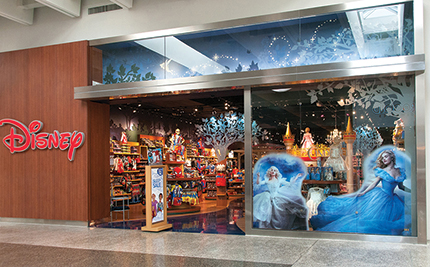
A: The growth and development sector can encompass anything from real estate renewals to everything an internal real estate department would do except paying the rent. This can include taking care of their renewals, new locations, their problems, and serving as their general advisors to make them healthier. Some clients in this sector are Disney Store, Vitamin World, Diamond Wireless, Brookstone, Bob’s Stores, Eastern Mountain Sports, and Cost Plus World Markets. Our clients are very solid businesses and have been with us for a long time.
We started out in restructuring and portfolio optimization in 1981. These services include portfolio assessment, examining clients’ occupancy costs and offering advice about improving profitability, growth, areas where they should expand or contract, or just taking care of annual renewals. This can also extend to total restructuring of all leases either outside of or within Chapter 11. Then there is the bankruptcy side, when the retailer is in the deepest trouble but has the most leverage to restructure their retail portfolio. Many to whom we’ve provided these kind of ad hoc services are now among our outsourced real estate clients because of the help we’ve given them.
 Q: Which is the largest part of your business?
A: We cut our teeth on restructuring and portfolio optimization and that continues to be over 50% of our business. But the business where we operate as an outsourced real estate department continues to grow.
Q: How did you get into this business?
A: In the early 1980s, there was a re-evaluation of what retail real estate was worth. In 1981 and 1982, everything was under market and people were monetizing and selling their leases to get value. Suddenly, things changed and everything was over market. That change started our business. Suddenly you could go to your landlord and say, “That rent is too high. If you don’t want me to leave, you have to adjust my rent.”
Q: Who is your competition, and how does RCS differentiate itself?
A: There may be three other companies out there, but they do only part of what we do. Some do restructuring, some may only act as brokers, some just sublet stores.
Q: Are leases being renegotiated to the same extent as three or five years ago?
A: 2016 is turning out to be a very problematic year. I’m seeing the same class of bankruptcies as in 2008 and 2009 – many companies will need to change or downsize their footprint. In November 2015, I predicted that 2016 would echo 2008/2009.
Q: Why?
A: The Internet is taking sales from brick and mortar, which along with an economy that is still struggling, brought a decline in mall traffic. Also, healthy companies believe they can shrink their footprint by 25%, do the same business and be more profitable.
 Q: Are leases in certain areas of the country more actively being renegotiated than in others?
A: We’re national. Many areas that depend on people coming from Europe are suffering a bit more, as are those who depend on business from South America. Some of the best malls in southern Florida are experiencing declines in sales and traffic.
Q: How did the industry change after the financial collapse of 2008? How did you adapt?
A: The weak got weaker, and there was more consolidation – Bed Bath & Beyond, for instance, once had three or four competitors. The outsourced real estate business tells us a lot through the number of stores retailers plan on opening and closing. That part of our business is very stable and continues to grow every year.
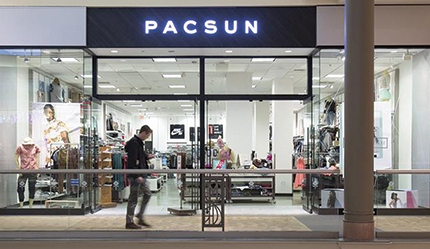
The restructuring side of the business has peaks and valleys. If you look at 2016, we’ve just finished restructuring PacSun and Aeropostale, and are doing Hastings Entertainment, Hancock Fabric and Bob’s/Eastern Mountain Sports. Of the major bankruptcies this year, we’ve worked on most of them.
Q: How many bankruptcies and chain closures do you expect in 2017? Do you expect it to increase over 2016?
A: You still have some very troubled industries. In junior sportswear you have two goliaths – H&M and Forever 21. Forever 21 could be feeling pressures because H&M takes the larger share. Except for American Eagle, that category is seeing comps trend down every month. The casual dining area is also very challenged. There will be a lot more fallout in 2017. I see a lot of people closing stores at expiration, creating more vacancies.
Q: Can you share some success stories?
A: On the outsourced real estate side, Disney had sold its stores to The Children’s Place, and in 2008 called us because they wanted the stores back. They asked Children’s Place to file that division for Chapter 11 so they could take back the pieces they wanted. Children’s Place was operating 375 stores and Disney wanted to keep 225. Disney asked us to perform a full analysis as to which leases to keep and which to reject, and after that, to negotiate with the landlords. We did that restructuring in 90 days. The next day, Disney told us they were not planning on hiring an internal real estate department. They wanted us to manage the portfolio. They are currently under contract until 2017, and we expect we’ll be with them for many, many years.
On the restructuring side, we were involved with PacSun. Golden Gate Capital, a private equity firm that had a position in the firm, called us in February and said, “The only way we want to purchase this company is through the Chapter 11 process.” It was not a matter of debt. They wanted to buy a company with a solid real estate base. PacSun filed for Chapter 11 in April, mainly to restructure the real estate. We were successful and Golden Gate purchased them out of Chapter 11 on September 7.
Tags:
Brokerage
MORE FROM Brokerage
United Properties Corp. expands Wisconsin and Illinois retail presence adding 200,000 s/f
West Allis, WI United Properties Corp. completed two retail acquisitions totaling $27.4 million across Illinois and Wisconsin, adding 205,000 s/f of shopping center space to its portfolio





 (2).gif)

Columns and Thought Leadership

A guide to finding the right NYC property management company - by Sanjay Gandhi
Being a small to midsize landlord in NYC is an increasingly demanding endeavor. From navigating complex regulations, increased compliance demands to dealing with tenant issues and remediating violations. It is wise to enlist the assistance of a partner, a professional

New York’s streets are full again, and the retail numbers prove it - by Noam Aziz
Walk down any New York block this year and you can feel it. The sidewalks are crowded, the storefronts are lit, and the energy that defines this city is back at full volume.

Hunt commercial real estate question and answer: Fortune 500 wisdom - by David Hunt
Yes, there are lessons to be learned from the largest companies in America when comes to managing your real estate. But the decision to buy or lease real estate may not be one of

Positive forecast for New York’s pro-housing push? - by Philip Butler
New York’s housing crisis remains a hot button topic despite growing consensus that varied and affordable housing is desperately needed statewide. Governor Hochul has recently introduced several initiatives to overcome N.Y.’s anti-housing
.gif)