



News:
Brokerage
Posted: December 29, 2008
EPA awards Saw Mill River Coalition $900,000 grant
Mayor Phil Amicone joined federal representatives on the banks of the Saw Mill River to discuss the $900,000 EPA Targeted Watershed Grant that was awarded to Groundwork Hudson Valley's Saw Mill River Coalition.
The grant, one of only 15 given out nationwide, will assist pollution cleanup, restoration and planning efforts that will improve the Saw Mill River from its origins in Chappaqua to its terminus in the city, including the much anticipated "daylighting" project that will unearth portions of the river through the city's downtown.
A check from the EPA regional administrator Alan Steinberg in the amount of $889,183 was presented at the event.
The Saw Mill River, while only 19-miles long, has a major impact on the Hudson River. It has had one of the worst stream profiles of any Hudson River tributary, based primarily on its past history and the role it played in industrialization. Once called the Nepprehan River, it was the location of the first saw mill in the colonies, hence its current name.
Groundwork Hudson Valley has worked with the city to build a local program of river conservation known as the Saw Mill River Coalition that involves volunteers, schools, environmental and community organizations, its local municipalities, and county and state agencies.
The Coalition was started in 2001 and has been working steadily on many projects to improve the river.
Tags:
Brokerage
MORE FROM Brokerage
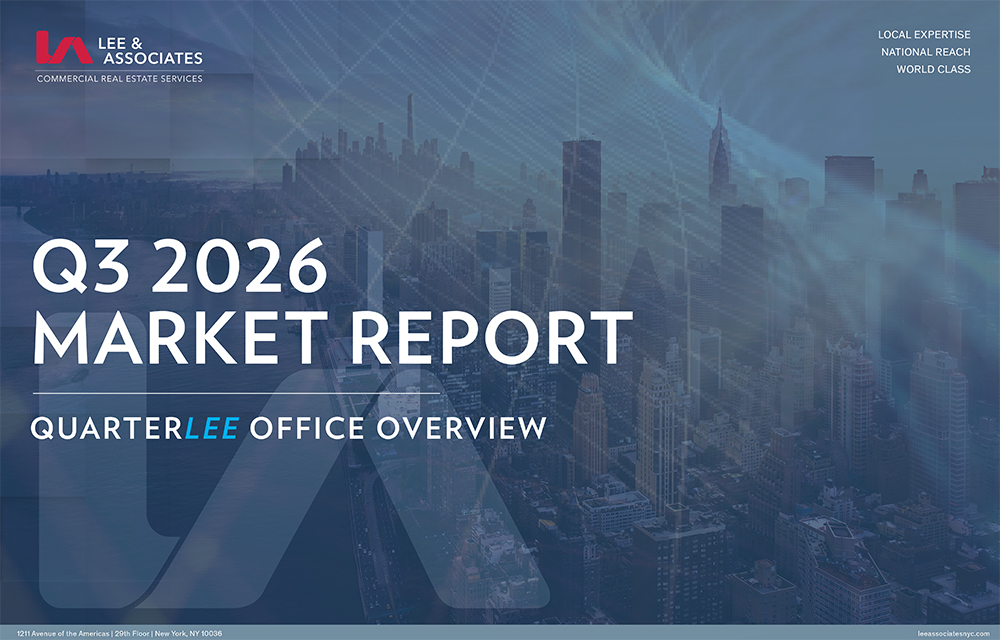
Manhattan office leasing tops 10 million s/f for ninth consecutive quarter, Lee & Associates NYC reports
Manhattan, NY Manhattan’s office market continued its recovery in the third quarter of 2026, recording more than 10 million s/f of leasing activity for the ninth




 (2).gif)

Columns and Thought Leadership

Hunt CRE question and answer: Choosing a real estate agent - by David Hunt
First, we will only work with one agent exclusively. The primary reason is that we want that agent to legally represent our client’s interests. In New York State, a real estate agent has a fiduciary

New York’s streets are full again, and the retail numbers prove it - by Noam Aziz
Walk down any New York block this year and you can feel it. The sidewalks are crowded, the storefronts are lit, and the energy that defines this city is back at full volume.

Hunt commercial real estate question and answer: Fortune 500 wisdom - by David Hunt
Yes, there are lessons to be learned from the largest companies in America when comes to managing your real estate. But the decision to buy or lease real estate may not be one of

A guide to finding the right NYC property management company - by Sanjay Gandhi
Being a small to midsize landlord in NYC is an increasingly demanding endeavor. From navigating complex regulations, increased compliance demands to dealing with tenant issues and remediating violations. It is wise to enlist the assistance of a partner, a professional
.gif)