



News:
Brokerage
Posted: January 11, 2022
Enterprise closes two Low-Income Housing Tax Credit funds totaling $365 million
New York, NY According to Enterprise Community Partners, they have completed the closing of Enterprise Housing Partners Funds XXXVI (EHP 36) and XXXVII (EHP 37), two Low-Income Housing Tax Credit (housing credit) funds. With commitments totaling $365 million from 17 investors, the two funds will help create and preserve 3,526 affordable rental homes across 35 properties in 17 states. These are the third and fourth in a series of multi-investor housing credit funds Enterprise has closed in 2021, bringing the combined total investment this year to $800 million in nearly 8,000 affordable rental homes across the country.
“As rents continue to rise, the Low-Income Housing Tax Credit remains our most powerful tool for creating affordability in every type of community,” said Scott Hoekman, president of Enterprise’s housing credit investments business. “Our investors come to us with the intent to make a real impact, and with their support we are able to channel critical resources into creating and preserving thousands of affordable homes nationwide.”
The 35 properties included in EHP 36 and EHP 37 are located in California, Florida, Georgia, Idaho, Illinois, Louisiana, Maryland, Massachusetts, Missouri, New York, North Carolina, Ohio, Pennsylvania, Texas, Virginia, Washington, and Wisconsin. The funds will also create an estimated 5,750 jobs that will lead to an estimated $370 million in wages and salaries for workers, and an estimated $146 million in income for small businesses.*
Two properties that are representative of the wide range of investments from EHP 36 and EHP 37 are Bridge at Turtle Creek, a new development of 307 apartments in Austin, Texas, and Skagit County PSH, a new 70-apartment development for formerly homeless individuals in Mt. Vernon, Washington.
As housing costs skyrocket in Austin, Bridge at Turtle Creek (EHP 36), a new 5-story development, will provide 134 studio, 96 one-bedroom, and 77 two-bedroom affordable apartments. The development will be Austin Energy Green Building certified. The property includes a fitness room, courtyard and grilling area, and an indoor lounge with kitchen. JCI Residential and the Austin Affordable Housing Corporation are the developers, and the project is scheduled to be completed in April 2023.
Skagit County PSH (EHP 37) is a new four-story building in Mt. Vernon, Washington that will provide 70 apartments for formerly homeless individuals in this Puget Sound community. The property will set aside 25 units for people experiencing mental illness, 10 for formerly homeless individuals recovering from substance abuse and five for formerly homeless veterans. The apartments will provide permanent supportive housing, which includes support services that help people stay stably housed for the long term. Two apartments will receive project-based Veterans Affairs Supportive Housing vouchers through the Housing Authority of Skagit County, while the remaining 68 apartments will receive an annual rental and operating subsidy from Skagit County. The developer for Skagit County PSH is Catholic Housing Services, and the project is scheduled to be completed by February 2023.
*Estimates of jobs and economic impact are rounded and based on national multipliers created by the National Association of Homebuilders in 2020, based on analysis of Enterprise investment data. These estimates assume local investments generate jobs, tax revenue and business earnings on par with national averages.
Tags:
Brokerage
MORE FROM Brokerage
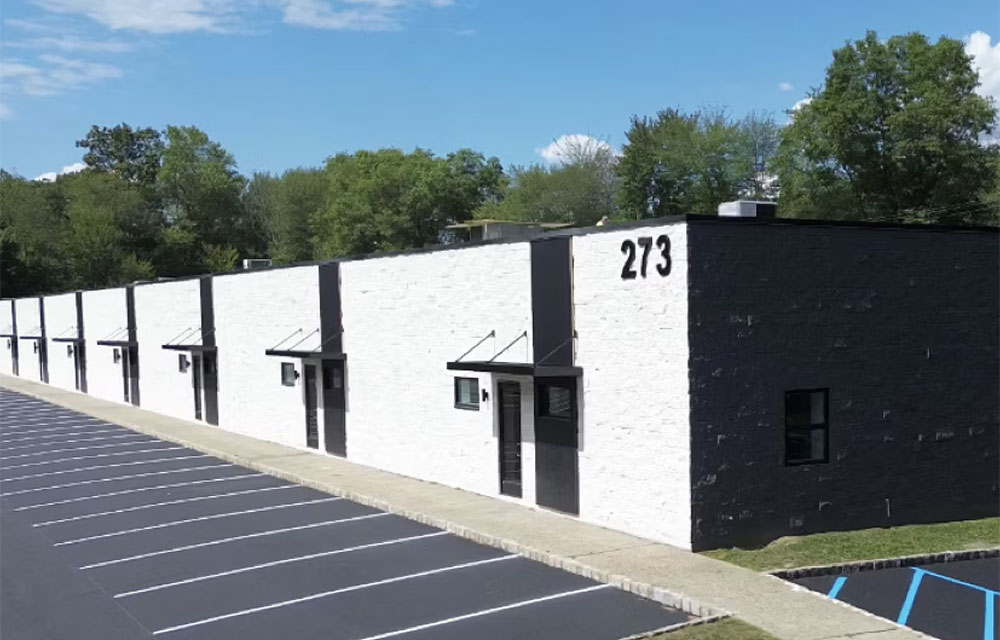
Resource Realty of Northern NJ delivers complete lease-up of 235 Franklin Rd. for Commerce Park Investors
Randolph, NJ Resource Realty of Northern New Jersey (RRNNJ) has completed the lease-up of a 10-unit small-bay industrial property at 273 Franklin Rd., marking the culmination of an investment strategy that began




 (2).gif)

Columns and Thought Leadership

A guide to finding the right NYC property management company - by Sanjay Gandhi
Being a small to midsize landlord in NYC is an increasingly demanding endeavor. From navigating complex regulations, increased compliance demands to dealing with tenant issues and remediating violations. It is wise to enlist the assistance of a partner, a professional

Positive forecast for New York’s pro-housing push? - by Philip Butler
New York’s housing crisis remains a hot button topic despite growing consensus that varied and affordable housing is desperately needed statewide. Governor Hochul has recently introduced several initiatives to overcome N.Y.’s anti-housing

New York’s streets are full again, and the retail numbers prove it - by Noam Aziz
Walk down any New York block this year and you can feel it. The sidewalks are crowded, the storefronts are lit, and the energy that defines this city is back at full volume.

Hunt commercial real estate question and answer: Fortune 500 wisdom - by David Hunt
Yes, there are lessons to be learned from the largest companies in America when comes to managing your real estate. But the decision to buy or lease real estate may not be one of
.gif)