



News:
Brokerage
Posted: July 26, 2009
Energy legislation from the Bloomberg Administration
New York City is one of the greenest cities on the globe by any measure. The U.N.'s Green Leaf Foundation places NYC as the second lowest city in carbon emissions per capita, which is a great accomplishment according to the Union of Concerned Scientists, who estimate how green one is depending on where people live and work, and how they travel to and from work. New Yorkers live and work stacked in a densely built, high-rise environment and use public transportation extensively to commute, making us more environmentally friendly than populations in sprawled development areas who are dependent on cars.
REBNY members have been taking the lead on building and operating green buildings. In recent years, REBNY members have built a host of new Leadership in Energy and Environmental Design (LEED) certified office towers such as the Bank of America and the Hearst Buildings. Owners and managers of existing buildings have been using the EPA Energy Star benchmarking tool for a decade, employing energy efficiency measures and upgrades, and are taking steps toward LEED Existing Building certification. Concerns about global warming, volatile energy prices, and tenant desires have created a movement towards environmentally sustainable buildings that will continue with or without legislation.
The Bloomberg administration has put forward four energy bills which will mandate a variety of measures for new and existing buildings of more than 50,000 s/f. While REBNY supports the goals of all four bills, and with some technical changes, could potentially support three of them, the mandates of Intro. 967 requiring audits and retrofits of existing buildings are unrealistic in the current economic environment. If passed, this could seriously impede our town's recovery from this devastating recession.
The first three bills would: 1) require measuring the energy use of buildings using the U.S. EPA's Energy Star Portfolio Manager; 2) adopt the NYS Energy Code as part of the city's Construction Codes and make it apply to any mechanical system or façade alteration; and 3) require that all lighting in office buildings be upgraded by the year 2025 to Energy Code standards. While each of these bills need some tweaking to make them workable, REBNY believes that together we can come to agreement on them with the city and the City Council.
The net effect of these three bills is great-the information provided by the EPA is extremely helpful to building owners and managers to operate their buildings efficiently day-to-day. The changes to the Energy Code will mean that every interior alteration of a building meets stringent energy efficiency standards. And, lighting is the area where the greatest energy savings can be achieved for the least cost. We are optimistic that we can reach agreement on the language of these bills.
Although the aims of Intro. 967 are worthwhile, its mandates are not workable and will make it more difficult for our economy to recover. The proposal has three components. First, buildings would be required to perform an energy audit. The audit would recommend capital improvements and system replacements to increase energy efficiency in the building where such improvements will result in a payback to the owner of their costs within five years. An analysis of the building's existing mechanical systems and exterior walls with the design documents and specifications is made to determine if the systems are performing at an optimum level. The audit includes recommendations for retrocommissioning, or servicing them so that they achieve top performance.
Many REBNY members have performed energy audits of their buildings. In a large office building, this requires several professionals including mechanical, electrical and structural engineers and a professional who can do energy modeling. Although it costs up to $.25 a s/f, the audit is a useful tool. Typically an owner will look at the results and take into consideration the expected life span of the mechanical equipment in a building and make decisions using the combined data. The audit also provides useful information on the operations of various systems which can lead to retrocommissioning to make them function better. We have no objection to requiring audits and commissioning reports.
Intro. 967 also requires that the building owner replace any equipment or make any improvements to the building's exterior walls that would result in a "simple payback" to the owner within five years. A simple payback is anything but simple in most office buildings. A lease attorney will be required to analyze leases to determine who would be the beneficiary of energy efficiency upgrades as leases vary in a multi-tenant building, tenant-by-tenant and even floor by floor.
Determining what upgrades would pay for themselves in five years or less is even more complex; in fact it is impossible. These are estimates which depend on the future price of energy. REBNY members have found that auditors tend to wildly overestimate the paybacks of efficiency improvements. Additionally, the payback is based on the estimated cost of the improvement - something that isn't available with any degree of accuracy at the time of the audit.
REBNY supports making our buildings more environmentally sustainable. We are continuing our discussions with the Council and the administration in the hope that we can agree on a legislative package that will include measuring the energy use of our buildings, ensuring that new construction and alterations meet high standards, operating our equipment to maximum efficiency, and making the best use of the information from benchmarking and audits to upgrade our buildings in accordance with individual building and tenant needs, rather than on an artificially and unworkable mandated schedule.
Steve Spinola is the president of the Real Estate Board of New York, New York, N.Y.
Tags:
Brokerage
MORE FROM Brokerage
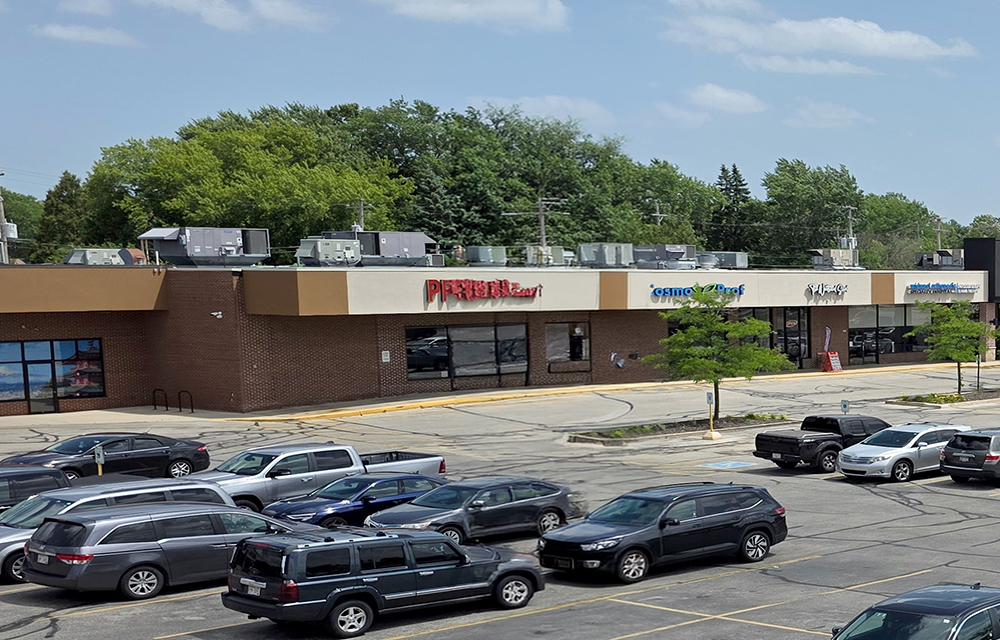
United Properties Corp. expands Wisconsin and Illinois retail presence adding 200,000 s/f
West Allis, WI United Properties Corp. completed two retail acquisitions totaling $27.4 million across Illinois and Wisconsin, adding 205,000 s/f of shopping center space to its portfolio






 (2).gif)

Columns and Thought Leadership

A guide to finding the right NYC property management company - by Sanjay Gandhi
Being a small to midsize landlord in NYC is an increasingly demanding endeavor. From navigating complex regulations, increased compliance demands to dealing with tenant issues and remediating violations. It is wise to enlist the assistance of a partner, a professional

Positive forecast for New York’s pro-housing push? - by Philip Butler
New York’s housing crisis remains a hot button topic despite growing consensus that varied and affordable housing is desperately needed statewide. Governor Hochul has recently introduced several initiatives to overcome N.Y.’s anti-housing

Hunt commercial real estate question and answer: Fortune 500 wisdom - by David Hunt
Yes, there are lessons to be learned from the largest companies in America when comes to managing your real estate. But the decision to buy or lease real estate may not be one of

New York’s streets are full again, and the retail numbers prove it - by Noam Aziz
Walk down any New York block this year and you can feel it. The sidewalks are crowded, the storefronts are lit, and the energy that defines this city is back at full volume.
.gif)