



News:
Brokerage
Posted: August 25, 2015
DTZ's July 2015 Manhattan Office Report
Manhattan, NY The following are some highlights and statistics from the July 2015 DTZ Manhattan Office Market Report:
Manhattan posted its sixth consecutive month of positive absorption after 464,826 s/f was absorbed in July. This coincides with the strong job numbers through midyear, as office-using employment added 30,700 jobs in New York City over the past 12 months. Although availability only fell 10 basis points to 9.4 percent, this is the first month in 2015 where all three Manhattan markets contributed to the decline in available space. In addition, 13 of the 17 submarkets posted declines in the available supply. Class A asking rents increased $0.25 per square foot to $77.43; meanwhile Class B asking rents jumped $1.42 per square foot to $61.81 because of an increase in demand in the Midtown South market.
Midtown Stability Continues
Midtown posted another solid month with seven of the nine submarkets having positive absorption with 256,895 s/f coming off the market, bringing Midtown’s 2015 absorption totals to positive 342,353 square feet. The availability rate decreased another 10 basis points to 9.5 percent, as the direct available supply dropped to just under 20 million s/f for the first time since December 2008. A total of 23 deals greater than 100,000 s/f have been signed through July, compared to 17 through the first seven months of 2014. This demand has caused the large blocks in Midtown to drop from 51 to 46 in the past 12 months. Class A asking rents increased $0.46 per square foot to $86.12, mainly from the Fifth/Madison asking rents increasing $0.73 per square foot to $128.20. Class B asking rents continue to rise, increasing $0.75 per square foot to $62.10.
Midtown South Bounces Back
Midtown South continues to be Manhattan’s hottest market with four of the five submarkets having availability rates below 7.0 percent. Availability dropped 20 basis points in July to 6.7 percent. Midtown South posted positive 152,642 s/f on the month, bringing its year to date total to positive 222,873 square feet. Demand from the TAMI sector (technology, advertising, media and information services) continues to drive the market comprising of 60 percent of Midtown South’s leasing volume. Both Class A and Class B asking rents jumped significant amounts during July, as Class A asking rents are up by $4.94 to $77.73 per square foot due to the asking rental prices at 11 Madison Avenue. Class B asking rents surpassed $70.00 per square foot for the first time in history and are up $3.13 per square foot to $71.27.
Downtown Steadies
Downtown continues to slowly chip away at the 1.6 million s/f of space added to the market in the first quarter. Even with 298,655 s/f of space added to the market at 200 Vesey Street, as American Express plans to vacate a portion of their space, Downtown still posted 55,289 s/f of positive absorption, causing availability to drop 10 basis points to 12.0 percent. Downtown inked its two largest relocations this year from Midtown and Midtown South during the month of July with Gucci and SandBox Studios leasing a combined 155,224 square feet. Class A asking rents increased $0.17 per square foot to $62.41. Class B asking rents remained flat in July, increasing a mere $0.07 to $44.25 per square foot, but still increased 8.1 percent over the past 12 months.
To view the full report visit: https://www.dropbox.com/s/unslkxqh96is2xm/Manhattan_Monthly_July_2015.pdf?dl=0
Tags:
Brokerage
MORE FROM Brokerage
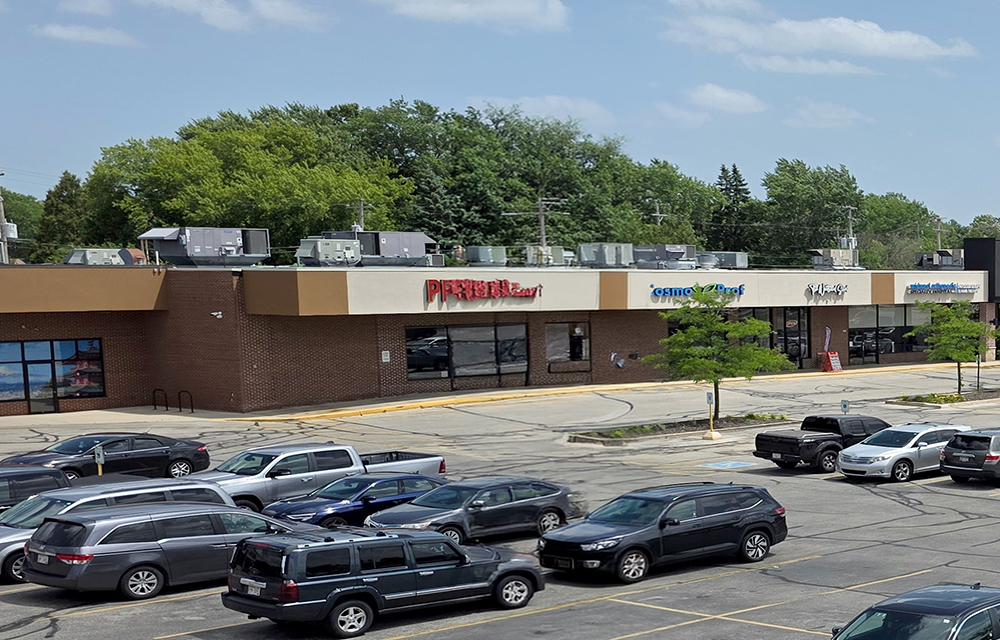
United Properties Corp. expands Wisconsin and Illinois retail presence adding 200,000 s/f
West Allis, WI United Properties Corp. completed two retail acquisitions totaling $27.4 million across Illinois and Wisconsin, adding 205,000 s/f of shopping center space to its portfolio



Columns and Thought Leadership

A guide to finding the right NYC property management company - by Sanjay Gandhi
Being a small to midsize landlord in NYC is an increasingly demanding endeavor. From navigating complex regulations, increased compliance demands to dealing with tenant issues and remediating violations. It is wise to enlist the assistance of a partner, a professional

New York’s streets are full again, and the retail numbers prove it - by Noam Aziz
Walk down any New York block this year and you can feel it. The sidewalks are crowded, the storefronts are lit, and the energy that defines this city is back at full volume.

Hunt commercial real estate question and answer: Fortune 500 wisdom - by David Hunt
Yes, there are lessons to be learned from the largest companies in America when comes to managing your real estate. But the decision to buy or lease real estate may not be one of

Positive forecast for New York’s pro-housing push? - by Philip Butler
New York’s housing crisis remains a hot button topic despite growing consensus that varied and affordable housing is desperately needed statewide. Governor Hochul has recently introduced several initiatives to overcome N.Y.’s anti-housing
.gif)